

This article by Erica L. Hagman Aguilar and Alejandro Ruiz originally appeared in the April 28, 2026 edition of Pie de Página.
– The Monsanto v. Durnell case is under review by the U.S. Supreme Court ( SCOTUS ).1 Oral arguments from both sides were heard on Monday, April 27 , and the Court will deliberate before voting and issuing a ruling—expected in July 2026—that will directly impact how pesticide warning labels are regulated in the U.S.
The decision is crucial in determining whether or not people exposed to these substances can sue agrochemical companies for their responsibility regarding the undisclosed effects of their products, for example, developing cancer from exposure to glyphosate.
In 2023, John L. Durnell sued Monsanto and received a favorable verdict after the court recognized the causal link between the development of non-Hodgkin lymphoma (NHL) and exposure to Roundup, the leading brand of the glyphosate-based herbicide (HBG) in the United States. The court found that Monsanto was aware of the carcinogenic risks of its chemical but failed to warn consumers. In that trial, the court determined that the company had to pay Durnell $1.25 million.
However, through its now subsidiary, Bayer filed a petition for a writ of certiorari in April 2025, requesting that the Supreme Court review the matter. On the same day, the company stated that the litigation “threatens Monsanto’s ability to continue supplying glyphosate-based products to farmers and other professional users.”
The central argument presented by the pesticide company is that there is a difference of criteria in the Roundup cases in different circuits of the US federal justice system, consisting of the prevalence or not of the Federal Insecticide, Fungicide and Rodenticide Act (FIFRA) over state regulations on warning labels, given the prior registration and approval of such labels by the Environmental Protection Agency (EPA), a federal agency.
The EPA has been publicly and legally accused of consistently allowing the mass marketing of over one hundred carcinogenic pesticides, failing to warn of cancer risks, and maintaining a close relationship with Monsanto. There are reports of collusion with the industry dating back to 1985.
In June 2025, the Supreme Court invited the U.S. Attorney General to submit his opinion on the case, which Bayer welcomed in a statement. On December 1, 2025, the Attorney General’s office filed its first amicus curiae brief expressing “the United States’ view” on the matter, reaffirming Bayer’s position and recommending that the Supreme Court grant the company’s request.
Among other arguments, the Attorney General’s document mentions the EPA ‘s authority and how this agency has supported its “robust scientific assessment” to conclude that “glyphosate is not likely to be carcinogenic to humans,” while “it has consistently approved Roundup labels without a cancer risk warning.” In another statement, Bayer expressed its satisfaction.
Hundreds of government entities, agricultural groups, business associations, and organizations have filed nearly twenty amicus curiae briefs. On Monsanto’s side are a coalition of 36 state legislators, the Chamber of Commerce, several industrial agricultural groups, and the United States government itself.
Several organizations of farmers and agricultural workers, think tanks such as the Center for Food Safety, and a coalition of former EPA officials filed briefs in support of Durnell. The latter argued that the federal agency has failed to warn of health damages and that state regulations do not interfere with federal regulations, but rather complement them.
At the April 27 hearing, the Supreme Court appeared divided , and both sides faced tough questions. Durnell’s side presented strong arguments, as expected . Monsanto was bombarded with questions , responding by washing its hands of responsibility, defending the EPA’s process, and asserting that glyphosate is not carcinogenic. Unsurprisingly, its lawyers and allies resorted to old tactics, mixing legal arguments with propaganda.
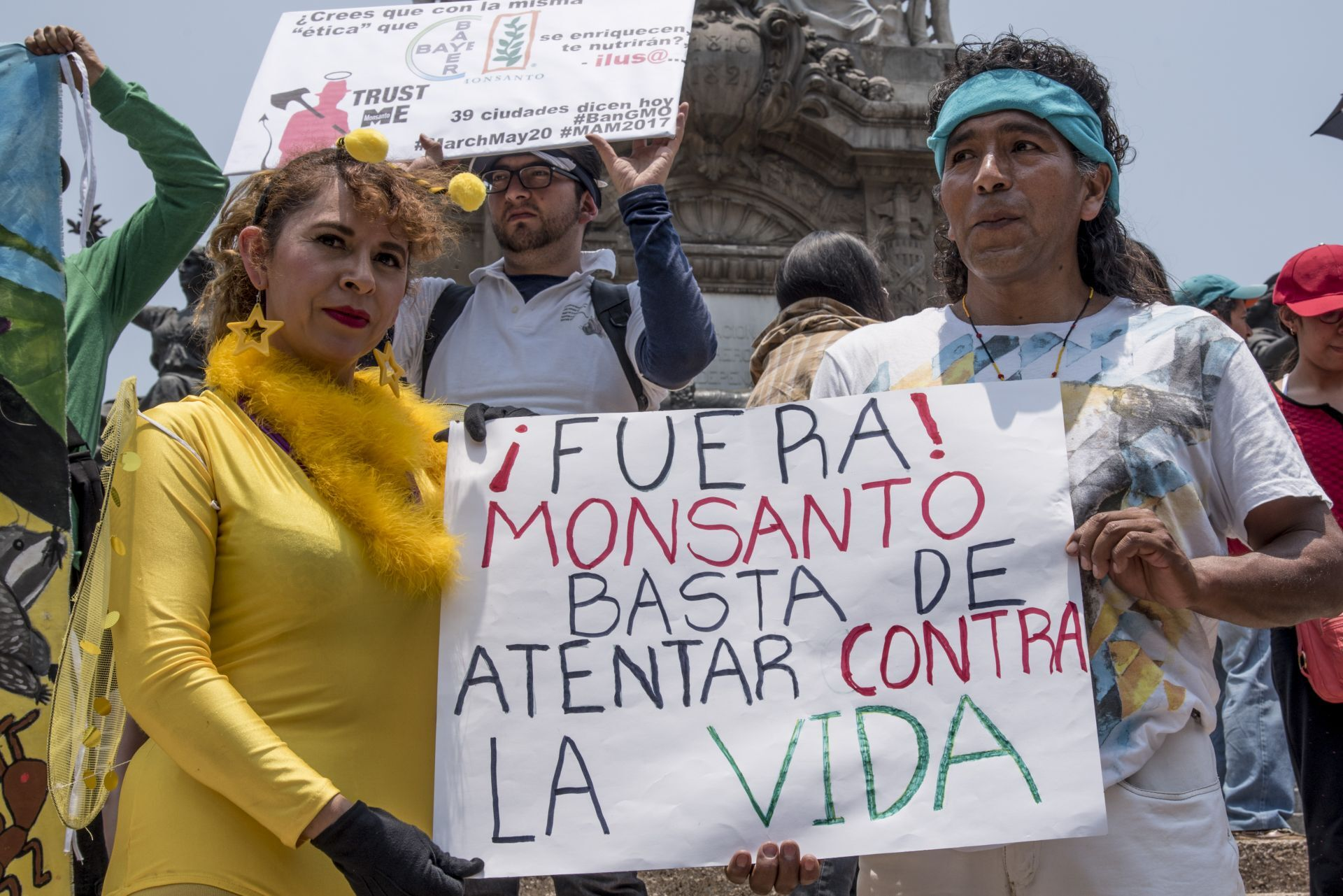
MEXICO CITY, MAY 20, 2017 – People of all ages and from different groups joined the Global March against Monsanto, the company that plans to develop genetically modified corn. PHOTO: TERCERO DÍAZ/CUARTOSCURO.COM
A Legislative Project: Immunity for Manufacturers
The premise presented by Bayer in the Monsanto v. Durell case is present in multiple legislative arenas. The same argument is echoed in various federal and state regulatory initiatives known as “pesticide immunity bills,” which limit the liability of pesticide manufacturers regarding warning labels approved by the EPA.
North Dakota and Georgia are the first states to have these types of laws passed, between 2024 and 2025. Twelve other states have introduced initiatives to shield companies that manufacture agrochemicals: Iowa, Tennessee, Kansas, Florida, Oklahoma, Kentucky, North Carolina, Missouri, Wyoming, Mississippi, Idaho and Montana, with Modern Ag Alliance, a Bayer front group2, as the main driver, lobbying in at least 21 of the 50 US states.
At the federal level, in July 2025, Section 4533 was introduced as part of the ” Department of the Interior, Environment, and Related Agencies Appropriations Act, 2026 ,” an appropriations bill sponsored by Republican Representative Mike Simpson of Idaho and also supported by the Modern Ag Alliance. Representative Chellie Pingree successfully eliminated Section 453 from the appropriations bill in January 2026.
According to the Environmental Working Group, Section 453 was a provision that “would prohibit states from regulating pesticides in a way that is better suited to their local environments and better protects their communities… they would no longer be able to add anything to pesticide labels other than what is required by the EPA .” Representative Pingree stated that the section “would have given pesticide manufacturers exactly what they have been asking for: federal precedence that prevents state and local governments from restricting the use of harmful and carcinogenic chemicals, adding health warnings, or holding companies legally accountable… [the] text would have restricted the EPA ’s ability to respond to scientific advances and strengthened the industry’s arguments…”
On March 5, 2026, the Farm, Food, and National Security Act of 2026 was passed. The bill, introduced by Republican Representative Glenn Thompson of Pennsylvania and Chairman of the House Agriculture Committee, passed with 34 votes in favor—all Republican representatives and seven Democrats—and 17 against. It is the formal proposal to update the Farm Bill of 2026, designed to authorize agriculture, nutrition, and conservation programs through 2031.
Shortly before the Agriculture Committee vote, Pingree had introduced a campaign called Protect Our Health, supported by Beyond Pesticides, as well as an amendment that was rejected by the Agriculture Committee. Both sought to remove text from Sections 10205,4 102065 and 102076 of the bill, which, according to the congresswoman’s office, would have “ensured that the final bill maintained three critical safeguards: (i) Judicial review of chemical manufacturers’ failure to warn of pesticide dangers; (ii) The democratic right of local governments, in coordination with states, to protect residents from pesticide use; and (iii) Site-specific local action to ensure protection (the safety of air, water, and soil from pesticides under numerous environmental statutes).”
On April 22, 2026, Democratic Congresswoman Pingree and Republican Congressman Thomas Massie, along with other members of Congress, introduced the Protect Our Health Amendment to the House of Representatives. This bipartisan amendment aims to remove from the Agriculture Bill all language that grants immunity to agrochemical companies like Bayer, thus making it possible to hold them accountable for the effects of their products.
The bill, accompanied by more than 300 amendments , must be voted on in the House Rules Committee before moving to the full House, amid pressure from hundreds of people against the corporate immunity it represents. In the words of the Democratic Agriculture Committee, “the Republican Farm Bill gives pesticide corporations a shield from legal liability.”
Monsanto’s Litigation & Internal Documents
What is happening in the Supreme Court adds to a series of events surrounding the health control of glyphosate in the United States.
Since 2020, Bayer has been dealing with a class-action lawsuit filed by shareholders who alleged they were misled during the acquisition of Monsanto between 2016 and 2018. The lawsuits alleged that Bayer downplayed the risks of litigation in the United States related to Roundup—the first two lawsuits were filed in 2016—and polychlorinated biphenyls (PCBs)—individual cases dating back to the 1990s, while the first state lawsuit was filed in 2016.7 Bayer continues to fight these lawsuits in courts across several states and jurisdictions. In April 2025, the shareholders reached a $38 million settlement, which was approved by a federal judge in October of that year.
Bayer, through its subsidiary Monsanto, still faces more than 67,000 punitive and compensatory damages lawsuits related to the use of Roundup and the development of cancer in tens of thousands of people—various types of leukemia and lymphoma, especially non-Hodgkin’s lymphoma (NHL). This comes after the company reached monetary settlements in approximately 100,000 cases, paying nearly $11 billion. More details about the lawsuits and settlements involving Monsanto are available on the website of the organization US Right to Know.
The Monsanto Papers, related to the Roundup cases, came to light following the first three victories against Monsanto, between 2018 and 2019.8 These are thousands of internal company documents obtained by a law firm through a formal judicial mechanism that allows the parties, prior to a trial, to exchange information, documentation, evidence and witness data.
The documents reveal, according to the law firm, coordinated strategies of scientific and business practices such as: writing scientific articles published under the names of supposedly independent researchers; close collaboration between Monsanto executives and senior EPA officials; surveillance of journalists, activists, and critical scientists; and concealment of studies conducted by the company itself that warned of the potential harm to human health from exposure to Roundup.
The firm describes the documentary series as “one of the most significant exposures of corporate malice in modern history… revealing a decades-long systematic campaign by the agrochemical giant to manipulate scientific research, corrupt regulatory processes, and deceive the public about the safety of its flagship herbicide, Roundup … telling an alarming story of ghostwriting, scientific manipulation, regulatory capture, coordinated attacks on independent scientists, and the creation of sophisticated intelligence operations targeting journalists and activists.”
In the Roundup litigation, this has been cited when Monsanto presents arguments based on EPA assessments to claim that glyphosate does not cause cancer, while omitting studies and diagnoses from other government agencies that are unfavorable to them. For example:
- The Agency for Toxic Substances and Disease Registry (ATSDR) Glyphosate Toxicological Profile confirms the IARC‘s conclusion regarding the carcinogenicity of glyphosate. The IARC is the International Agency for Research on Cancer of the World Health Organization (WHO). The Trump administration decided that the US would leave the WHO in January 2025 and severed ties with the IARC in March 2026.
- The Centers for Disease Control and Prevention’s (CDC) 2017-2018 National Health and Nutrition Examination Survey (NHANES) shows that nearly 80% of the U.S. population has glyphosate in their urine, a result consistent with the 2013-2014NHANES.
- A CDC investigation indicated an association between glyphosate exposure and the presence of molecular markers of oxidative stress. There is scientific evidence of five mechanisms through which glyphosate and its formulations cause cancer; one of these is oxidative stress.
In June 2025, Bayer’s CEO met with top EPA officials to discuss the company’s legal and judicial issues related to glyphosate. Following that meeting, the Trump administration took increasingly favorable actions toward the company.
On the other hand, the rift between EPA Administrator Lee Zeldin and the grassroots members of the MAHA movement has grown, to the point that they have called for his resignation due to his stance toward the pesticide industry. Recently, Democratic Senator Jeff Merkley sent an oversight letter to Lee Zeldin expressing concern about conflicts of interest within the EPA stemming from the infiltration of former corporate lobbyists from the chemical industry into key positions in the Office of Chemical Safety and Pollution Prevention.
The Trump Administration’s Relationship with Monsanto/Bayer
Trump’s support for the company has a history. One of the most frequently cited examples is the case of Agent Orange, a herbicide used by the US as a chemical weapon during the Vietnam War, with health and environmental consequences that persist to this day and affect thousands of people in that country. One of the main companies that manufactured this chemical was Monsanto—another was Dow Chemical. The company reached an agreement in 2012 with the victims who sued it, and that same year, the US government committed to cleaning up the chemical residues remaining in the areas where it was sprayed, given that dioxins were generated , classified as one of the most dangerous and persistent synthetic chemicals in the environment. The Trump administration halted the cleanup in 2025.9
President Trump’s most recent and significant endorsement of Monsanto is the publication of an Executive Order (EO) that dictates that, for reasons of national security and defense, the supply of elemental phosphorus and glyphosate in the United States must be guaranteed, in addition to providing immunity to the phosphorus extraction industry, as a critical mineral, and to the companies that manufacture the highly dangerous herbicide.
The EO is linked to the US trade war against China and the Trump administration’s reindustrialization strategy, in an attempt to keep afloat a failing and unsustainable model. Phosphorus is a non-renewable mineral, crucial for the agricultural and defense industries. The largest reserves are in Morocco and Western Sahara, and significant reserves exist in China, Algeria, Syria, Jordan, South Africa, the US, and Russia.
Elemental phosphorus10 is used in the glyphosate supply chain, with Bayer owning the only plant in the US, located in Idaho. The Idaho phosphorus plant is reportedly one of the most contaminated sites in the country.
The Executive Order fails to mention that the elemental phosphorus supply chain for glyphosate has been expanding since before the order was issued. It also fails to mention that Bayer produces white phosphorus from elemental phosphorus , as one of the few companies in the world and the only one in the United States to manufacture this chemical weapon . It is an incendiary substance whose use is prohibited in civilian areas and populations.11 White phosphorus and glyphosate, as chemical weapons of war, are part of what the international Coordination Network on the Dangers of Bayer has called a ruthless thirst for profit.
In the context of the trade war with China, the data is as follows:
China has a large glyphosate production capacity distributed among several companies and currently accounts for 66% of the global total (810,000 tons per year). In the US, Bayer operates the only fully integrated glyphosate production chain , which relies on elemental phosphorus, with a capacity of 31% of global production (380,000 tons per year). The remainder of global production is handled by other US companies, without an integrated chain, and by India.
According to data from the United States Geological Survey , glyphosate consumption in that country is estimated to range between 127,000 and 136,000 tons ( 280 million and 300 million pounds ) per year, with the highest use in Iowa, Texas, Kansas, Illinois, Nebraska, North Dakota, Minnesota, Indiana, South Dakota and Montana.
These states contain several counties with the highest pesticide use and cancer rates above the national average. Counties with the highest glyphosate use have elevated rates of non-Hodgkin’s lymphoma (NHL), according to a 2025 analysis. The chief scientist of the Center for Food Safety has published an opinion piece on this topic.
It is a documented fact that glyphosate has been identified as the most widely used herbicide in the USA and worldwide, and that the increase in its use (1500%) is directly related to the planting of genetically modified organisms (GMOs), whose main producer is the USA, followed by Brazil, Argentina, Canada and India.
However, producers in the US have had to resort to other options to control the proliferation of ” superweeds ,” caused mainly by glyphosate.12 Scientific research also links its use to deficiencies in crop health and nutrition, alteration of soil biodiversity, and adverse effects on long-term soil fertility, which persist even after application has stopped.
This impacts crop yields. Production operates with subsidies directed toward agribusiness13, a practice that has been in place for decades but is increasingly questioned . The model does not incorporate the health and environmental externalities identified in the scientific literature: costs for the treatment of different types of cancer, chronic metabolic and neurodegenerative disorders, congenital malformations and reproductive alterations, as well as costs due to pollution and degradation of terrestrial and aquatic ecosystems, and loss of species.14
From March 25 to 27, 2026, the Seattle Glyphosate Symposium was held , bringing together scientists from various disciplines—epidemiology, toxicology, medicine, among others—as well as experts in law, communication, and journalism, who have studied the glyphosate case, with the purpose of reviewing the state of the science ten years after the IARC conclusion.15 The joint declaration adopted at the end of the meeting states that:
- Humans are exposed to glyphosate, with food being the main route of exposure and occupational exposure the most severe.
- According to US and international surveys, glyphosate is found in samples collected from 70-80% of the people tested, including infants.
- There is accumulated scientific evidence that glyphosate can cause cancer in humans, in addition to evidence of other health damage, including organ diseases and impacts on various systems.
There is also evidence of genetic damage, oxidative stress, and hormonal disruption, and further studies are needed for a better understanding of the epigenetic alterations, microbiome disruption, and endocrine effects caused by glyphosate and HBGs.
- The evidence is so strong that there is no justification for delaying the regulation of glyphosate as a hazardous substance, whose use should be limited and eliminated to protect public health.
- All scientific panels and evidence used in pesticide risk assessments must be publicly accessible, free of conflicts of interest, and without industry involvement.
- The bias of industry-funded studies must be accounted for; the industry has to bear the costs of obtaining exposure and damage data, but the tests must be carried out by independent laboratories and organizations.
- It is imperative for ecosystems and the human health of present and future generations that pesticides be reduced and eliminated globally, replacing them with safe and sustainable systems.
Under the glyphosate-dependent industrial agricultural model, products with low nutritional value are produced containing residues of this and other highly hazardous pesticides (HHPs). The cumulative effects—from consuming various foods with different levels of residues—, chronic effects—from daily consumption of foods with residues—, and cocktail effects—from combined and synergistic exposure to multiple agrochemicals—are not addressed in regulations. Many of these products are ultra-processed, with ingredients and additives—many of them made from GMOs, such as flavorings, colorings, sweeteners, preservatives, emulsifiers, and thickeners— that are not disclosed to consumers.
Trump’s Executive Order asserts that “there is no chemical alternative” to replace HBGs and that without them, “agricultural productivity would be critically jeopardized, adding pressure to the domestic food system,” while “any major restriction on access to [HBGs] would result in economic losses for producers and make it unsustainable for them to meet the growing demands for food and feed.”
There are analyses that document how denying the existence of alternatives is part of the agribusiness’s propaganda and strategies to promote different versions of the same fallacy in public opinion: that its toxic products are essential to feed the world and that ceasing their use would have catastrophic effects. The multiplicity of viable and sustainable alternatives—in economic, social, environmental, and cultural terms—to stop using glyphosate will be explored in greater detail in the third installment of this analysis.
Regarding Bayer’s lobbying and influence networks, recent reports reveal some twenty links between key officials in the Trump administration and Bayer’s legal team or lobbying network, and an expenditure of $9.19 million on lobbying that sustains the activity of 13 external companies and 45 lobbyists operating to influence Congress and the Executive Branch of that country: access to officials with decision-making power in the White House, the US Department of Agriculture (USDA) and the EPA, among others.
There was a significant increase in the company’s lobbying spending for the first quarter of 2026, specifically aimed at securing legislative protection against lawsuits related to the effects of its agrochemicals. It has been documented that the toxic policies of Bayer and the agrochemical industry have poisoned all three branches of the U.S. government (Executive, Legislative, and Judicial).
Bayer’s stock has recovered its value during the Trump administration, particularly from November 2025 to the present. Support for the giants of the pesticide and GMO industry dates back to Trump’s first term and continued under Biden; the Executive Order is part of this phenomenon, providing certainty to Bayer investors.
One day before the publication of the Executive Order, Bayer announced a class-action lawsuit settlement as part of a case filed in the Circuit Court of St. Louis, Missouri, to resolve current and future Roundup litigation from individuals exposed to these herbicides—those exposed before February 16, 2026, and diagnosed with cancer within the following 16 years. The settlement payment section of the agreement establishes a fund of up to $7.25 billion, with an initial payment of $1 billion (divided into two installments) in 2026, and annual payments ranging from $550 million to $250 million, extending for 16 years and, if necessary, for an additional four years. The payment per eligible claim package would be up to $165,000, depending on the type of exposure to the herbicide, the claimant’s age, and the subtype of NHL.
WisnerBaum’s analysis points out that this agreement is separate from other settlements the company may reach for individual cases, does not imply that Bayer accepts liability, and can be withdrawn from the agreement if few plaintiffs choose to participate. On March 4, 2026, Bayer obtained preliminary approval of the agreement from District Judge Timothy J. Boyer, though this is not a final decision. Bayer issued a statement indicating its support for the approval. Journalist Carey Gillam has reported that a group of law firms, representing some 20,000 plaintiffs, has opposed the agreement, deeming it unfair.
According to its 2025 corporate report, Bayer’s Crop Science division’s profit margin represents approximately 50% of the company’s total sales, equivalent to around €22.37 billion. Its largest assets are concentrated in the Americas, with sales of approximately €9.36 billion in North America (42%) and €6.24 billion in Latin America (28%). Glyphosate and GM corn are the products that individually generate the most sales for the division:16 €6.6 billion for GM corn (29.5% of division sales) and €2.6 billion for HBG (11.6% of division sales).
In the corporate glossary, the company calls these products “crop protection tools,” a euphemism invented by the agribusiness industry to name toxic substances, several of them highly dangerous, designed to damage or eliminate “target organisms” (the so-called “pests” or “weeds”), but which also affect other living beings and their environments, with cumulative and synergistic effects.
In its reports , Bayer does not refer to the plaintiffs as cancer patients and all that this implies. Instead, it addresses the allegations presented in the lawsuits, the risks and opportunities the litigation presents for its business in terms of potential losses and gains, as well as the strategies to mitigate those risks: class and individual monetary settlements, lobbying with authorities, legislation introduced in Congress, requests for hearings before the U.S. Supreme Court, figures, and costs. In its own words: “Bayer believes it has strong defenses and intends to vigorously defend the safety of glyphosate and [its] formulations…”
Political Reactions to the Executive Order
The election generated reactions within the Make America Healthy Again (MAHA) movement, a bloc of voters led by Robert F. Kennedy, Jr., who played a significant role in Donald Trump’s victory and his second presidential term. Particular discontent was registered among the MAHA Moms, an alliance related to the Moms Across America coalition , which for over ten years has disseminated information, developed analyses, and implemented strategies in opposition to the agro-industrial model based on agrochemicals and GMOs, and the production of ultra-processed foods in the United States.
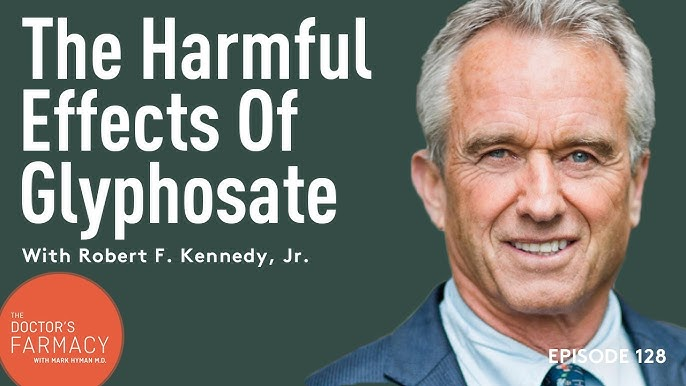
Robert F. Kennedy Jr. heads the government’s MAHA program as Secretary of the U.S. Department of Health and Human Services (HHS). From this position, he publicly defended Trump’s Executive Order, a move deemed inconsistent by various stakeholders, given that in 2018, while a litigator, Kennedy Jr. participated in one of the punitive damages lawsuits against Monsanto, in which the company lost with a $289 million verdict, after a plausible link was established between Roundup exposure and the plaintiff’s development of cancer.
In 2025, the first MAHA commission report acknowledged the link between exposure to primary pesticides (PPPs), including glyphosate, and the worst chronic childhood illness crisis in the US. The news was met with skepticism by those who had worked on this issue for years in that country. Then, with the publication of the MAHA strategy, disappointment and harsh criticism followed, as it did not include actions to restrict PPPs; it merely estimated that precision agriculture would reduce the volume of pesticides and that the EPA would “work to ensure that the public has knowledge of and confidence in the rigorous pesticide review procedures.”
Kennedy Jr.’s most recent statements17 revealed internal divisions. On the one hand, he asserted that glyphosate causes cancer, that its use needed to be minimized, and that he had previously expressed his disagreement with the Executive Order. On the other hand, he aligned himself with the official narrative, stating that U.S. agriculture depends on glyphosate and that all the glyphosate used in the U.S. comes from China, and he defended President Trump’s decision. He added, without supporting evidence, that the Trump administration is investing more than previous presidents in attempting the transition to glyphosate-free farming models.
In February 2026, Representatives Thomas Massie and Chellie Pingree introduced the bipartisan No Immunity for Glyphosate Act, which aims to prohibit the use of federal funds to implement Trump’s Executive Order and prevent glyphosate manufacturers from receiving immunity. This bill would eliminate the protection intended to be provided to the oligopoly that controls the glyphosate and elemental phosphorus market, both through the Executive Order and other legal and administrative instruments under development.18
New Jersey Democratic Senator Cory Booker, a member of the Senate Committee on Agriculture, Nutrition, and Forestry, commented on the Executive Order. He stated that it is “a slap in the face to the thousands of Americans who have developed cancer from glyphosate… [and] this Administration’s message is clear: the profits of chemical companies are more important than your health.” In July 2025, this senator introduced a bill called the “Pesticide Injury Accountability Act” to amend the Federal Injury Regulation and Affect the Risk of Injury (FIFRA) so that any person “whose property or person is injured by a pesticide may bring a civil action in federal district court against the registrant of the pesticide for monetary damages…,” which may include compensatory and punitive damages.
What Follows
Just days before the U.S. Supreme Court hearing, the Environmental Working Group (EWG) filed another lawsuit against Monsanto, seeking a ban on the use of glyphosate as a drying agent for grains such as oats. The EWG has filed other legal actions against the company and submitted evidence. This use of glyphosate has been criticized for its implications for children’s health.
The issue has activated and reinforced dissenting voices against the toxic agri-food system among a large segment of the US population. There is strong opposition and organization against weak, industry-friendly regulations. In this context, glyphosate’s status as a national defense priority in the US effectively shields the corporate interests of the agribusiness oligopoly.
There is a call for a mass mailing of letters to the attorneys general of the 15 states that sided with Monsanto in the case against Durnell. A large demonstration, The People vs. Poison, took place outside the Supreme Court, with the participation of critics of glyphosate and the agribusiness model in general. A letter with 200,000 signatures was also delivered demanding that Bayer stop manufacturing and selling pesticides such as glyphosate and neonicotinoids.
The scenario involves human lives and other biological species, as well as natural environments at risk of further irreversible damage at the hands of agribusiness. The impact of this political framework in Mexico will be examined in the next installment.
Footnotes
- Facts about the Supreme Court in the USA: It is composed of nine justices : a Chief Justice and eight Associate Justices. The justices are appointed for life by the President of the United States with the confirmation of the Senate. Three of them were appointed by Donald Trump during his first term: Neil M. Gorsuch, Brett M. Kavanaugh, and Amy C. Barrett. Four justices attended Trump’s recent State of the Union address: Chief Justice John Roberts, Associate Justices Elena Kagan and Amy C. Barrett, and Associate Justice Brett M. Kavanaugh.
 ︎
︎ - The Modern Ag Alliance is, in fact, the coalition led by Bayer and nearly one hundred agricultural organizations tasked with defending the use of PHAs, especially glyphosate, and lobbying for the shield-instruments that protect the profits of the agrochemical oligopoly in the USA, at the expense of people’s health and environmental devastation. ︎
- “Sec. 453. None of the funds made available by this or any other Act may be used to issue or adopt any guidance or policy, take any regulatory action, or approve any labeling or changes to such labeling that are inconsistent with or in any respect other than the conclusion of –
(a) a human health assessment conducted in accordance with the Federal Insecticide, Fungicide, and Rodenticide Act…; or
(b) a carcinogenicity classification for a pesticide.”
︎ - Sec. 10205. Uniformity of Pesticide Labeling Requirements… Section 24(b) of the Federal Insecticide, Fungicide, and Rodenticide Act… shall apply to require uniformity in pesticide labelling nationwide and prohibit any State, agency or political subdivision thereof, or court, from directly or indirectly imposing or maintaining in force any requirement, or penalizing or holding liable any entity, for failure to comply with requirements that would require labelling or packaging in addition to or different from the labelling or packaging approved by the Administrator of the Environmental Protection Agency… under such Act… including requirements relating to warnings on such labelling or packaging… ︎
- Sec. 10206. Authority of the States. Section 24 of the Federal Insecticide, Fungicide, and Rodenticide Act… is amended: … (2) by adding the following at the end: “(d) LOCAL REGULATION. – A political subdivision of a State shall not impose, or maintain in force, any requirement relating to the sale, distribution, labelling, application, or use of any pesticide or device subject to regulation… ︎
- Sec. 10207. Lawful Use of Authorized Pesticides. Section 3(f) of the Federal Insecticide, Fungicide, and Rodenticide Act… is amended by adding the following at the end: “(6) LAWFUL USE OF REGISTERED PESTICIDES. —Notwithstanding any other statutory provision, the use, application, or discharge of a registered pesticide, in accordance with its labeling approved pursuant to this Act, shall be permitted and deemed lawful, without the need for any additional permits or approvals.” ︎
- We will not elaborate on the PCB cases, but we will say that there are thousands of lawsuits for environmental damage and personal injuries (cancer and other effects) resulting from exposure to PCBs , due to the contamination of bodies of water and insulating materials used in schools in various parts of the USA, whose effects were also hidden by Monsanto for decades. ︎
- The three paradigmatic cases are:
Johnson vs Monsanto Co. 2018 Verdict. $289.2 million, with Monsanto’s appeal reduced to $20.5 million.
Pilliod vs Monsanto Co. Verdict in 2019. $2.055 billion, after appeal, reduced to $87 million.
Hardeman vs Monsanto Co. Verdict in 2029. $80.2 million, then reduced to $25.2 million.︎ - Agent Orange is composed of the chemicals 2,4,5-T and 2,4-D; 2,4-D continues to be marketed as a herbicide by several agrochemical companies; it is one of the main herbicides inextricably linked to GMOs, with several transgenic events designed to be resistant to the application of the toxic agent and marketed by Bayer/Monsanto and Dow (now Corteva). Ironically, the nickname Agent Orange has been popularized by the renowned film director Spike Lee. ︎
- In elemental phosphorus mining, radioactive phosphate slag is discarded and has even been used as a construction material . Phosphate slag is the main waste product of this type of mining, although toxic and corrosive “effluents” are also generated, such as various types of sludge and water containing heavy metals like cadmium. ︎
- The Protocol on Prohibitions or Restrictions on the Use of Incendiary Weapons (Protocol III), in its Article 2, expressly prohibits “in all circumstances making the civilian population as such, individual civilians or civilian objects the object of attack with incendiary weapons.” It was used, illegally , in the genocide in Gaza led by Israel and supported by the US; and Monsanto’s (now owned by Bayer) involvement in federal contracts for the supply of white phosphorus has been denounced before. ︎
- Although today it is a global problem related to the use of various chemically synthesized herbicides. ︎
- These subsidies are the main reason for dumping, an unfair practice that during neoliberalism has undermined food self-sufficiency in Mexico. ︎
- Sections 1.3, 2.3 and 3.3 of the Scientific Dossier prepared by CONAHCYT, available in Spanish and English. ︎
- A good review of the symposium. ︎
- For example, GM soy and cotton combined barely reach sales of 3.4 billion euros; and the rest of the herbicides, combined, report 2.8 billion euros. ︎
- Here are the videos: https://www.schatz.senate.gov/news/videos/watch/schatz-presses-rfk-jr-on-support-for-trump-order-to-boost-weed-killer-he-said-was-causes-cancer and https://youtu.be/rCUbGR_HhiU ︎
- The No Immunity for Glyphosate Act refers to physical damages, illnesses, ailments, and deaths caused, in whole or in part, by exposure to elemental phosphorus and glyphosate-based herbicides (HBG) manufactured, distributed, sold, or supplied in the USA; so that people can file lawsuits against any covered entity, understood as any “person, corporation, partnership, association, contractor, subcontractor, or other entity that manufactures, distributes, formulates, supplies, or sells” this mineral or these herbicides; and may, where applicable, obtain compensation for damages (for medical expenses, lost profits, pain and suffering, and wrongful death; punitive damages; among others); and adding that none of those covered entities shall be exempt from civil liability under federal or state law for injuries, illnesses or death caused by exposure and without being able to allege, as a defense, “that the manufacture, formulation, distribution, sale or supply of elemental phosphorus or [HBG] was made in compliance with, or pursuant to, an executive order, regulation, directive, contract or other authorization issued.” ︎
-
Mexico’s Education Secretariat Will Meet with CNTE Teachers on International Workers Day
April 30, 2026
Secretary Delgado says “there is no need for demonstrations” in the streets, but stressed, “we are respectful” of the decisions they make.
-
People’s Mañanera April 30
April 30, 2026April 30, 2026
President Sheinbaum’s daily press conference, with comments on US charges against Mexican Governor & officials, Brazilian energy agreement, and education.
-
Glyphosate: the Legal & Political Battle That Defines the Future of the World’s Most Widely Used Herbicide
April 30, 2026
A US Supreme Court decision on cancer & agrochemicals is taking place as the Trump administration declares glyphosate a national security priority.
The post Glyphosate: the Legal & Political Battle That Defines the Future of the World’s Most Widely Used Herbicide appeared first on Mexico Solidarity Media.
From Mexico Solidarity Media via This RSS Feed.