

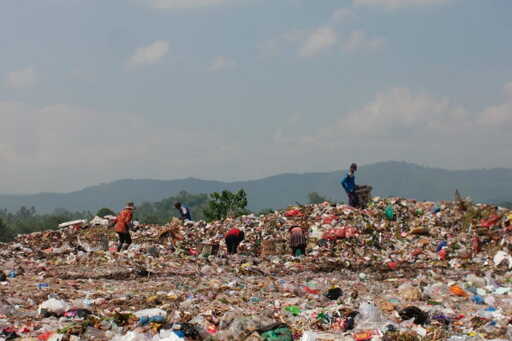
JEMBER, Indonesia — Syazwan Luftan Riady traces his environmental campaigning to school holidays spent at his grandmother’s riverside home in a rural part of Indonesia’s East Java province. “Throw that trash in the river, the basket’s full!” Luftan said, mimicking the levity with which his grandmother, like millions of others on the world’s most populous island, handled household waste in the absence of government services. While still a schoolboy in Jember, East Java, Luftan learned from his parents and developed his interest in the environment further after joining Sekolah Alam Raya. At just 12 years old, Luftan went on to co-found an organization of his own, Wiskomunalian, a grassroots association of youngsters working on achievable measures to effect environmental change. “It was about making friends aware about the environment, especially the issue of waste,” said Luftan, now in his second year of an undergraduate degree at Brawijaya University in Malang, a four-hour drive from Jember. Some of the Wiskomunalian youth in January 2026. Image by Gafur Abdullah/Mongabay Indonesia Child star A goal of Luftan and his colleagues is that “every child must be supported with adequate knowledge and experience grounded in their local realities,” Wiskomunalian wrote last year. But converting that vision into cleaner rivers and streets is a tall order, amid population growth and limited fiscal space with which to build waste treatment facilities. The United Nations Environment Programme records Indonesia as generating around 3.2 million metric tons of plastic waste every year, making it the world’s second-largest plastic…This article was originally published on Mongabay
From Conservation news via This RSS Feed.