

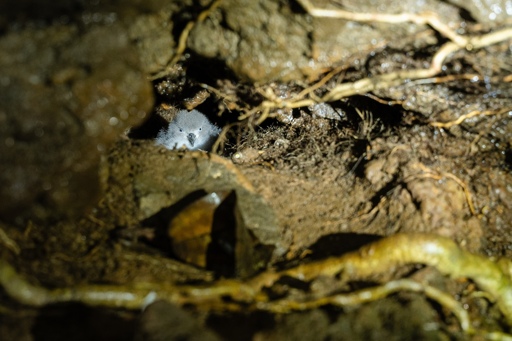
Critically endangered Galápagos petrels spend much of their life at sea, but as they return to breed in the only place they call home, a litany of threats awaits. Over the last 60 years, in particular until the 1980s, the population of the Galápagos petrel (Pterodroma phaeopygia) declined significantly, with only 15,000 individuals remaining today, according to the latest IUCN Red List assessment of the species. And although that number could be as high as 20,000 as new colonies are being discovered, pressure from invasive species that prey on the bird and degrade its habitat keeps the petrel on the edge. But decades-long conservation efforts have refined strategies to protect these seabirds, while a new initiative will involve thousands of Galápagos private landowners in securing their fragile nesting grounds. “Even though it’s an oceanic bird, you don’t see them that often,” Paola Sangolquí, a marine conservation coordinator with Ecuadorian NGO Jocotoco, told Mongabay in a video interview. The petrels spend most of their time out on the open water, hunting squid and fish. When they return to land, it’s to the upland and remote areas of the Galápagos islands of San Cristóbal, Floreana, Santa Cruz, Isabela and Santiago, where they nest in burrows or natural crevices. These tend to be far from the islands’ human settlements, and because the birds are also largely nocturnal, that makes them even more difficult to spot. “They nest in these foggy, misty areas up in the highlands, surrounded by dense vegetation,” Sangolquí says. “It…This article was originally published on Mongabay
From Conservation news via This RSS Feed.