

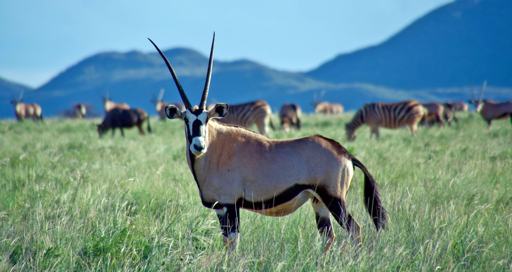
South Africa’s conservation debate is too often anchored within the blunt slogan, “If it pays, it stays.” At face value, this appears pragmatic, even responsible. But there’s a troubling premise underneath it: the survival of South Africa’s wildlife depends on its ability to generate an enormous income for a select group of wealthy farmers and professional hunters from an even wealthier foreign clientele. According to this logic, wildlife is protected not because it is ecologically vital, culturally significant, or ethically deserving of life, but purely because it can be killed for a hefty price. When conservation is built on the premise that wildlife must pay its way to exist, we should ask not only who benefits, but what is being lost, and at whose expense. Each year I examine the professional hunting statistics provided to the Department of Forestry, Fisheries and the Environment (DFFE) to demand transparency regarding how South Africa’s wildlife is being utilized for financial gain. The most recently available statistics (for 2024) show a substantial increase of 17%: 7,756 visitors killed 40,508 wild animals (if one includes indigenous mammals, birds, reptiles, amphibians and exotic mammals also killed). For proponents of the euphemistically termed “sustainable use,” this will naturally look like a significant success. But can we continue to justify the continuous intensification and amplification of commercial wildlife use on ecological and ethical grounds? Number of animals hunted and hunting clients in South Africa, 2018-2024. Table provided by the author. ‘If it pays, it stays’ Superficially, this phrase…This article was originally published on Mongabay
From Conservation news via This RSS Feed.
How about, and hear me out here, we… leave the animals alone. There it is. I said it.
Just a thought.