

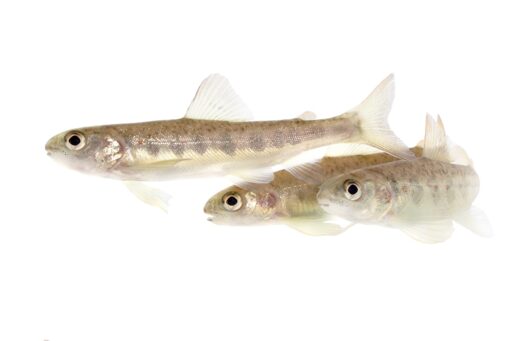
Young Atlantic salmon exposed to cocaine and its breakdown product, benzoylecgonine, swim farther and more widely in the wild, a new study shows. This behavioral change can put them in risky situations, researchers say. “[T]he effects of illicit drug pollution on aquatic wildlife is not just a laboratory finding — it can measurably alter wildlife behaviour under natural conditions,” study co-author Jack Brand, an ecologist at the Swedish University of Agricultural Sciences, told Mongabay by email. Researchers are increasingly detecting cocaine and its primary metabolite, benzoylecgonine, in aquatic wildlife, from sharks to freshwater shrimp. However, most studies into the impacts on behavior and brain chemistry in animals have been done in laboratory settings, Brand said. “We wanted to find out whether these effects translate to the real world.” The researchers selected Lake Vättern in Sweden for their real-world experiment. Young Atlantic salmon (Salmo salar) are released in the lake from a hatchery each year for recreational fishing. In some of these hatchery-raised 2-year-old salmon, the researchers implanted small devices that slowly released chemicals. One group of 35 fish received implants containing cocaine, another group got benzoylecgonine, while a third, control, group didn’t receive any chemical. The researchers found that in the exposed fish groups, concentrations of the chemicals per fish averaged about 43 nanograms per gram for cocaine, and 34 ng/g for benzoylecgonine. Previous studies have found up to 107.5 ng/g of cocaine in muscle samples of wild sharks, and nearly 70 ng/g of cocaine in some wild crustaceans. “These…This article was originally published on Mongabay
From Conservation news via This RSS Feed.