

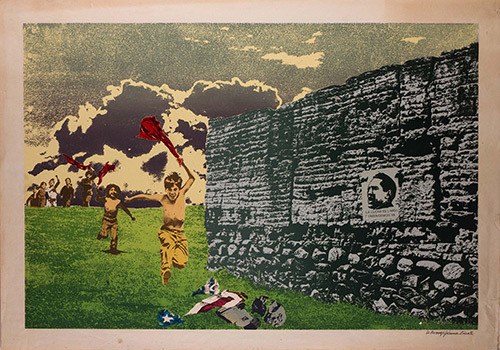
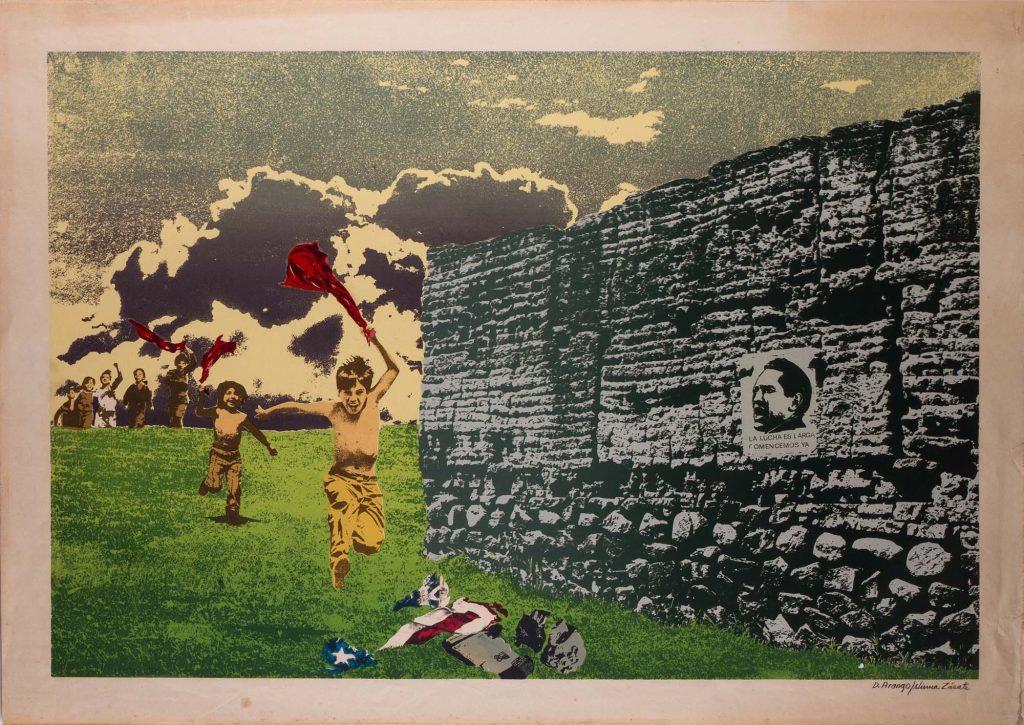
Taller 4 Rojo (Colombia), The Struggle Is Long—Let’s Start Now, 1973.
Greetings from the Nuestra América Office of Tricontinental: Institute for Social Research.
Lebanese Marxist theorist Mahdi Amel noted that the intellectual “who does not fight for revolution at all times is a false intellectual, and their intellect is deceptive and superficial.” In times of a hyper-imperialist offensive and the advance of the neo-fascist right, it becomes even more urgent for the intellectuals of Nuestra América to keep their revolutionary conviction alive. For 22 years now, a group of intellectuals, artists, and social movement activists has been accompanying revolutionary and popular processes, defending the aspiration for a society of dignity for all. To learn about its history and better understand this space, we asked Ximena González Broquen, international coordinator of the Network of Intellectuals, Artists, and Social Movements in Defense of Humanity (REDH), for a contribution to this debate. It follows below:
In the fabric of power that runs across the Global South, cognitive warfare has become a decisive trench. Before it, there are tools of resistance that transcend the conjuncture and stand as beacons of hope and organized action. The Network of Intellectuals, Artists, and Social Movements in Defense of Humanity (REDH) is one of them. It was born out of the founding alliance between two giants, Hugo Chávez and Fidel Castro, in the heat of the struggle against imperial aggression. Since then, it has constituted itself as a movement of thought and action: a collective trench against the hegemonic pretension of global imperialism.
The Origin: A Cry from the South Against Barbarism
The REDH was born out of historical urgency. At the end of 2003, the global shock over the wars in Afghanistan and Iraq pierced the consciousness of Nuestra América like a knife. The great Mexican thinker Pablo González Casanova, concerned by the imperial offensive, convened a conclave in Mexico, bringing together figures such as Rigoberta Menchú, Evo Morales, and Eduardo Galeano. The idea germinated: it was necessary to articulate a global front of intellectuals and artists who would put their ability to create and think at the service of defending humanity.
This call culminated in December 2004 in Caracas, with the First World Meeting of Intellectuals and Artists in Defense of Humanity. The inaugural conference was led by Nobel laureate José Saramago, and the call was an act of anti-imperialist affirmation. More than three hundred thinkers from over forty countries met to build, through word and action, a collective siege against domination. It was the materialization of a shared dream, the certainty that critical intelligence must leave the ivory towers to mingle with the breath of the people.
Under the Caribbean sun, Chávez’s voice became word made flesh, tracing the course forever: “Humanity is about living day to day, becoming one in soul and flesh with what is human—what is truly human. It is about living within the human experience, filling the void—or filling the gaps—with deeply human feelings and actions. The values of the human being and that sublime value, love (…) otherwise, we will not be able to defend any form of humanity. Much less go on the attack for it, or take the offensive for it. I believe that is one of the greatest challenges in the world right now: starting with ourselves, to fill ourselves with humanity; to make humanity—that which is human—our very flesh, nerve, muscle, soul, and body.” Those words were the birth certificate of a trench that still stands today, sustained by revolutionary love as a daily practice.
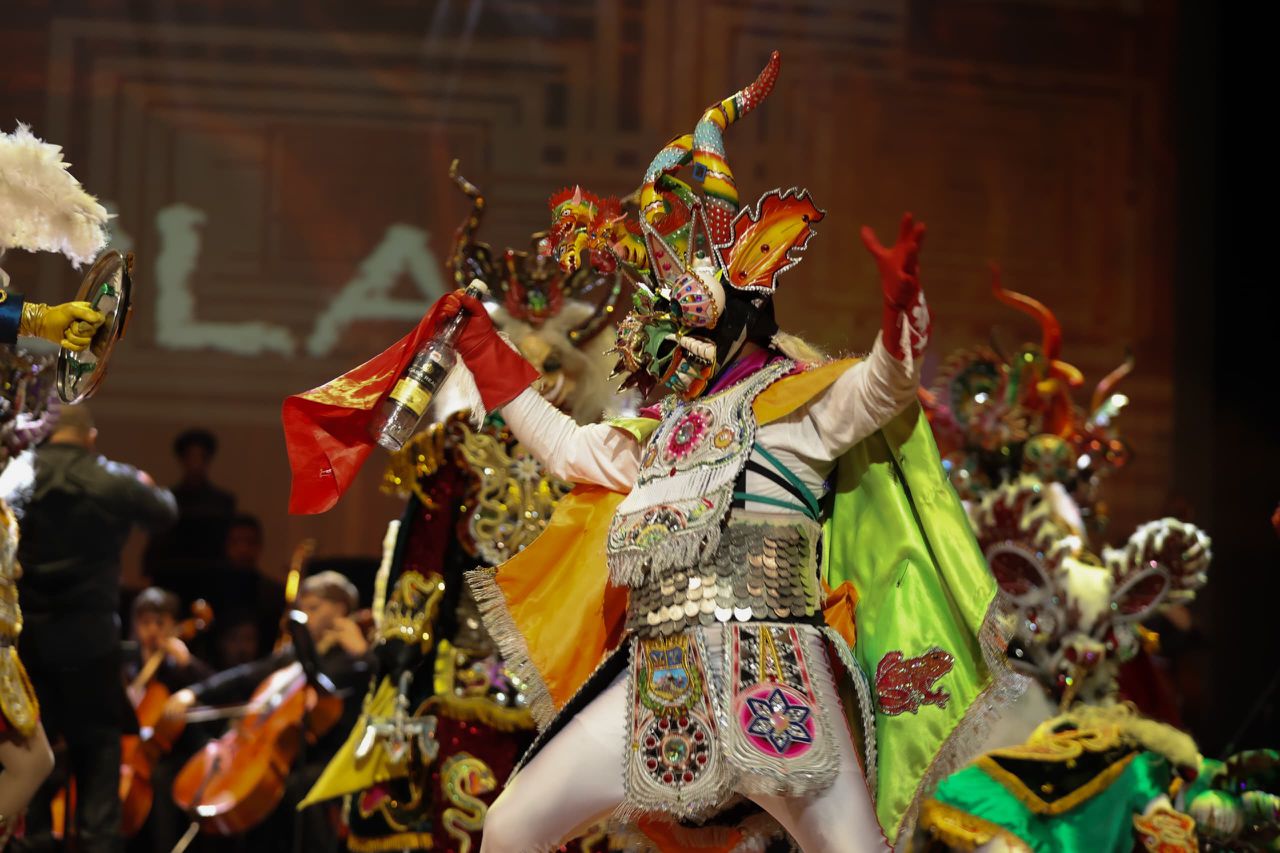
Celebrating teleSUR’s 20th anniversary with the “The Birth of a New World” Grand Gala Concert, an evening of Latin American culture, unity, and resistance. Venezuela, 2025. Photo by La Radio del Sur.
Historical Importance: Beyond Words
The legacy of the REDH is concrete. One of its boldest proposals arising from that first meeting was that of Brazil’s Beto Almeida: to create a television station for the South. That idea materialized in TeleSur, which for two decades has been an informative trench from Nuestra América, breaking the imperial media siege.
The REDH also bred the Liberator Prize for Critical Thinking, an unparalleled award, a unique global recognition that celebrates the word that discomforts, that challenges elites, that puts thinking at the service of popular struggles and feeds socialism and Latin American emancipation. In its thirteen editions, it has honored Franz Hinkelammert, Enrique Dussel, István Mészáros, Marta Harnecker, Juan José Bautista, and Atilio Borón, among many others, building a living archive of intellectual rebellion from the South.
The REDH has woven its own geography: eleven world meetings in Caracas (Venezuela), and meetings in Italy, Bolivia, and Belgium, demonstrating that its articulation knows no borders. In parallel, it has developed seven International Philosophy Forums, where collective reflection on capitalism, socialism, revolutionary humanism, alienation, the State, and hegemony became militant practice.
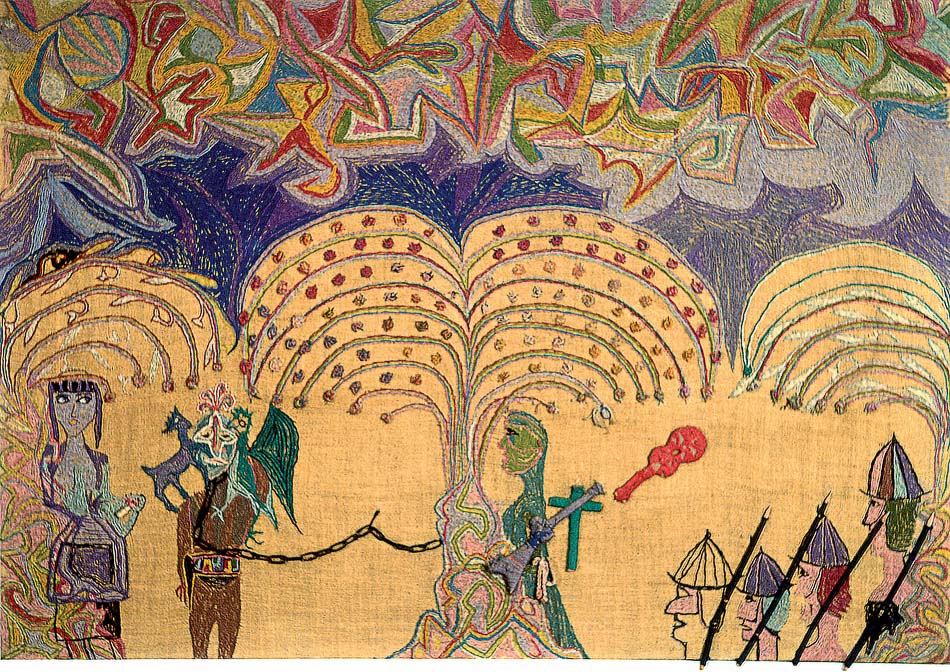
Violeta Parra (Chile), Untitled (unfinished), 1966. Embroidery on sackcloth, 136 x 200 cm.
The REDH Today: At the Global Crossroads
The multiple wars of the present—expressions of imperialism—are intertwined in the same tangle. The genocide in Palestine, the criminal blockade of Cuba, the aggression against Iran, the multifaceted aggressions against Venezuela, the looting of Africa—with the Congo as an open wound—, the incessant exploitation of Haiti, and the advance of neo-fascist expressions in Argentina, Chile, El Salvador, and other nations that dismantle rights and criminalize protests: all of this is the imperial hydra showing its heads. Everything springs from the same imperialist, colonial, and patriarchal matrix.
Cognitive warfare does not seek to convince with arguments, but to pierce the perception of reality through narratives, emotions, and algorithms. It fragments the social fabric to install a brutal premise: there are lives that matter and lives that do not. It operates in the daily life of social networks and the media, designed to capture attention and reinforce isolated identities.
Faced with this offensive, the REDH assumes liberating epistemic sovereignty as its compass: the capacity of peoples to narrate, govern, and protect themselves collectively. From there, it deploys several battles that share a single heartbeat. To dismantle fragmentation by showing the historical continuity of each aggression is to fight for the liberation of consciousness. To dispute the power to name—saying “kidnapping” where they impose “arrest”—constitutes an act of self-determination of thought. To deactivate the traps of division implies that living memory, as historical reparation, strengthens the community fabric. And to cultivate trust as a political act, because in a world where suspicion is a weapon of war, trust based on the shared memory of struggles and resistance becomes revolutionary. Thus, relational sovereignty is woven: South-South unity as collective self-defense constitutes the horizon of struggle for the REDH.
The REDH unfolds in a horizontal structure that embodies the communal principle, that web of self-government and solidarity that has crossed Nuestra América since ancient times. National chapters in more than 30 countries, from Latin America to Africa, Oceania, and the Iberian Peninsula, and a base of 9,000 contacts, are the expression of this communalization in motion. Its thematic nodes—the World Poetry Movement, Canto de Todos [The Song of All], the feminist collective “Libertadoras,” REDH Communication, REDH-Artists, and youth in REDH—are living cells of the same network of resistance, from which forums, talks, seminars, concerts, and training spaces are co-organized.
In its daily work, its website functions as a digital insurgent agora. There, the “Miradas desde la RED” (Views from the Network) columns are published and spread weekly, along with critical articles, essays, reviews, interviews, militant poetry, dossiers, and statements of condemnation, weaving internationalist sorority as one more weapon in the offensive for humanity.
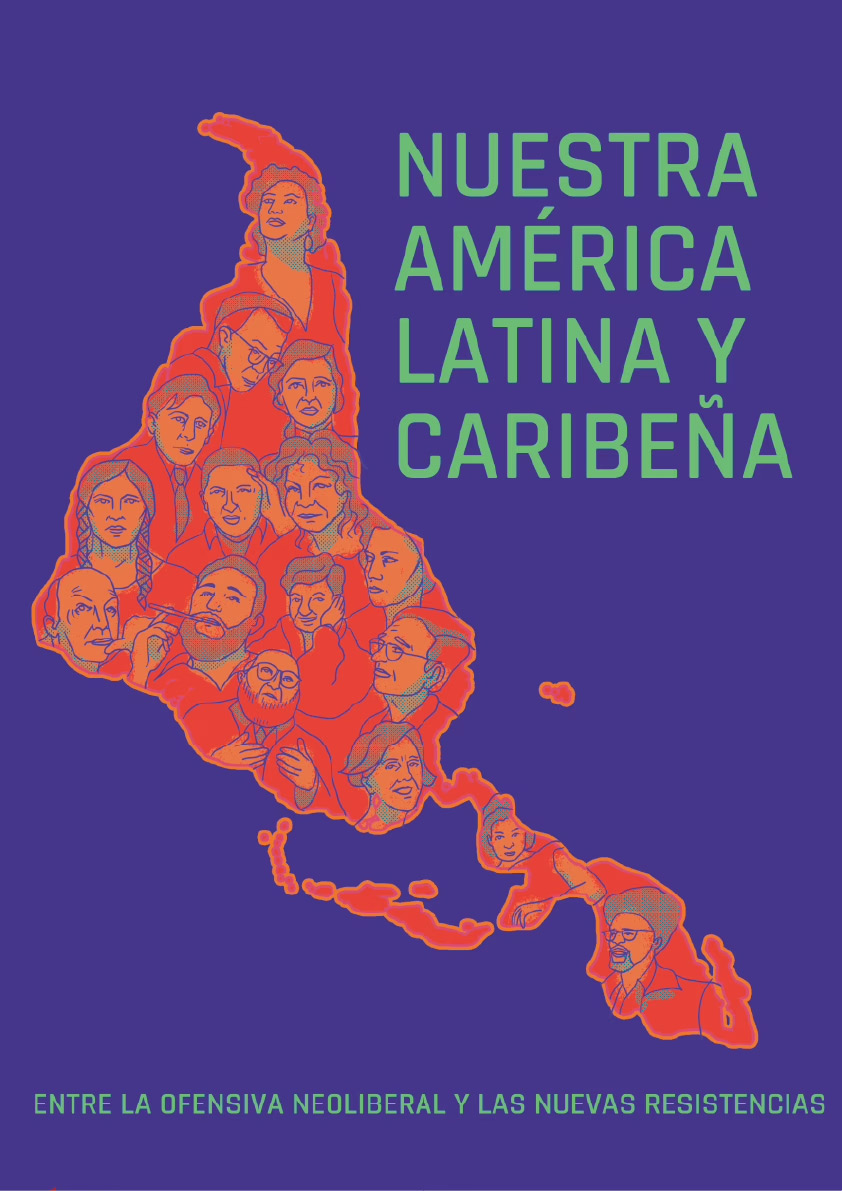
Poster from the exhibition “20 años del No al ALCA”, organized by the Tricontinental Institute, ALBA Movimientos, and UTOPIX, 2025.
Conclusion: The Offensive for Humanity
The REDH is a living structure, a movement in permanent construction that knows that the defense of humanity is not an abstraction. It is at stake in every devastated territory, every besieged people, every resistance that rises against imperialism. That is why it raises the offensive cry: it is not just about resisting, but about creating, thinking, and organizing a new world of collective construction (it remains, as indicated). Let poetry temper the steel of dawn. Let living memory weave futures of liberation. Let the network be more of a plot every day, more of an embrace, more of a certainty that, from the South, a shared victory is being built.
Greetings to all,
Ximena González Broquen
| Ximena González Broquen is the International Coordinator of the Network of Intellectuals, Artists, and Social Movements in Defense of Humanity – REDH. She holds a PhD in Political Studies and Philosophy and is the head of the Center for the Study of Social Transformations at the Venezuelan Institute of Scientific Research (CETS IVIC). |
From | Tricontinental: Institute for Social Research via This RSS Feed.