

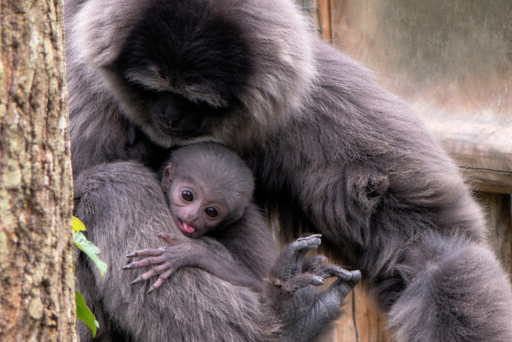
A rare Javan gibbon was born at a wildlife park in the U.K., one of the world’s main centers for the species’ captive breeding. Lima, now just over 2 months old, is a potential candidate for returning to the species’ native habitat on the Indonesian island of Java. The Javan gibbon (Hylobates moloch), known locally as owa, is listed as endangered on the IUCN Red List. A 2017 study estimated a wild population of between 2,640 and 4,178 individuals. This number is declining due to habitat destruction, forest fragmentation, and poaching for the illegal pet trade and bushmeat trade. “We’re very happy that we’ve got a new baby at our site and we’re very happy that she may be something that could be reintroduced into the future as well, back into the wild,” said Simon Jeffery, the animal director at Port Lympne Hotel and Reserve in the southern U.K. county of Kent, where Lima was born. Jeffery is also the animal director at the nearby Howletts Wild Animal Park. Both parks, run by U.K. charity The Aspinall Foundation, together hold 26 Javan gibbons, representing around 40-50% of the global captive population, Jeffery told Mongabay by phone. Many Javan gibbons born there have since been rehomed, he added. The foundation has bred Javan gibbons since the early 1980s, recording more than 50 births across both parks in the past two decades. Since 2012, it has also sent around 10 individuals to Java. Lima, whose name means “five” in Indonesian, is the…This article was originally published on Mongabay
From Conservation news via This RSS Feed.