

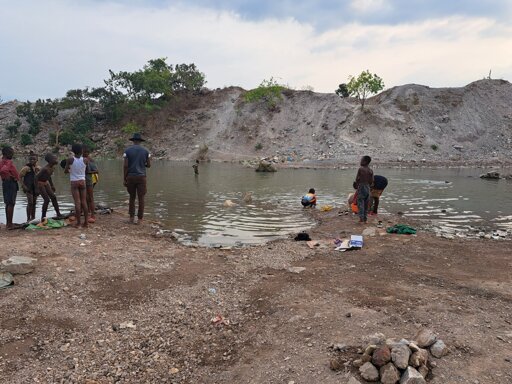
A new report published by the United Nations University Institute for Water, Environment and Health (UNU-INWEH) warns that wealthy nations’ push toward cleaner energy comes with high environmental and social costs in mineral-producing countries. The investigation links the extraction of transition minerals used in green energy technologies like solar panels and rechargeable batteries to acute water insecurity, livelihood disruptions and health risks for local communities. The authors conclude that the very technologies designed to combat climate change are also contributing to deepening inequality levels in vulnerable regions, mostly through the disproportionate usage of water. “Extraction, especially lithium, cobalt, copper and rare earth elements, directly depletes and contaminates freshwater resources, often in already water-stressed and water-bankrupt regions,” lead author Abraham Nunbogu told Mongabay via email. Across the world, mining activities have been linked to the depletion and contamination of freshwater sources as well as reduced access to safe water for local communities, increasing the risk of disease. Studies from the Democratic Republic of Congo (DRC), the world’s largest producer of cobalt, have linked the prevalence of gynecological problems, skin diseases and chronic illnesses in mining areas to heavy metal exposure through polluted water sources. “These impacts are not incidental side effects but structural outcomes of prevailing extraction models,” said Nunbogu, who is a researcher at the UNU-INWEH. Critical minerals are the minerals considered crucial to secure countries’ economic and security needs, especially in terms of energy access. Between 2010 and 2023, the demand for critical minerals tripled, with cobalt demand…This article was originally published on Mongabay
From Conservation news via This RSS Feed.