

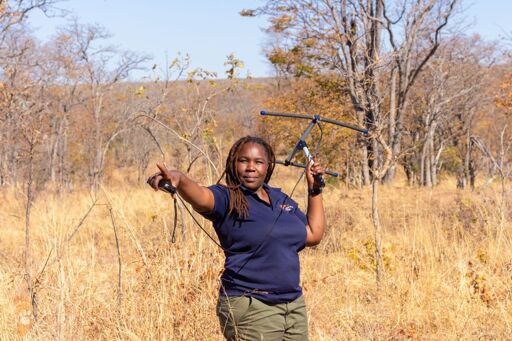
Lion conservationist Moreangels Mbizah and her colleagues chose the name “Batabilili” for the community guardians they’re training in northern Zimbabwe. The word means “protectors” in the local language, Tonga, and its meaning cuts both ways: the guardians protect people and their livestock from lions, and lions from people. Both jobs are essential in this part of the Southern African country. When cattle are killed by lions, the economic losses suffered by families are considerable; when farmers retaliate by killing lions, it worsens the plight of an emblematic species, Panthera leo, now vulnerable to extinction across the continent. “In some cases these lions are female lions and at times some of them would have cubs, so when the females die [at the hands of people] the cubs would probably die [also],” says Mbizah, who is the winner of one of this year’s Whitley Awards, prestigious international conservation prizes given out annually by the U.K.’s Whitley Fund for Nature. A young lion at rest. Image courtesy of the Whitley Foundation. The 50,000-pound ($67,500) prize money will go toward supporting the work by Mbizah’s NGO, Wildlife Conservation Action, in three additional rural wards — small administrative areas comprising clusters of villages and around 4,800 people — that are prone to human-carnivore conflict. This will include the recruitment of six new Batabilili. The protectors head out early each morning to look for tracks or droppings and warn farmers about the presence of predators or elephants (Loxodonta africana) so that they can avoid herding their…This article was originally published on Mongabay
From Conservation news via This RSS Feed.