

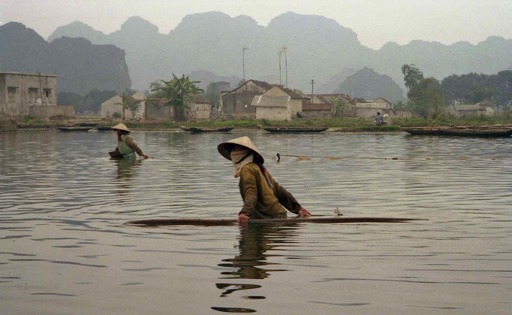
Southeast Asia’s growing demand for rare earth elements and gold, driven by global needs in electronics, renewable energy, defense and high-value commodities, has accelerated mining across the region. While Myanmar’s unregulated mines have drawn attention for contaminating Mekong River tributaries, monitored by the Mekong River Commission, an equally pressing but less scrutinized issue exists along the river systems shared by Laos and Vietnam, where no comparable bilateral treaty provides oversight. River hydrology and the mining footprint The total population of Laos is less than 8 million. In northeastern Laos, particularly Houaphanh province (population 300,000), rapid expansion of rare earth and gold mining along the Nam Ma, Nam Sam and Nam Neun rivers poses significant transborder risks. These waterways flow into Vietnam as the Song Ma, Song Chu and Song Lam rivers, where they sustain drinking water, agriculture and fisheries for approximately 10 million people in Vietnam’s Thanh Hoa, Nghe An and Ha Tinh provinces. Pollutants can travel downstream within hours, creating urgent needs for cross-border cooperation. Satellite analysis from the Stimson Center’s interactive River Basins Dashboard shows 21 mines directly impacting these river systems in Laos. Contamination seen in these interconnected basins mirrors contamination patterns seen in Mekong tributaries affected by upstream mining in Myanmar, where toxins have devastated fisheries downstream in Laos and Thailand. Stimson’s dashboard shows 2,539 riverine mines in the region, including more than 500 rare earth mines concentrated in Myanmar and Laos. Many employ in-situ leaching techniques that use large volumes of river water and chemicals…This article was originally published on Mongabay
From Conservation news via This RSS Feed.