

Two more political parties opposed to Daniel Noboa’s right-wing government have been added to the list of parties barred from participating in the upcoming local elections. These are the left-wing Unidad Popular and the center-right Construye, both of which have publicly criticized the administration.
These parties were not the first opposition parties to be disqualified. In March, under an alleged accusation of corruption, the Contentious-Electoral Tribunal (TCE) disqualified the main opposition party, Revolución Ciudadana (RC), whose leader is former President Rafael Correa.
In this regard, in an official statement, the RC asserted that this is an attempt to prevent the organization from participating in the elections. “Does anyone still doubt that we live in a dictatorship?” the statement said, indirectly suggesting that the government was behind the decision to avoid having rivals in the upcoming election.
Technical violations or electoral fraud? Accusations of authoritarianism against the Noboa administration
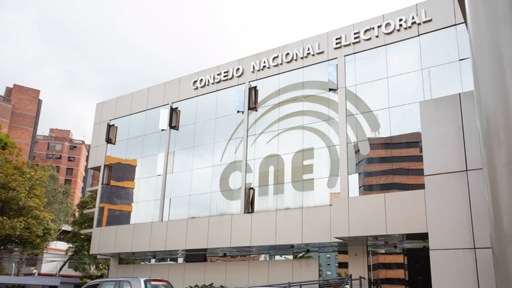
On April 26, the National Electoral Council (CNE) stated that the Popular Unity and Construye parties had failed to meet certain requirements to maintain their legal status, such as periodically reporting on membership records and supporting documents; therefore, their registration should be revoked. Thus, the highest electoral body has defended its position and affirmed that this is not a decision motivated by political interests.
However, the disqualifications carried out by the CNE have been denounced as an act of fraud and a “blow to democracy” that benefit President Daniel Noboa and his intentions to secure a victory following the resounding defeat he suffered in the recent referendum, in which the majority of the Ecuadorian people rejected his attempts to reform the constitution along neoliberal lines and to accept the establishment of foreign military bases.
The leader of the Popular Unity Party, Geovanni Atarihuana, said: “We can state categorically that a fraud against democracy is underway, which has included bringing the elections forward to benefit the president of the Republic, as well as the banning of opposition political forces.”
Atarihuana refers to the CNE’s equally controversial decision to move the elections up by several months. According to the electoral authority, the measure is being taken to prevent elections from taking place during the season when heavier rains and flooding are likely to occur (known as “El Niño”).
However, several environmental experts have pointed out that it is impossible to predict the country’s weather conditions so far in advance, which is why the opposition has viewed the CNE’s decision as a move that would benefit the Noboa administration, whose popularity has been declining over time.
In this regard, Atarihuana stated in a radio interview: “(The members of the CNE) are supporters of the Noboa administration … This is a political decision by Daniel Noboa, made with the help of his political operatives.”
For its part, the center-right Construye party said in an official statement: “Today the country faces the greatest crisis in its history in terms of security, energy, health, hunger, and unemployment … (Daniel Noboa) has used his power for personal vendettas, to buy off the media and institutions. He does not apply that same vehemence or force to address the country’s problems.”
Elections of transcendental importance for the future of Ecuador
The upcoming elections on November 29, 2026 are of enormous importance for shaping Ecuador’s political landscape, as they will determine all local officials, such as prefects (governors), mayors, city council members, parish council members, and members of the Council for Citizen Participation and Social Control, the latter being responsible, among other things, for electing other key officials such as the Attorney General, the Comptroller General, the Superintendent of Banks, and the members of the CNE, the TCE, and the Judicial Council.
In other words, whoever controls the Council for Citizen Participation will have the power to appoint extremely influential judicial and political authorities, who, in the current period, have been at the center of significant controversies and accusations of favoring the current Noboa administration.
Hence, political scientist Sofía Cordero stated that the dissolution of parties is not an accident or an isolated incident, but rather “a way of governing and eliminating any form of opposition … It runs counter to even minimally transparent and fair elections.”
Adding to this criticism was a statement by Gabriela Rivadeneira, president of the RC party, who, in response to the moves to dissolve Unidad Popular and Construye, said: “The 2026 electoral process is fraudulent; we warned you.”
In this regard, several social and political organizations have denounced a clear “setback for democracy” in the country as a result of these and other political decisions that are allegedly aimed at “silencing” critical voices.
The post “A setback for democracy”: Two more opposition parties banned in Ecuador appeared first on Peoples Dispatch.
From Peoples Dispatch via This RSS Feed.