


A Department for Work and Pensions (DWP) minister has refused to rule out scrapping the health element of Universal Credit for young disabled people under the age of 22.
Instead, minister of state for social security and disability Stephen Timms seemed to hint the government may already be treating it like it’s a foregone conclusion that it needs to implement the benefit cut.
DWP Universal Credit cut for under 22s: plans could still be afoot
In March 2025, then DWP boss Liz Kendall announced the plan as part of its sweeping £5bn programme in welfare cuts.
Specifically, the government floated the proposal that people under the age of 22 would no longer be eligible for the limited capability for work related activity (LCWRA) part of Universal Credit (UC).
This would have meant the DWP would strip young disabled people of £416.19 every month. Across a year, this would have resulted in a total £4,994.28 loss in the health benefit.
Of course, the DWP assesses claimants as LCWRA if they are too sick to work. Given this, there’s no conceivably justifiable reason why a disabled person under 22 should be any less eligible for this.
And plenty of respondents to the government’s own consultation published in October spelled this out in no uncertain terms. More than 3,300 people told the DWP that social security support:
should be based on need, not age.
Campaigners like Disabled People Against Cuts (DPAC) have previously lambasted the cut. The group has particularly highlighted its impact on disabled students and their future job prospects.
In November, DWP secretary Pat McFadden confirmed that the government had not yet decided whether to take its proposal forward. He told parliament that the department wouldn’t be making any firm decisions until after Alan Milburn publishes his review into young people and unemployment this “summer”.
The DWP commissioned Milburn to carry out the “independent investigation”. It aim is to explore why young people are not in employment, education, or training (so-called NEET).
Now however, Timms has kicked the can down the road further – and refused to rule out the callous cut.
Already decided? That seems likely
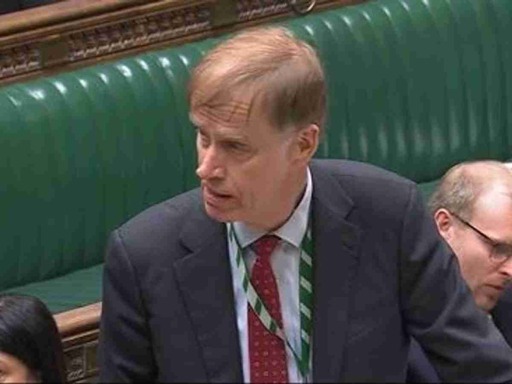
Speaking to parliament on Tuesday 28 April, Timms responded to a question on the plans from Labour MP Ben Coleman.
He told parliament that:
There is an urgent need to address the big rise in the number of young people not in work, education or training that took place before the last general election. We think that better support might help young people more than extra cash. Alan Milburn’s review on the NEET problem more broadly will report in September; we will wait until then to decide whether to delay access to the universal credit health element until the age of 22. If we did do that, there would need to be exceptions.
The first notable part of Timms’ reply is that he made the decision to couch his answer in the context of the supposed “big rise” in the number of young people not in work, studying, or training. That was likely a deliberate move – because straight away Timms’ was seeking to justify the government’s vile proposal.
The next part of his answer reinforces that the DWP seems to be putting the cart before the horse.
If the government is already beginning from the position that employment schemes are better than welfare, then it goes some way to confirming fears that the Milburn review will be another monumental stitch-up. It’s the DWP playbook in a nutshell. That is: manipulating disabled people’s input to back up the conclusions it has already made.
And obviously, that “summer” publication date has now morphed into “September”.
Milburn review: gearing up to manipulate results to the DWP’s advantage
And of course, this was another problem with Timms’ response more generally. Put simply, the fact that the fate of the health element for disabled people under 22 rests on the shoulders of Blairite former health secretary Alan Milburn.
As the Canary’s Rachel Charlton-Dailey pointed out, in 2024, Milburn:
authored a report which wanted disabled people to be pushed into work. The report called for the government to cut benefits except for those with “severe disabilities”. This was, of course, adopted as part of the Universal Credit Act last summer.
The same report also called for the DWP to sink its claws further into the NHS. This had the obvious aim to kick chronically ill and disabled people off their benefits and coerce them into work.
Disability News Service (DNS) noted how Milburn’s review specifically – and exclusively – targets young disabled claimants.
Timms also already tried to soften the blow with talk of “exceptions”. As such, this also hinted at a DWP that’s hell-bent on ramming through the vicious cut in one way or another.
DWP doing its usual: wrecking disabled people’s lives
To three separate written questions, Timms was similarly evasive on the DWP’s plans for the proposal.
Labour MP and a leading rebel against the benefit cuts Neil Duncan-Jordan and DUP MP Jim Shannon and probed the government on impact assessments.
Timms’ answers made apparent it hasn’t done any for the possible benefit cut. He also didn’t commit to carrying any out once the government has decided its plans.
Once again, he merely pointed to Milburn’s upcoming review. Of course, if it does introduce this, it will likely need to do an impact assessment. However, it’s probable it will be little more than a tick-box exercise. Because ultimately, the DWP will have already made up its mind.
What’s clear is that the government hasn’t given up on wrecking young disabled people’s lives just yet. Flashy-sounding youth employment schemes putting them at the mercy of profiteering corporations for paltry wages won’t level the playing field for young disabled people. And cutting financial support to young disabled claimants who can’t work to force them into these low-paying jobs is a one-way ticket to destroying their futures.
This Labour government neither wants to admit that, nor cares.
Featured image via the Canary
From Canary via This RSS Feed.