

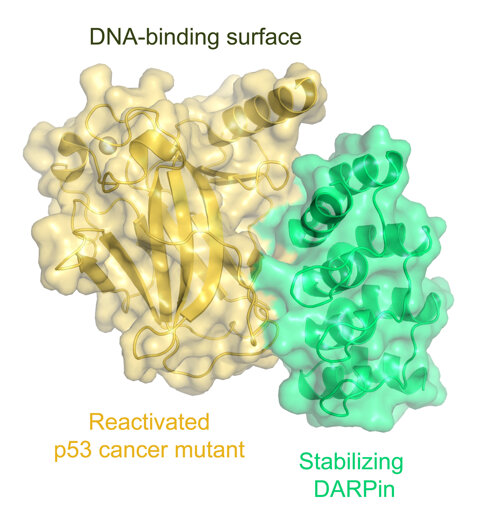
Each year, 20 million people are diagnosed with cancer. Various organs can be affected, and cancer types sometimes differ greatly at the cellular and molecular level. In about half of all cases, however, the protein p53 is mutated. Known as the “guardian of the genome,” it plays a central tumor suppressor role: In healthy cells, it ensures that DNA damage is detected and repaired. If this is not successful, the affected cell is selectively eliminated through apoptosis—an important protection against cancer. Conversely, cells can often only develop into tumor cells when the protein p53 is inactivated by a mutation. In many cases, it becomes unstable as a result of the mutation and loses its functional structure.
From Biology News - Evolution, Cell theory, Gene theory, Microbiology, Biotechnology via This RSS Feed.