

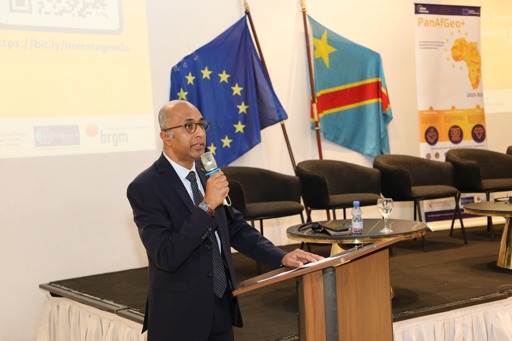
KINSHASA — Few countries are the focal point of as many expectations, tensions and contradictions as the Democratic Republic of Congo. With its vast forests, iconic protected areas and mineral resources among the most coveted in the world, the country finds itself at the heart of two global dynamics often portrayed as opposing forces: biodiversity conservation and the energy transition. Cobalt, copper and lithium, the country’s strategic minerals, fuel global supply chains. At the same time, its forests play a vital role in regulating the climate. Caught between these two realities, the fundamental question remains: how can resource extraction, conservation and development be reconciled in a country still marked by insecurity, governance challenges and regional inequalities? In the capital, Kinshasa, the European Union has positioned itself as a key partner, engaging in natural resource management, the traceability of critical minerals, the financing of protected areas, and diplomatic efforts aimed at stabilizing Africa’s Great Lakes region. This presence is part of a broader approach that combines investment, structural reforms and support for public policy. In this interview, Fabrice Basile, the European Union’s chargé d’affaires (top envoy) to the DRC, reflects on this cooperation and advocates for a strategy he describes as pragmatic: strengthening transparency in the extractive sectors; supporting local economic models, such as that of Virunga National Park; and fostering a more inclusive approach that integrates local and Indigenous communities. In the face of criticism regarding past resource management or the impact of certain conservation projects, Basile emphasizes the evolution…This article was originally published on Mongabay
From Conservation news via This RSS Feed.