

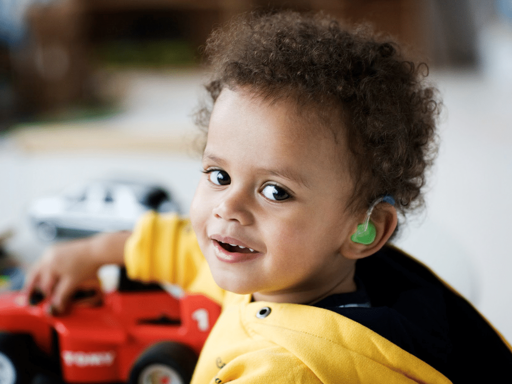

In a rare success story for Six Counties’ legislators, the Northern Ireland Assembly has passed a Sign Language Bill that in several respects goes beyond its equivalents in the Republic of Ireland and Britain.
It will be the first bill in the islands mandating the provision of sign language classes for all D/deaf children and young people up to the age of 25, along with their immediate family members.
These will be free of charge. People aged 25, or who have become deaf, will also have classes available to them, though it seems likely a small fee will be charged in these cases.
The bill is also the first to officially recognise two signed languages, British Sign Language (BSL) and Irish Sign Language (ISL).
All public bodies are required to take “all reasonable steps” to ensure D/deaf people are able to access services in their language of choice. This will include provision of interpreters or “web-based or technological means for on-site or remote interaction”.
The bill goes beyond requiring this kind of access as a “reasonable adjustment” for a disability. Instead, it is considered a linguistic right for a cultural minority.
Deaf people’s culture respected in law
The cost of fulfilling the bill’s requirements is likely to be about £3 million per year. The main justification for the bill is clearly that treating D/deaf people as equal citizens is simply the right thing to do.
However, even for those caring purely about bean counting, it’s hard to imagine the spending won’t be easily recouped by letting D/deaf communities participate fully in society.
This is the case with all similar social spending. Reactionary governments try to pinch every penny as if spending it on disabled people would be an enormous waste. In reality, enabling people to fulfil their potential more than pays for itself.
The bill’s passage was hailed by the British Deaf Association (BDA), which described the legislation as a “landmark step”.
The BDA continued:
The legislation marks a significant milestone not only for Northern Ireland, but for the wider UK and Ireland, reinforcing the importance of sign languages as living languages with their own culture, heritage and communities.
Caroline Doherty, Northern Ireland manager at the charity, said:
This is a hugely significant moment for Deaf communities in Northern Ireland. The recognition of both BSL and ISL reflects the reality of our linguistic and cultural landscape and sends a powerful message about inclusion, respect and equality.
She spoke of wanting to ensure, “Deaf people are not only included, but are actively influencing and shaping the services that affect their lives”.
This must lead to meaningful, lasting change for our community.
Chairperson of the BDA, Robert Adam, reiterated this emphasis on implementation. He said:
The hard work starts here. We need to work together to turn this legislation into meaningful change in people’s lives. The sign language community stands ready to work with government to set clear priorities and deliver real progress.
That means ensuring early access to sign language for deaf babies, children and their families; expanding the availability of public information in sign language; and empowering deaf signers to play a stronger, more visible role in shaping the decisions that affect our lives and our future.
MLAs: Limit self-congratulation until there’s equality for all
Sinn Féin’s Colm Gildernew, chairman of the Stormont Communities Committee, spoke of the need to ensure the private sector gets on board too. He said:
The department’s future work on extending any central system outside of [the] public sector will be key to this, and something stakeholders raised consistently with the committee.
Gordon Lyons, whose Department for Communities led on the bill, said:
For generations, deaf people have built rich linguistic, cultural and social communities through sign language yet that history has too often been marked by exclusion. Legal recognition of sign language has lagged far behind lived reality.
At further consideration stage, I spoke of the Milan conference in 1880 and how its decisions led to deaf children being discouraged from learning and using their own language, and deaf people in general being marginalised in employment and civic life, often seen and treated as outsiders, as not quite belonging.
The Milan conference Lyons referred to was the Second International Congress on Education of the Deaf. There it was declared that “oral education (oralism) was superior to manual education”. A resolution then banned the use of sign language in schools.
It led to schools in Europe and North America using speech therapy without sign language in education for Deaf people. UNESCO described the impact:
The resolutions of this Congress impacted negatively on deaf people’s access to language and education in many countries, excluded deaf teachers from the profession, and contributed to the widespread devaluing of signed languages.
It’s welcome that Lyons can recognise the mistreatment of a marginalised group 145 years ago. It’s always more valuable to recognise it in the here and now, at a time when his own Democratic Unionist Party scapegoats immigrants and trans people.
There was rightly a mood of self-congratulation in the Assembly chamber during the passage of the bill. However, the cheers will echo only as hypocrisy if similar legislation isn’t extended to all of today’s marginalised communities.
Featured image via the Canary
From Canary via This RSS Feed.