

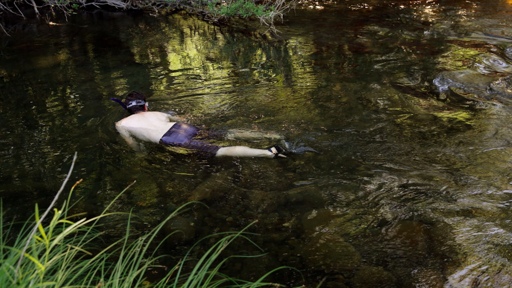
In the creeks and rivers of southern Illinois, a school of bigeye shiners darting along the edge of a stream is a sign of healthy water. The freshwater fish, which is on the state’s endangered species list, has managed to survive despite habitat loss driven by decades of construction and industrial farm runoff. But an ongoing dispute between two state agencies over state species protections is testing how the tiny fish will endure.
Last summer, the state’s top wildlife regulators faced resistance from the Illinois Department of Transportation, or IDOT, when trying to protect the shiner. The Illinois Department of Natural Resources, or IDNR, recommended that the transportation agency crews mapping out construction at a site in Union County should first survey the area and find out if the shiner was present. If so, IDNR would ask them to apply for a permit to minimize impacts to the paper clip-sized fish before proceeding.
IDOT declined. The department’s reason, among others, was simple: “Fish swim away.”
The standoff between the two agencies, outlined in internal documents obtained by WBEZ and Grist, is at the center of an ongoing clash that broke out last year after the transportation department repeatedly ignored recommendations from state experts to pursue permits designed to protect imperiled species during road, bridge, and other transportation work. The transportation department, which is the state’s largest public landowner, may have overridden Illinois’ Endangered Species Protection Act in 11 cases in the past year, according to public records.
Endangered species laws are meant to shield imperiled animals and plants from publicly funded projects. The federal Endangered Species Act, which was passed in 1973, currently safeguards nearly 1,700 species in the United States and has saved close to 300 species from extinction. Almost every state has its own version of the law for protecting critters within its borders. The Illinois Endangered Species Act, which predates the federal act, operates similarly, protecting 513 species, including federally listed species like the rusty patched bumblebee, piping plover, and gray wolf. The safeguards, often criticized as slow and pricey, block crews from breaking ground on nearly any project until they first minimize harm to listed species.
Despite massive popularity, the federal law, which has been credited with resuscitating the bald eagle, grizzly bear, and gray wolf populations, is under attack by Congress and the Trump administration. On Earth Day last week, House Republicans tried and failed to pass a bill that would’ve shredded those protections at the federal level. Weeks earlier, after Iran closed the Strait of Hormuz, President Trump convened the “God Squad,” a committee of high-ranking officials across his administration to bypass the Endangered Species Act entirely and open the Gulf of Mexico for oil drilling. The Trump administration also recently unveiled a proposed rule to revoke the federal law’s definition of “harm” to species.
Read Next
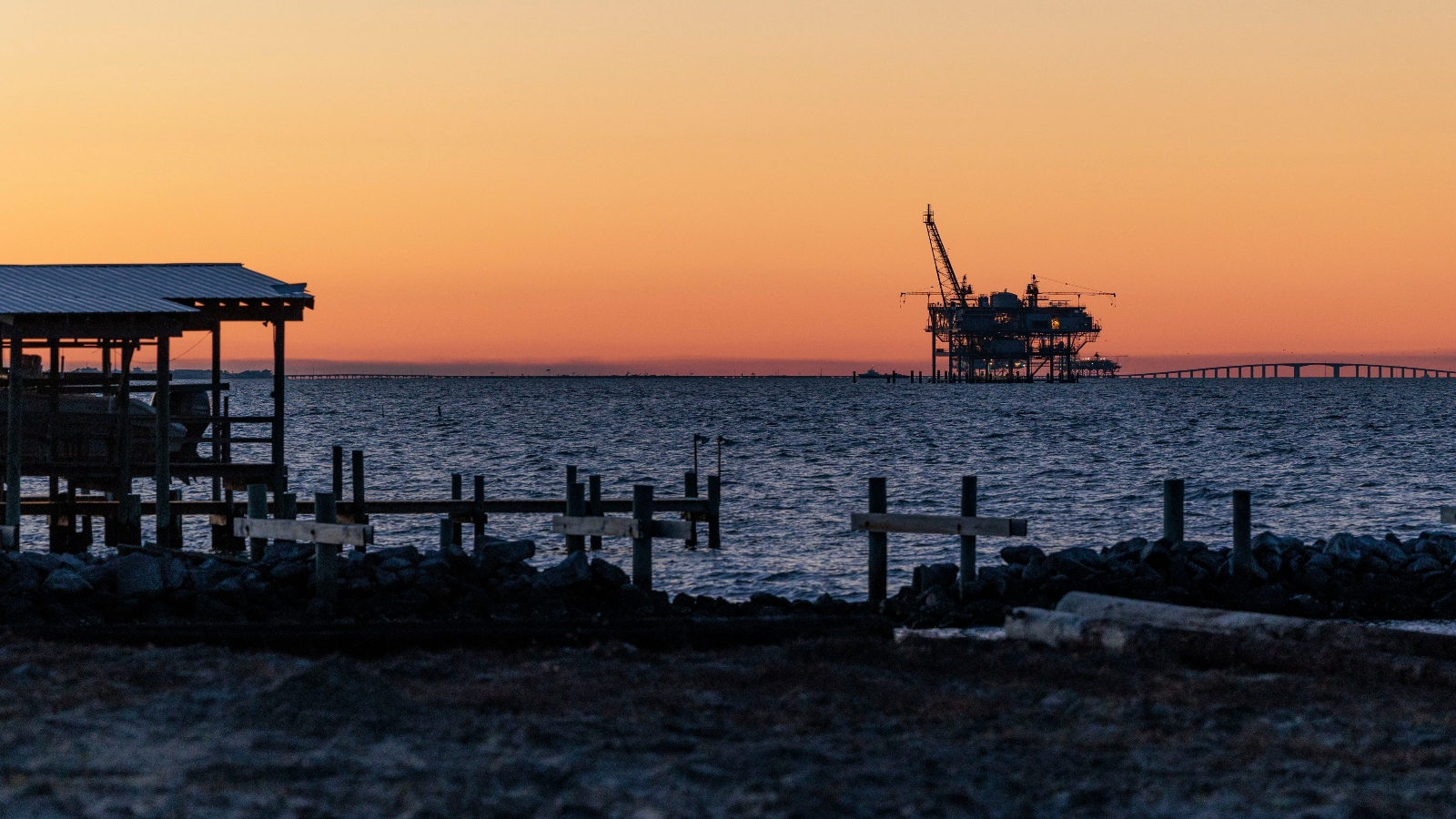
Trump’s ‘God Squad’ blocks endangered species protections in the Gulf of Mexico
Species protections aren’t just breaking down on the federal level. States like Illinois are also failing to keep up with local rules to protect species from disappearing forever.
In response to the transportation department’s handling of species protections, IDNR ended a decade-old agreement with the agency last fall that allowed it to fast-track environmental reviews. The agency’s impact assessment manager, Bradley Hayes, pointed to “IDOT’s apparent automatic response to decline ITA recommendations” in his cancellation letter obtained by WBEZ and Grist.
An ITA, or incidental take authorization, is a permit that allows for the accidental harm of a protected species during the construction of an approved project, such as building a road or fixing a bridge. These permits involve lengthy reviews in which applicants must outline potential impacts to listed species, require a public comment period, and incorporate feedback from conservation specialists. The entire process can take at least five to six months.
Still, experts say these permits are crucial because they minimize harm to protected species and provide legal cover from criminal charges that can accompany the unintentional killing of a state-listed species.
IDOT’s Jack Elston responded to the termination letter at the end of last year disputing the initial allegations from the environmental regulators, saying that the agency “does not make automatic responses regarding the IDNR recommendation for an ITA.”
In a joint statement from IDOT and IDNR to WBEZ and Grist, IDOT spokeswoman Maria Castaneda said, “IDOT continues to consult with IDNR and considers recommendations from IDNR along with multiple other factors, including known information about the species, other environmental surveys, engineering, costs, and public safety.”
Castaneda added that the agencies are currently drafting a new agreement and that the agreement on file was outdated. “Updated language was needed,” she said.
Despite the agreement expiring at the beginning of 2019, IDOT continued to conduct environmental reviews until lDNR stepped in to stop them last fall.
Email exchanges between IDNR officials obtained by WBEZ and Grist show concern about how IDOT was conducting its environmental reviews.
Last December, IDOT’s Elston wrote that “fish swim away from construction noise” as justification for several projects that could harm fish and molluscs, like the harlequin darter and the American brook lamprey, which are found in rivers and streams in southeastern and northeastern Illinois, respectively. In another instance, Elston wrote that the relocation of state-endangered mussels in White County was unnecessary and would delay a project by at least a construction season and add about $2 million in costs.
But internal emails show that IDNR officials were increasingly concerned by that rationale. The American brook lamprey, for example, spends much of its life burrowed in sediment, dies not long after spawning, and is unlikely to simply swim away
“We are the experts,” wrote Todd Strole, IDNR assistant director, in an email earlier this year preparing for a meeting with IDOT. “Fish are not the same, some don’t swim away.”
In another email, Ann Holtrop, head of IDNR’s division of natural heritage, wrote: “We are open to professional dialogue with IDOT, but planning and engineering needs don’t negate or override the recommendations by scientists.”
The Illinois dispute reflects a broader erosion of species protections nationwide, according to the Natural Resources Defense Council’s Rebecca Riley. During his first term, President Donald Trump advanced new guidance that undercut species protection. The Biden administration undid the Trump-era rules, but the Trump administration has yet again proposed a new rule to weaken the federal law.
WBEZ and the Chicago Sun-Times reached out to Governor JB Pritzker’s office for comment on how the state’s internal dispute fits into the Trump administration’s ongoing rollback of federal species protections; however, the Governor’s office offered no comments beyond the statement from IDOT and IDNR.
This story was originally published by Grist with the headline Illinois is feuding with itself over endangered species protections on Apr 29, 2026.
From Grist via This RSS Feed.