

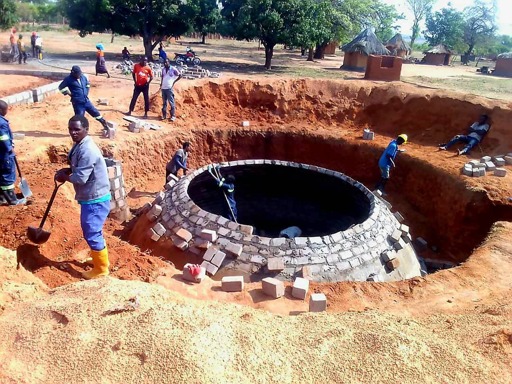
LUSAKA, Zambia — In Nkhundye, a farming community in Zambia’s Eastern province, cattle dung from a communal kraal, a traditional livestock enclosure, is being used to produce energy for cooking, to run irrigation pumps, and to meet some electricity needs. The biogas plant is managed by the Nkhundye Community Cooperative, whose members collectively keep some 300 head of cattle. The dung from the animals is fed into a biodigester that produces methane gas, which is used as a cooking fuel. As of March 2026, the project was providing biogas to 100 households. The cooperative comprises roughly 600 households and the operation is gradually being expanded to cover all members and nearby communities, according to the company Biogas Technology in Zambia, which is a partner in the project. Homes within 100 meters (330 feet) of the biogas plant receive gas through underground pipes, while those further away receive storage bags with enough methane to last three to five days, depending on use. A community member cooks using biogas in Nkhundye village in Eastern province, Zambia. Image courtesy of Biogas Technology in Zambia. Community members use the biogas for cooking through adapted biogas stoves. All the project equipment was supplied free of cost to the consumers, including fittings to install the connections. Household stoves are connected directly to gas storage bags using a valve and pipes. The process starts with mixing cow dung with water and feeding it into the sealed biodigester. Inside the biodigester, anaerobic bacteria break down the waste, producing…This article was originally published on Mongabay
From Conservation news via This RSS Feed.