

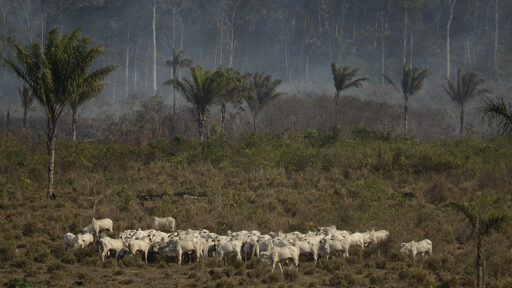
JAKARTA — Tropical primary forest loss fell sharply in 2025, dropping 36% from the record highs of the previous year, according to new data from a long-running satellite monitoring project. Non-fire forest loss also declined by 23%, reaching its lowest level in a decade, according to the data from the University of Maryland’s Global Land Analysis and Discovery (GLAD) laboratory and visualized on the World Resources Institute’s (WRI) Global Forest Watch platform. The drop suggests that policy and enforcement can make be effective in protecting tropical primary forests, which are critical for biodiversity, water provision, carbon storage, food and medicine, cultural identity and more. But researchers say the headline figures mask a more complex reality and may say more about fewer fires than real progress, as forests across the tropics continue to move in the same direction: toward less forest and, in many places, faster rates of loss. “A drop of this scale in a single year is encouraging — it shows what decisive government action can achieve,” said Elizabeth Goldman, co-director of Global Forest Watch. Even so, total loss remains high. The tropics lost 4.3 million hectares (10.6 million acres) of primary forest in 2025 — an area larger than Switzerland, and still 46% higher than a decade ago. That’s the equivalent of about 11 football fields’ worth of forests being razed every minute. At current rates, the world remains far off track from the 2030 goal of halting and reversing forest loss, a pledge made by more than…This article was originally published on Mongabay
From Conservation news via This RSS Feed.