

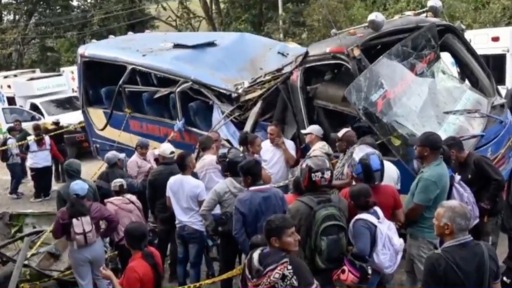
At least 20 people were killed in an attack involving explosives in the Valle del Cauca Department of Colombia. Authorities have reported that 36 people are currently injured. The attack occurred on the Pan-American Highway, one of the most significant routes in the entire region.
The attack took place just as Defense Minister Pedro Sánchez Suárez was holding a security council meeting in the city of Cali, the administrative capital of the Department of Valle del Cauca, to assess other attacks carried out in the same area. The attackers reportedly detonated a gas cylinder on a bus that was on the road, causing an explosion that has left a number of people dead.
According to authorities, the attack was carried out by a group called Jaime Martínez of the EMC (Estado Mayor Central), one of the dissident factions of the Revolutionary Armed Forces of Colombia (FARC) that did not accept the 2016 peace agreements. These dissident factions, grouped around the EMC, have been engaged in ongoing conflicts with the Colombian Army, the guerrillas of the National Liberation Army (ELN), and the paramilitary group Clan del Golfo.
Authorities also report that this attack is in addition to others carried out by the same organization. The first took place in Cali, targeting the Colombian Army’s Pichincha Battalion, while the second occurred against the Agustín Codazzi Engineer Battalion in Palmira, where gas cylinders rigged with explosives were also launched. Upon detonation, these devices cause massive destruction. It was also reported that on April 25, the same group attempted to attack the Santana radar station.
Attacks to influence the presidential elections?
Colombian President Gustavo Petro described the attack as a “terrorist attack”: “Those who carried out the attack and killed and wounded … civilians in Cajibío – many of them Indigenous people – are terrorists, fascists, and drug traffickers. Their leader is known as ‘Marlon,’ and has been fully identified by police and military intelligence. The fronts led by alias Iván Mordisco in Cauca are criminals guilty of crimes against humanity and must be treated as such.”
Furthermore, Petro suggested that the attacks may not be unrelated to political motives, given that in a month Colombia will go to the polls to elect the country’s next president: “[The attackers] want the far right, fascism, to govern Colombia because they know they can conduct their cocaine and illicit gold businesses with them.”
This same idea has been put forward by leftist presidential candidate Iván Cepeda, who is currently campaigning across the country and has received constant death threats: “I express my strongest condemnation of these acts of barbarism. I absolutely condemn the deaths and serious harm caused to the civilian population through the use of explosives … It is deeply concerning that these terrorist acts are occurring in regions of the south of the country where there is broad public support for our political project.”
In this regard, Cepeda added: “A legitimate concern arises as to whether, in addition to causing harm and distress among the population, these events seek to create a climate of fear that favors the interests of far-right sectors determined to destabilize the country and hinder the democratic development of the electoral process. I ask the authorities to thoroughly investigate this context and possible motivations.”
Cepeda, who currently serves as a senator in Colombia, is known for being one of the key players in the peace agreements with armed groups and for advocating a policy of disarmament among these groups as a means to achieve peace – a strategy that stands in stark contrast to that of the Colombian right, which calls for all-out war against these groups.
The post 20 killed in attack on Pan-American Highway in Colombia appeared first on Peoples Dispatch.
From Peoples Dispatch via This RSS Feed.