

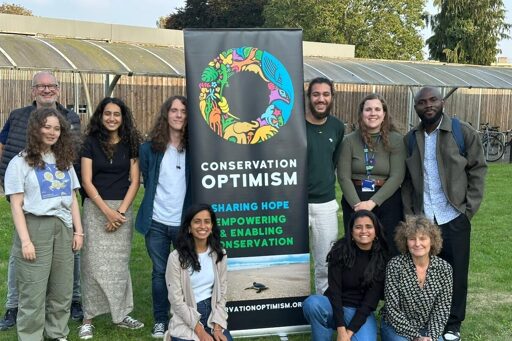
Several recent articles at Mongabay regarding mental health in the conservation sector provide a much-needed overview of an issue not talked about enough: that conservationists face a mental health crisis, an “epidemic of suffering” that is nestled within a complex biodiversity crisis. We are in a profession in which loss is a normal, everyday occurrence. The foundation of this sector lies in the passion of conservationists working tirelessly to understand, document and mitigate biodiversity and its loss. With that passion comes a job profile that is marked by exploitative practices, low wages and a general lack of support for dealing with mental well-being. Coupled with few benefits and a front-row seat to biodiversity loss and de-prioritization of conservation actions, a pertinent question arises: Is there a reason for hope? As young conservationists starting out in the field, following “conservation optimism” as a philosophy, we think so! Sometimes conservation work can make one feel like a lone tree on a mountain, but young conservationists say there’s a lot of room for hope and optimism amid the challenges. Image courtesy of Qazi Hammad Mueen. Language matters Conservation is marred by a language of crisis. This might not be the root of the mental health crisis in the field, but it is a major contributor. Hope is a delicate word to use in a field riddled with anxiety and despair. Its power, nonetheless, can be an enabling force for rebalancing the discourse around conservation and what it can achieve. How then do we…This article was originally published on Mongabay
From Conservation news via This RSS Feed.