


The Premier League’s allocation of European places is straightforward in principle but fluid in practice.
League positions will determine most spots, while the outcomes of the Europa League and Europa Conference League can add or reassign places.
Recent results have opened realistic pathways for as many as 10 English clubs to play in European competitions next season, and there are credible routes for six to reach the Champions League.
What would create six Champions League places from the Premier League?
Two scenarios produce a sixth Champions League entrant.
The simplest is an English winner of the Europa League who finishes outside the top four, that club would take a Champions League berth in addition to the usual top four qualifiers.
Nottingham Forest and Aston Villa meet in the Europa League semi-finals, guaranteeing an English finalist and therefore a plausible English winner.
If that winner finishes outside the top four, the Premier League will have six Champions League representatives next season.
A second, less likely route is a combination of domestic and European cup outcomes that shifts places down the domestic table.
Either way, the key point is that continental success by an English club can increase the number of Champions League slots given to the Premier League.
How nine or 10 teams becomes possible
The Europa Conference League winner gains direct entry to next season’s Europa League.
Crystal Palace is in the Conference League semi-finals and are the most likely English side to lift that trophy.
If Palace win the Conference League and an English club also wins the Europa League, the knock-on effects would push additional Premier League teams into European competitions, potentially taking the total to nine.
If the Europa League winner is also outside the top six domestically and Palace win the Conference League, the Premier League could reach the ten-team mark in Europe next season.
The domestic picture and immediate triggers
Manchester United’s recent results have put them close to securing a top four finish, at the time of the latest update they required only a small number of points to confirm Champions League qualification.
That domestic stability matters because it fixes several of the league’s European slots and clarifies which positions would be affected by continental winners.
Meanwhile, the battle for sixth and seventh, remains tight. Brighton, Fulham, Bournemouth, Chelsea and Brentford are all involved and fighting for success.
The FA Cup’s role
The FA Cup winner affects which league positions feed into the Europa League and Conference League but does not change the total number of English teams in Europe.
If a club already qualified for Europe wins the FA Cup, the European place tied to the cup transfers down the league table.
That means the identity of the cup winner can affect whether seventh or eighth place in the Premier League gains continental football.
Practical takeaway for clubs and supporters
For clubs chasing European qualification, the message is simple, secure league position where possible and treat the remaining cup competitions as opportunities rather than complications.
For supporters, the permutations are worth following because a single result in Istanbul or Leipzig can alter the landscape for a dozen clubs.
The mechanics are indeed technical, but the outcome is binary. Domestic form locks in most places; European trophies can add one or two more.
The next few weeks will resolve which of these scenarios becomes real.
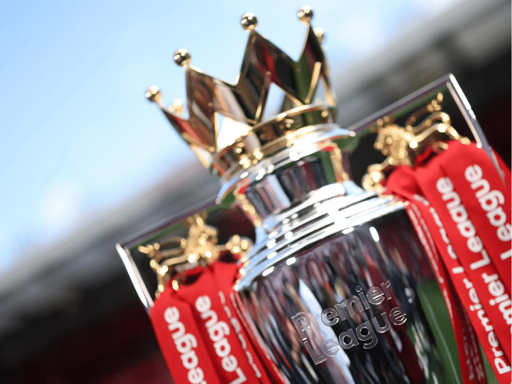
Featured image via the Premier League
By Faz Ali
From Canary via This RSS Feed.