

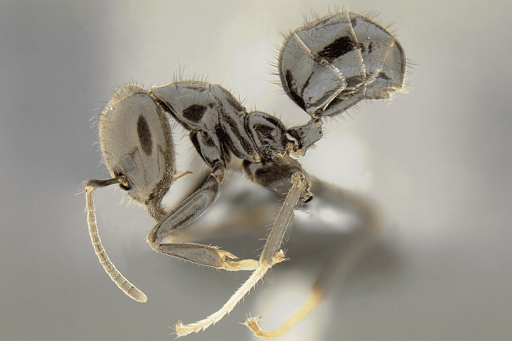
Scientists conducting a DNA analysis of ant specimens collected from across the Fiji islands in the Pacific have been able to reconstruct how entire ant populations rose and fell over thousands of years. The findings, based on specimens held at museums, showed that nearly 80% of the archipelago’s 88 endemic ant species have been declining since humans first arrived there 3,000 years ago, while a small number of nonnative species expanded their populations. “It can be difficult to estimate historical changes to insect populations, because with few exceptions, we haven’t been directly monitoring populations over time,” co-author Evan Economo, a biologist at the Okinawa Institute of Science and Technology, Japan, and the University of Maryland, U.S., wrote in a statement. The new methodology, called community genomics, uses DNA to infer large-scale population patterns across entire ecological communities, rather than just one or a few species. It’s especially useful for studying insects, as their populations are difficult to assess in the wild. “The genomes hold evidence of whether populations are growing or shrinking,” Economo said. Researchers found a sharp decline starting around 300 years ago, roughly corresponding with the arrival of Europeans, industrial agriculture, and introduced species. Fiji’s ant fauna, mainly found in intact, high-elevation forests, were shaped by at least 65 colonization events, the study found. A total of 88 species are endemic to Fiji, while 16 species arrived after European colonization. “The findings confirm once more what we have been saying for the past decade: that human impacts are…This article was originally published on Mongabay
From Conservation news via This RSS Feed.