

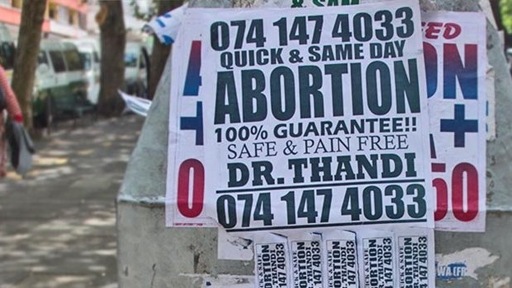
Advocates for reproductive rights in Kenya, where thousands die every year of complications due to unsafe abortion, expressed outraged at the ruling on April 24 by the Court of Appeal in the town of Malindi. The court overturned a 2022 High Court ruling and recriminalized abortion.
The 2022 decision held that abortion is a constitutional right, but the appellate court ruled that this was an incorrect interpretation. The constitution adopted by Kenya in 2010 allowed for abortion if “there is a need for emergency treatment, or the life or health of the mother is in danger.” It has, however, remained criminalized in practice for over a decade as the colonial-era penal code has not been amended to reflect this.
“This is what the criminalization of abortion looks like in practice”
In September 2019, a 16-year-old suffering severe abdominal pain and bleeding went to a clinic where a professional medic, Salim Mohammed, diagnosed a lost pregnancy and provided emergency post-abortion care. Barging into the clinic, the police arrested the doctor.
They also arrested the girl from her hospital bed, and held her without medical care for two nights in Ganze Police Patrol Base, before remanding her in Malindi Juvenile Remand Prison for over a month after forcing her to sign a distorted statement.
“This is not an exceptional story. It is what the criminalization of abortion looks like in practice. Every year, at least 2,600 women die from unsafe abortions in Kenya, and 21,000 more are hospitalized due to abortion complications,” said the Center for Reproductive Rights (CRR).
“A 2023 national study by APHRC found an estimated 792,694 induced abortions in Kenya in that year alone, with over 304,000 women seeking facility-based care for post-abortion complications. This is not a statistic; it is the lived reality of what happens when women and girls are denied care, information, and dignity,” its statement said.
Acquitting the doctor and his patient in a landmark judgement in March 2022, the High Court of Kenya in Malindi ruled that their arrest and prosecution were unlawful as abortion care is a fundamental right when a doctor determines the need for emergency treatment to thwart a danger to the mother’s life.
It further ordered the parliament to develop a policy framework and enact a law on access to abortion services. However, the parliament slacked.
Far-right lobby
In the meantime, Kenya Christian Professionals Forum (KCPF), reportedly an African appendage of the far-right evangelical movements in the US and Europe, along with the Attorney General, appealed the High Court’s ruling.
Following arguments last October, the Appeals Court ruled in favor of the appeal, overturning the High Court’s judgment on Friday. “Abortion is not a fundamental right guaranteed under the Constitution. On the contrary, the Constitution expressly prohibits it but provides exceptions in limited circumstances when it may be permissible,” the judges ruled.
Further adding that “Constitutional rights could not, of itself, stand in the way of proper investigation, charge and prosecution of the alleged offenses,” the judges threw open the acquitted doctor and patient for further prosecution.
A blow for the reproductive rights movement in Kenya
Prudence Mutiso, lawyer for CRR, told NTV that this ruling creates “a chilling effect” on girls and women as well as on doctors, who may hesitate out of fear to provide the necessary emergency care to patients.
Calling the ruling “deeply disappointing”, CRR said it will challenge the judgment in the Supreme Court.
Advocates for reproductive rights have long fought for the recognition of women’s autonomy and full control over their bodies. They say the complex social and health realities of women and girls in Kenya are not reflected in rigid legal decisions such as this one.
“In a context where access to comprehensive reproductive health services remains limited, and where cultural taboos still shape conversations around sexuality, such a decision risks worsening already existing challenges,” explained socialist feminist Daisy Burett to Peoples Dispatch.
“Misunderstandings about the female body, combined with restricted access to contraceptives and information, continue to contribute to unintended pregnancies.”
Burett also points out that the most economically disadvantaged women are inevitably the most-impacted by these policies because they already face the most barriers in accessing care.
“If the primary concern were safety and well-being, greater attention would be directed toward improving healthcare systems and ensuring dignified, accessible medical services for all.”
Restrictive abortion policies “often push individuals toward unsafe alternatives” rather than reducing the need for abortion, says Burett, highlighting a broader public health concern as a result of this decision.
She adds that the consequences of having a child without the preparation, support, or stability “extend beyond the individual to affect the well-being of the child”.
“This raises broader concerns about whether such policies sufficiently consider the long-term social and developmental impacts on children.”
The post Kenyan court recriminalizes abortion appeared first on Peoples Dispatch.
From Peoples Dispatch via This RSS Feed.