

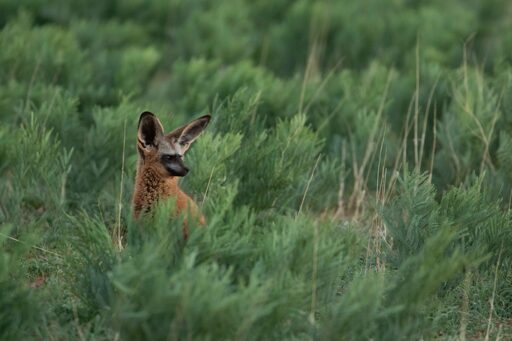
In northern South Africa, the Tswalu Kalahari Reserve in the Kalahari Desert is teeming with life — and carbon credits. Most carbon credit projects are focused on forests, but globally, soils hold roughly three times more terrestrial carbon than forests. Some scientists also say soil is more stable since it can’t be easily removed in a forest fire or clear-cut. At Tswalu, decades of wildlife reintroductions are helping to restore the degraded soils of the landscape while generating revenue through carbon markets. “I think Tswalu shows how rewilding can mitigate climate change through soil carbon storage and improve land productivity,” Duncan MacFadyen told Mongabay’s John Cannon. MacFadyen is the head of research and conservation with Oppenheimer Generations, which represents the family that owns Tswalu. The Oppenheimer family acquired the reserve in 1999 and eventually expanded it to an area larger than the size of Hong Kong, 118,000 hectares (292,000 acres). Their goal is to rebuild a functioning ecosystem by bringing back native herbivores and predators, and with it, soil carbon. Locally known as “the waterless place,” the region averages just 10-50 centimeters (4-20 inches) of rainfall annually, but that’s enough for rare, desert-adapted wildlife. Historically, vast herds of springbok antelope (Antidorcas marsupialis) followed seasonal rains and fresh grass across the landscape. The Indigenous San people compared springbok numbers to the number of stars in the Milky Way. European settlers later described herds stretching some 160 kilometers long and 24 km wide (100 miles by 15 mi). By the early 1900s, hunting,…This article was originally published on Mongabay
From Conservation news via This RSS Feed.