

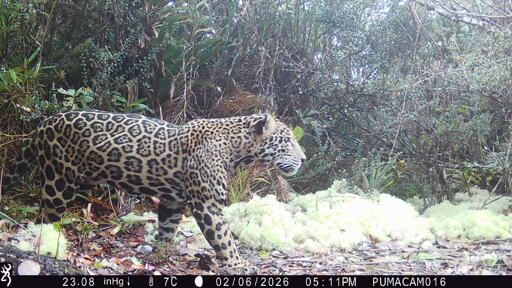
High in the Sierra del Merendón mountains in Honduras, a jaguar has been photographed at 2,200 meters, or about 7,200 feet — an unusually lofty elevation for a species that usually sticks to lowland forests and wetlands. Jaguars (Panthera onca) are typically found below 1,000 m (3,300 ft), making high-elevation sightings so unusual that scientists have coined a term for the big cats spotted here: cloud jaguars. Seeing jaguars at this elevation is very rare, said Allison Devlin, who directs the jaguar program for U.S.-based wildcat conservation NGO Panthera. “The fact that they’re able to travel through these high elevation areas also shows how resilient they are.” The jaguar, a healthy-looking young male, was photographed by camera traps on Feb. 6 this year — almost 10 years to the day, and in the same location, where camera traps captured the first recorded glimpse of an elusive cloud jaguar in the Sierra del Merendón. The mountains form an important corridor between Honduras and Guatemala, linking the jaguar’s historical range, which spans 18 countries across the Americas, running from Mexico to Argentina. As apex predators, jaguars play a key role in the ecosystem by keeping prey populations healthy and balanced, and in helping prevent zoonotic diseases that jump between species and can infect humans. But like all wild cats, they face multiple threats. Once-intact forests are being felled to make way for human settlements, plantations, ranches, mines and other developments. Climate change is also taking a toll: Forest fires are scorching wetlands…This article was originally published on Mongabay
From Conservation news via This RSS Feed.