

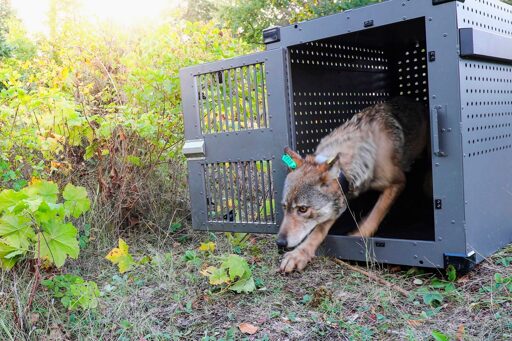
Wolves on a remote island in Lake Superior appear to be thriving, but they’re making deep dents in the moose population that they rely on as a leading food source, according to a report released Monday. Isle Royale is a 134,000-acre (54,200-hectare) national park in far western Lake Superior between Grand Marais, Minnesota, and Thunder Bay, Canada. The island is a natural laboratory, offering scientists a rare opportunity to observe wolves and moose largely free from human influence. Researchers have conducted wolf and moose population surveys on the island since 1958. The surveys had been an annual winter event when the roadless island is closed to visitors, but researchers have run into obstacles in recent years. The pandemic in 2021 forced scientists to cancel the survey for the first time. The National Park Service ordered researchers to evacuate the island during their 2024 winter survey after weeks of unusually warm weather left the ice surrounding the island unsafe for ski-plane landings. Researchers rely on the planes for easier wildlife tracking but the island has no runway, forcing them to land on iced-over Lake Superior. Things didn’t go much better last year when researchers were forced to scrap the effort after their pilot suffered a last-minute medical issue. But this year a team of researchers led by scientists from Michigan Tech University were able to conduct a survey from Jan. 22 through March 3. Findings from the survey led them to estimate the island’s wolf population at 37 animals. Data scientists gathered before they evacuated in…This article was originally published on Mongabay
From Conservation news via This RSS Feed.