

Drop Site’s journalism is free to read because thousands of readers choose to fund it. If our work matters to you, please consider making a tax-deductible donation today.
SUPPORT DROP SITE - DONATE TODAY
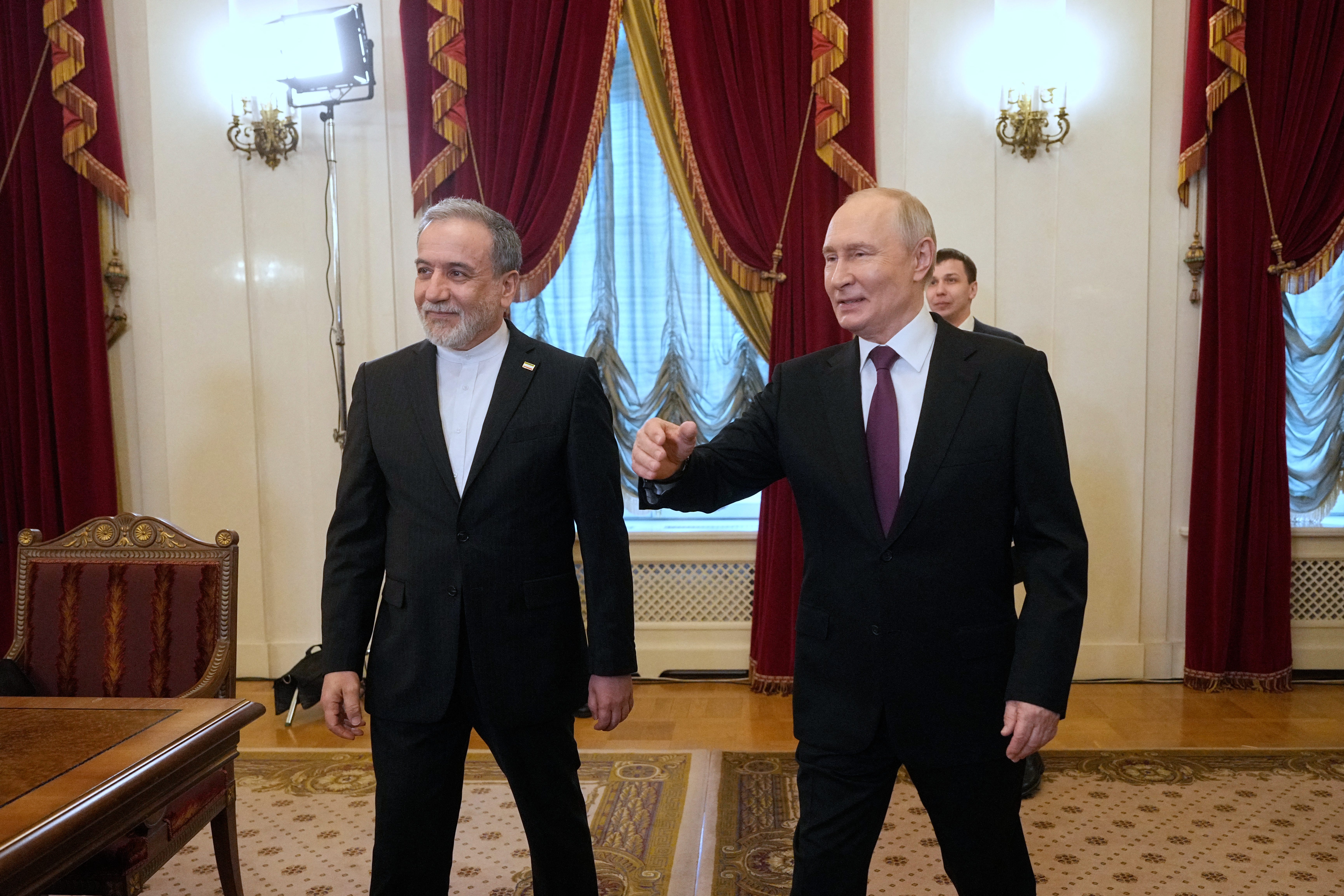
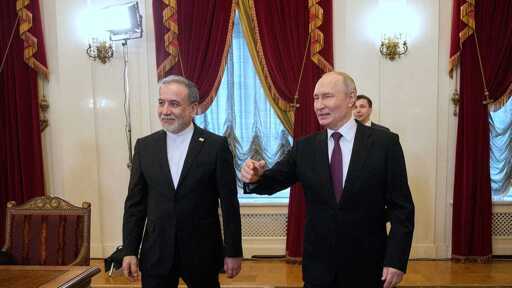
Russian President Vladimir Putin and Iranian Foreign Minister Abbas Araghchi at the Boris Yeltsin Presidential Library in Saint Petersburg on April 27, 2026. Photo by Dmitry Lovetsky / Pool / AFP via Getty Images.
Iranian Foreign Minister Abbas Araghchi has been on a strategic tour to prepare for two dramatically different paths that could unfold in the coming days: a return to diplomacy or a resumption of the war with the U.S. and Israel. While President Donald Trump has claimed that the Iranian government is in a state of internal chaos and his administration is waiting for Iran to capitulate, a senior Iranian official told Drop Site that Tehran is establishing the conditions under which a new round of direct talks could take place.
“We’re currently moving forward with our own design, and we feel continuing negotiations doesn’t make sense until the U.S. government lifts the maritime blockade,” said the official who has direct knowledge of internal diplomatic deliberations in Iran. He requested anonymity because he is not authorized to publicly discuss the negotiations. “The scope of the conflict has expanded, and naturally the issue is no longer purely nuclear.”
Tehran, the Iranian official said, remains firm in its demand that the U.S. naval blockade in the Strait of Hormuz be lifted as a condition to move forward. If that happens, a formal second round of top level direct talks can happen.
“Araghchi is Iran’s top diplomat. So even if there’s a 1% chance for a breakthrough, he would embark on it,” said Hassan Ahmadian, a prominent Iranian analyst and associate professor at the University of Tehran. He told Drop Site that Iran has crafted a multi-phase outline for ending the war: A real ceasefire must be imposed on Israel in the region, specifically Lebanon, and a settlement must be reached in the Strait of Hormuz “without harming Iran’s national security and also regional security.” Once these conditions are met, comprehensive negotiations on Iran’s nuclear program and a long-term non-aggression agreement could commence.
“The Iranians are saying time is working in our favor for the three Ms: munitions, markets, and the midterms. These three Ms help Iran in its position and weaken U.S. positions,” Ahmadian said. “Obviously in the U.S., they want something to say, ‘We squeezed Iran and we got this.’ My perception is that the Iranians are keen to deny the United States that—they wouldn’t give what Trump wants as a victory.”
While White House officials claim Iran presented the U.S. with a “new” proposal over the weekend and pushed this narrative through their preferred media outlets, the Iranian official said the characterization was false. Trump claimed Iran softened its stance over the weekend, but not enough for a deal. Ahmadian said there has been a recent Iranian shift, but it is toward a clearer set of conditions for resuming negotiations, not acceding to American demands on its nuclear program. “There are changes, as I understand,” he said. “The main change is for Iran to insist on the stop of the war regionally. That’s pivotal in Iran agreeing to discuss other issues.”
As a practical matter, Tehran is facing an unprecedented challenge in dealing with Trump. Twice in one year, Israel and the U.S. have bombed Iran in the middle of negotiations. Trump is erratic and frequently contradicts himself—vascillating between expressing optimism for a deal and claiming Iran has surrendered to sweeping U.S. demands only to turn around and threaten to destroy Iranian civilization and to carpet bomb its civilian infrastructure. Iran also believes that Israeli Prime Minister Benjamin Netanyahu has been given unprecedented influence over U.S. intelligence estimates and White House decision-making.
“Our country has had negotiations with the Americans at various levels over the past 30 years— formal and informal, public and back-channel,” the senior Iranian official said, referencing previous U.S.-Iran negotiations that involved months—at times years—of diplomacy and technical talks. “It’s as if they are showing up to a football match with rugby rules.”
Iran has total disdain for Trump’s Special Envoy Steve Witkoff and views him as both oblivious of diplomatic processes and totally ignorant of technical issues. Kushner is viewed by Iran as Israel’s man at the table. Iran, the senior official said, does not see any reason to deal with these two without a figure like Vice President JD Vance present.
Last week, the Iranian government announced that Araghchi would be visiting Islamabad for bilateral talks with Pakistani leaders. This set off a flurry of media speculation that a new round of negotiations would happen. Trump announced that Vance was en route to Islamabad and once again characterized Iran as pleading for new negotiations. But Vance, it turned out, was not on a plane, and Iran continued to deny it had any intention of meeting with U.S. officials in Pakistan.
Trump then said he was dispatching Witkoff and Kushner, and the media was flooded with stories about a meeting with Iran. Some news outlets, citing White House sources, claimed that planes were en route to the meetings, and the White House suggested Iran was lying about the forthcoming talks. “The Iranians want to talk, they want to talk in person,” said White House spokesperson Karoline Leavitt on Friday. “Steve and Jared will be heading to Pakistan tomorrow to hear the Iranians out.”
Iran continued to reject suggestions that any talks would happen. “No meeting is planned to take place between Iran and the U.S.,” Iran’s Foreign Minister spokesman Esmaeil Baghaei said soon after Araghchi arrived in Pakistan. Iran, he said, discussed a range of issues, including trade. On Sunday, Islamabad announced it was expanding the transportation of third-country goods through Pakistan destined for Iran. While the transit routes had been under discussion since 2008, the timing—with Trump claiming his naval blockade was “strangling” Iran—was impossible to ignore.
After Araghchi left Islamabad on Saturday and flew to Oman, Trump scrambled to spin the narrative and control the damage, claiming he had actually called off the planned negotiations. “Too much time wasted on traveling, too much work!,” Trump wrote on Truth Social. “Besides which, there is tremendous infighting and confusion within their ‘leadership.’ Nobody knows who is in charge, including them. Also, we have all the cards, they have none! If they want to talk, all they have to do is call!!!”
Trump then claimed that as a result of his refusal to send his emissaries, Iran had softened its stance, submitting a new proposal to the U.S. “They gave us a paper that should have been better. And interestingly, immediately, when I canceled it, within 10 minutes, we got a new paper that was much better,” Trump said.
Trump continues to claim that he extended the initial two-week ceasefire agreed on April 7 because Iran’s leadership was in a state of disarray and infighting. This narrative has been widely parrotted in Western media. “That’s part of the cognitive warfare on Iran,” said Ahmadian. “It’s targeted at the society, the elites, and the position of the Supreme Leader. It’s not news, it’s not intel that they’re talking about. It’s basically an agenda to create what they are calling division. And I think the main aim within Iran is to increase mistrust and decrease trust among elites, which I think the Iranians are now very well aware of.”
Ahmadian said that Iran’s perception is that it is the U.S. leadership that is in deep disarray, as evidenced by Trump’s flip-flops, unrealized threats and the recent chaos over which officials would be heading to Islamabad to negotiate with Iran. During the first round of direct talks held in Islamabad on April 11, the Iranian team arrived with “a clear message coming out of Tehran, with a team that represents all of the system, and it came with a very strong case for showing the unity within the country,” Ahmadian said. He added that the Iranian side left the talks with the impression that there were stark differences between Vance on the one hand and Witkoff and Kushner on the other. “The Iranians see Witkoff and Kushner as representatives of the Israeli interests, not those of the United States, as opposed to Mr. Vance, who is representing the U.S. interests in those talks,” he said. “They were divided in their way of approaching the Iranians.”
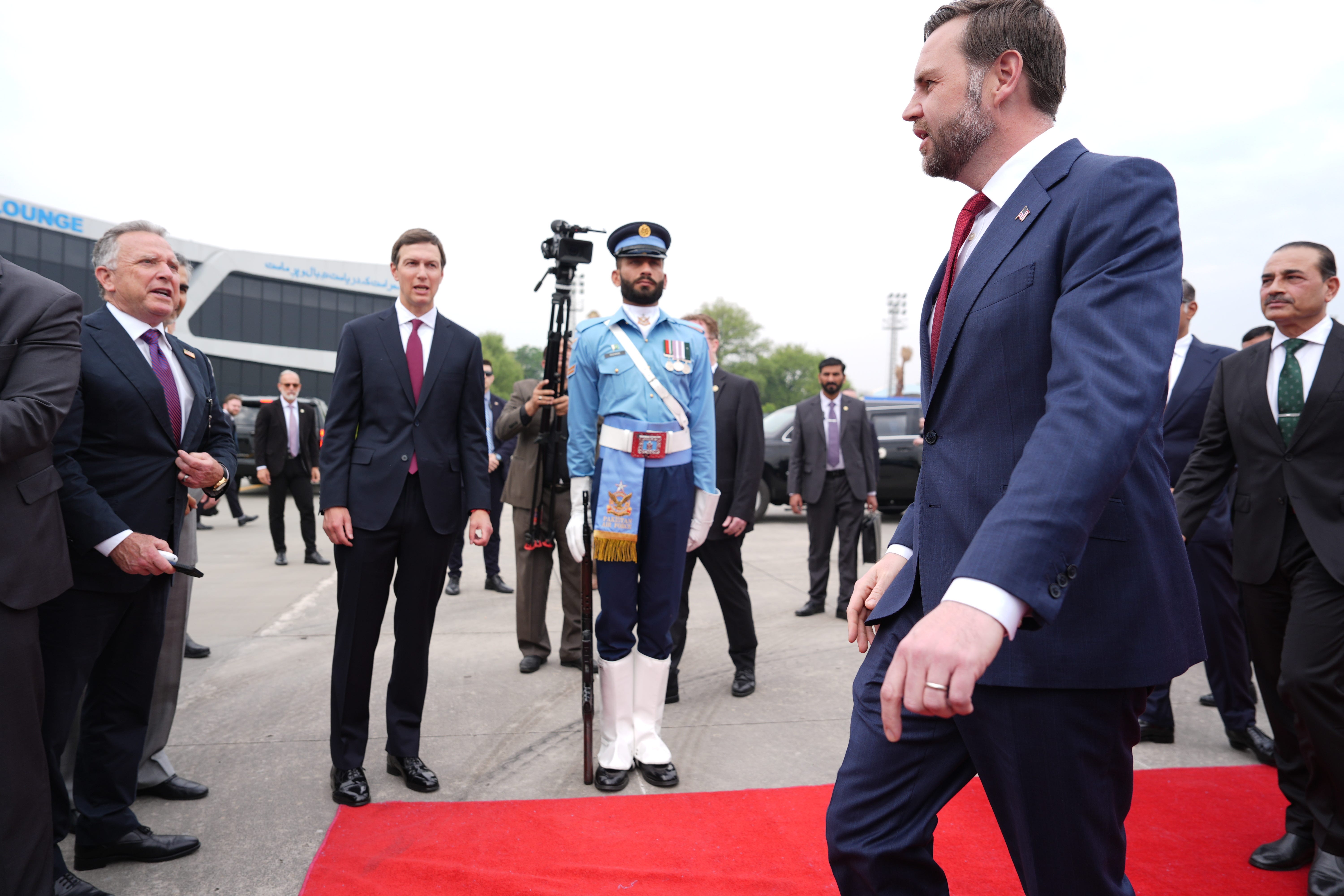
U.S. Vice President JD Vance, Special Envoy Steve Witkoff, and Jared Kushner arrive for talks with Iranian officials on April 11, 2026 in Islamabad, Pakistan. Photo by Jacquelyn Martin - Pool/Getty Images.
“I Don’t Take That as a Bluff”
Abbas Araghchi’s three nation tour, the senior Iranian official told Drop Site, is aimed in part at laying out Tehran’s position in clear terms to mediators and key strategic players who could play a role in any future deal. Oman has decades of experience serving as the mediator on nuclear issues between the U.S. and Iran, but Muscat was blindsided by the surprise attack on Iran a day after its foreign minister visited Washington and was led to believe an agreement was within reach. Given Oman’s vast experience and technical knowledge, Iran is eager to see Muscat reenter the diplomatic process. Araghchi also discussed the situation in the Strait of Hormuz, as Oman and Iran are the only two littoral states in the strategic waterway. “Our focus included ways to ensure safe transit that is to the benefit of all dear neighbors and the world,” Araghchi wrote on X.
During his talks with Pakistani officials, Araghchi offered a comprehensive overview of Iran’s position on a range of issues, including nuclear enrichment and the standoff in the Strait of Hormuz. The senior Iranian official said it did not constitute a new proposal, but rather a reiteration and extrapolation on the terms laid out by Iran since February. “We explained our technical positions to the Pakistani side. Regarding the nuclear issue, solutions that we had previously proposed were raised again so that we could reach a shared understanding with them,” the official said. “Our remarks were not directed at the Americans given that these are bilateral discussions. We believe that the intermediaries themselves should also be technically briefed on the proposals.”
While some Iranian officials have expressed frustration with Pakistan’s role and a perception that it has shown an inability to manage Trump, Ahmadian said Tehran will not publicly criticize Islamabad. “They don’t want these talks to burden their relationship with Pakistan with any negative outcomes,” he said.
Ahead of a meeting with Russian President Vladimir Putin on Monday, Araghchi held the U.S. responsible for the stalled progress in negotiations. “The Americans’ approaches caused the previous round of talks, despite the progress that had been made, not to reach its objective,” he said, decrying “the excessive demands they made and the incorrect approaches they adopted.”
Araghchi’s meetings in Russia—a key strategic and military ally—also serve a dual purpose. If war resumes or if it stretches into a prolonged unresolved state with no comprehensive agreement, Iran will need to craft an alternative path to rebuild the country, stabilize its economy and prepare for future U.S.-Israeli military attacks. Support from Moscow would be crucial to all of these efforts, especially military and intelligence cooperation.
During his meeting with Araghchi Monday, Russian President Vladimir Putin praised “how courageously and heroically the people of Iran are fighting for their independence and sovereignty,” and pledged that Moscow would offer its assistance to Iran in efforts to bring the war to an end. “Russia, just like Iran, intends to continue our strategic relationship.”
Russia played a key role in the 2015 nuclear deal and could emerge as an important guarantor of Tehran’s interests in any agreement reached with the U.S. Following the 2015 agreement, Iran shipped more than 25,000 pounds—roughly 98 percent of its enriched uranium—to Russia. At the time, Iran was believed to possess only a small quantity of highly enriched uranium, and nearly all of that stockpile was sent to Moscow along with the less enriched material. After Trump unilaterally canceled the landmark agreement, Iran increased its enrichment activity and is, at present, believed to have roughly 1,000 pounds of highly enriched uranium. Trump falsely claimed recently that Iran had agreed to allow the U.S. to send troops into Iran to take custody of the uranium, which Trump refers to as “nuclear dust.”
Iran has said it will not transfer its enriched uranium outside of the country. Instead, it has said it would agree to dilute its enriched uranium under international supervision. Whether this stance would change if Russia was brought into the process remains a wild card.
“Russia, and to my understanding, China, are the main parties that the Iranians might think of,” said Ahmadian. “A partner that is trusted more than the United States that can play a mediating role and then can be the destination if there is an agreement for the highly enriched uranium. These are things that I think are part of any negotiations with China and Russia.”
Iran has given no public indication it would alter its position opposing a transfer of its enriched uranium, but has also maintained it is willing to resolve the issue as part of a comprehensive settlement with the U.S. “These issues, on the ground, have clear and practical solutions, and we have always examined them in meaningful negotiations,” said the Iranian official. “Any serious negotiation on the American side must involve a large team, including experts and multiple government departments, so that they can properly understand and process a meaningful agreement that covers the various cross sectoral dimensions on their side.”
At present, Iran still believes it is likely that the U.S. and Israel will resume the war. “Our assessment is that we do not see [Trump] as capable of shaping the agreement,” the Iranian official said. “Our take is that they’ve basically decided to keep the war going until there’s a regime change,” which the official predicted will continue to fail.
Tehran has indicated it has prepared new forms of retaliatory strikes and other actions, including in the Strait of Hormuz. On April 22, Iran’s Tasnim news agency, which is affiliated with the Islamic Revolutionary Guard Corps, published maps of undersea cable infrastructure in the Persian Gulf, raising concerns it was suggesting Iran could cut the cables, causing widespread internet outages and disrupting commerce, further harming the global economy. Iranian military commanders have said that while the U.S. has moved more military assets into the region during the ceasefire, Tehran has also taken this period to prepare its own weapons systems for more fighting. Iran has made no secret that it would target U.S. military assets, as well as infrastructure in any Gulf states who aid American attacks in any way.
All of this is unfolding amid an increasingly tense standoff in the Strait of Hormuz marked by nearly daily incidents, including the seizure, interdiction, and forceful redirection of ships. “I think the Iranians will not sit on their hands watching the United States harass and seize their ships. They would rather go for a war,” said Ahmadian. “If there’s no breakthrough in the next week, I think escalation will happen. I expect the United States to increase the pressure on Iran militarily. But the Iranians will go heavier this time,” he added. “Iran is saying that if its infrastructure is targeted, we will target four times what’s hitting Iran. I don’t take that as a bluff. I think they will do that because the more the pain on the other side, the less likelihood of it continuing the targeting of Iran’s infrastructure.”
From Drop Site News via This RSS Feed.