

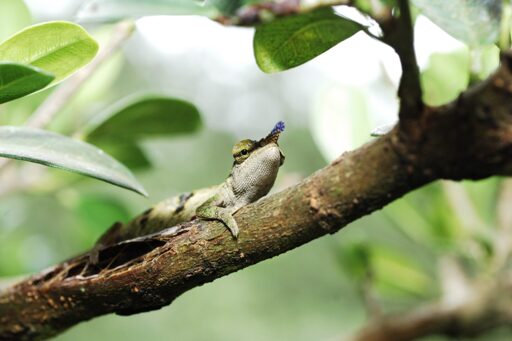
Blue-nosed chameleons, a lizard species found only in northern Madagascar, are known for their colorful noses, which brighten when they get excited. For many years, lack of data meant the blue-nosed chameleon was classified as the species Calumma boettgeri, a chameleon whose nose, while also prominently shaped, isn’t blue. It was only in 2015 that scientists published a revision: the blue-nosed chameleon, they declared, is it’s own species, Calumma linotum. Apart from a few other differences in size and shape, C. linotum’s coloration was described as “a blue rostral appendage and greenish turquoise extremities,” compared to the “inconspicuously yellowish brown” C. boettgeri. The photograph, by Mongabay photo editor Julie Larsen, was taken in northern Madagascar’s Montagne d’Ambre National Park, home to one of two known populations of the species. C. linotum’s conservation status is currently considered least concern on the IUCN Red List due to its relatively high density and presence in a well-managed park. However, every year, hundreds of thousands of chameleons are taken from the wild, both legally and illegally, to be sold on the exotic pet trade. Chameleons are challenging to keep alive and healthy in captivity, yet remain among the most popular reptiles in the trade due to their distinctive features. C. linotum, like most other chameleons, is listed on Appendix II of CITES, the global wildlife trade treaty, meaning its international trade requires permits and monitoring. According to a recent study, reptile species found only on islands are much more vulnerable to extinction than mainland…This article was originally published on Mongabay
From Conservation news via This RSS Feed.