

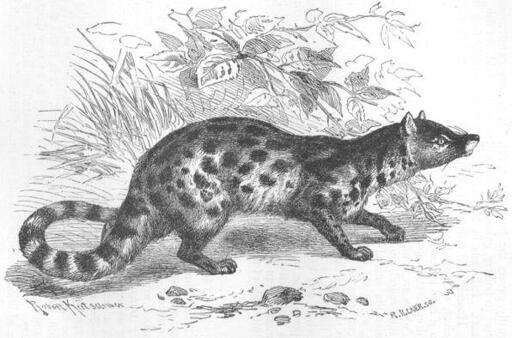
The large-spotted civet is an endangered small carnivore found in pockets of forest across Southeast Asia. Now, a new study suggests the nocturnal mammals are heading toward local extinction in Cambodia’s Srepok Wildlife Sanctuary (SWS), once considered a global stronghold for the species. The study, published in Pacific Conservation Biology, analyzed a decade of camera-trap data from the sanctuary and found a 75-95% decline in the large-spotted civet’s (Viverra megaspila) population density between 2009 and 2019. Over the 10-year period, estimated densities plummeted from approximately 9 individuals per 100 square kilometers (23 per 100 square miles) to fewer than 1 per 100 km2 (3 per 100 mi2). Population models now project the species could be extirpated from the sanctuary by 2034. However, in the same sanctuary over same study period, the closely related large Indian civet (Viverra zibetha) population flourished. Its population density tripled from 2 to 7 individuals per 100 km² (5 to 18 per 100 mi2). Researchers point to several factors driving these divergent fates. The large-spotted civet is believed to reproduce slowly, producing only two offspring per year during a strict breeding season, which the study suggests occurs between November and April. In contrast, the large Indian civet breeds year-round with larger litters, allowing it to better withstand high mortality rates from hunting and snaring. While there’s no direct evidence of hunting of large-spotted civets in the area, the study authors say indiscriminate snaring increased significantly over the study period, becoming the main driver of wildlife decline…This article was originally published on Mongabay
From Conservation news via This RSS Feed.