

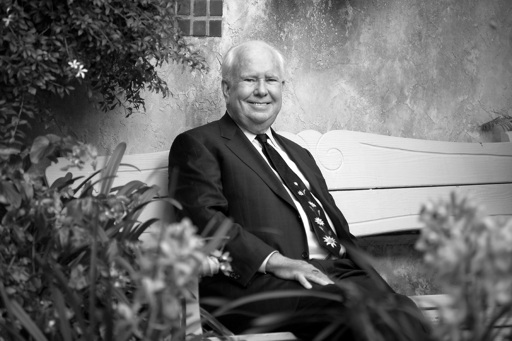
Life on Earth is often described as a web, but for much of modern science it was catalogued as a ledger: names, specimens, distributions, relationships drawn in careful lines. Over the course of the 20th century, that ledger gave way to a more connected view. Plants and animals were no longer just entries in a system; they were participants in it, shaping one another across deep time. The implications of that shift were not merely scientific. They pointed, more directly than before, to the role of a single species—our own—in altering the terms of that participation. Few scientists did more to define that transition, or to explain its consequences, than Peter Raven. Peter Hamilton Raven, who died this weekend, aged 89, was among the most influential botanists of the past century. Over a career that spanned more than six decades, he combined taxonomy, evolutionary biology and conservation into a coherent body of work: to understand the diversity of life, and to argue for its preservation with a clarity that was unusual among scientists of his generation. Peter Raven. Courtesy of the Missouri Botanical Garden He began with curiosity rather than doctrine. Born in Shanghai in 1936 to American parents, he spent his childhood in California after his family returned in the late 1930s. As a boy in San Francisco, he collected insects and then plants, drawn to the order that botany seemed to offer. The ranges of species were mapped; their forms could be compared. It was, as he later…This article was originally published on Mongabay
From Conservation news via This RSS Feed.