

This is an edited transcript of a talk I gave back in November at King’s College London. The original title was the one I’ve used here, but when we got closer to the event we ended up deciding to merge it with a book launch for my Everyday Analysis pamphlet Confessions of a “Class Reductionist.” So, essentially the first part of the talk covered the media issues—roughly, what’s happened to the media in the last several decades, what’s happened to the Left in the same timeframe, and the frustrations and opportunities that come out of how the two intersect—and the second covered my case for class-first left political strategy in the pamphlet. What follows is a slightly condensed transcript of the first half, since that already seemed more than long enough for a Philosophy for the People essay and anyone who wants to know what I say in the pamphlet can (ahem!) pick up a copy.
When Noam Chomsky and Edward Herman put out their classic book Manufacturing Consent: The Political Economy of the Mass Media in 1988, the media landscape they were writing about was, in some ways, as different from what we have now as the kind of early factories where they used horses to pull heavy equipment were from factories in 2025 that are so heavily automated that they only have a handful of human workers.
I’ll focus my examples here on my homeland, since that is unfortunately where all this stuff gets field-tested before it gets exported to the rest of the world. (All I can say about that, on behalf of myself and my 340 million countymen, is that we’re very sorry.) In 1988, there were three 24/7 cable news channels in the United States. One of them was restricted to financial news…and the other two were CNN. Really. There was CNN and a channel with the very creative name CNN2. The transition from there to the thriving universe of competing right-wing vs. centrist “progressive” cable news channels, supplemented by all day and all night barking reactionary talk radio bullshit, that I can remember in, say, the middle of the Obama era already feels a bit like the part in Ch. 15 of Capital where Marx is describing the explosion of steam-engine technology over a few short decades. And like the steam-powered world Marx was marveling about in Capital, that media universe now feels like a bygone world. CNN still exists, just about, but I’m pretty sure its executives would sacrifice their mothers at Bohemian Grove if they thought it would get them the kind of ratings routinely racked up by Joe Rogan or Theo Von—half-political comedians who just kinda record themselves having conversations and dump them onto the internet.
It’s easier now than it’s ever been before to curate your own media diet according to your particular preferences. Not getting the same high you used to from Fox News? No problem. Switch to the harder stuff, like Newsmax. Or there’s a really godforsaken one called the One American Network. Think even OAN are cucks? Brother, have you heard about Nick Fuentes? You can have him in your ear all day every day if he’s the only that still gets you where you’re trying to go. And conversely, of course, there’s a vastly greater niche for content that I actually like—that departs from mainstream narratives in a direction that’s actually useful in terms of building support for some sort of movement in the direction of a less insanely cruel and inegalitarian world than the one we have right now. More on that in a moment.
First, though, I want to pull back from thinking about the disanalogies between the world Chomsky and Herman were talking about and the new and updated hellscape, and think about the common threads. Because…just as we’ve moved a very long way away from steam engines powering ocean liners being the cutting edge of technological progress but even so Capital remains the most illuminating book anyone has written about the core dynamics of the economic order that still shapes our lives…as different as our current fragmented media landscape is from the one described in Manufacturing Consent, it’s not as if Chomsky and Herman’s “propaganda model” doesn’t tell us anything salient about the media wars of 2025.
In fact, last year as the Palestine encampments were going on at American universities, a thought I kept having was that the kind of propaganda that was being spewed nonstop in major media about these student protesters was actually far cruder than the relatively sophisticated model of how propaganda works that you get in Manufacturing Consent. Basically, if you imagine the most excitable 19-year-old leftist you’ve ever met, the way that guy thinks media propaganda works is a fairly decent model for what was all over media in the spring semester of 2024. At the height of all that hysteria, I did a teach-in at the Palestine encampment at Princeton, and I couldn’t stop thinking about this. Every day, I was hearing in the media about how the protesters were these violent hordes of antisemites raging around college campuses doing mini-kristallnachts, but all the students I interacted with at my teach-in were just these very earnest kids, tons of whom were Jewish, who were having a very healthy and appropriate human reaction to the horrors of a livestreamed genocide.
Perhaps that’s a topic that’s best steered away from here, though, since as I understand it I’m speaking in a country where if I said the sentence “I support Palestine Action” (rather than keeping it safely on the mention side of the use/mention distinction and merely mentioning that forbidden sentence), I’d be committing some sort of punishable thoughtcrime. Even under the Trump administration, we’re not quite there yet in the United States.
![Image of Manufacturing Consent: The Political Economy of the Mass Media Herman, Edward S.,Chomsky, Noam [Used - Good] [Softcover]](https://substackcdn.com/image/fetch/$s_!aw9H!,f_auto,q_auto:good,fl_progressive:steep/https%3A%2F%2Fsubstack-post-media.s3.amazonaws.com%2Fpublic%2Fimages%2F97a3cf54-0378-4d60-b0a0-bd569ddfa2c6_290x438.webp "Image of Manufacturing Consent: The Political Economy of the Mass Media Herman, Edward S.,Chomsky, Noam [Used - Good] [Softcover]")
Anyway, what Chomsky and Herman describe is a very sophisticated form of propaganda where a thriving debate is allowed within narrowly prescribed limits. Chomsky always used to contrast this to the crude Stalinist version, where, like, Soviet citizens all knew better than to trust what they read in Pravda. Everyone took it for granted that there was a fair amount of distortion there. Americans could feel like sophisticated news consumers who knew all about “both sides” of a debate and had sophisticated views on who was right even though any serious critique of capitalism or imperialism was well outside of the brackets of that “both,” off in a region of the map marked Here There Be Dragons.
And, look. To a great extent, legacy media is still trying to make that model work. They’ll probably be trying straight until the last cable news hack goes off air, like the TV studio that’s still trying to operate during the zombie apocalypse at the beginning of George Romero’s Dawn of the Dead. But the seams are showing, even in legacy media.
When Henry Kissinger died two years ago, I was invited onto a mid-tier cable network called News Nation to argue with a guy from American Conservative magazine about Kissinger’s legacy and absolutely everything about the way that the host who was jointly interviewing me and the American Conservative guy said was an effort at gently enforcing the old standards. But the fact that they had someone like me on at all is already a sign that the system is breaking down. Like, this is a network where Andrew Cuomo’s brother Chris is one of the anchors! Weird marginal commies like me wouldn’t be booked there if things were still functioning at a 1988 level of efficiency. On the other hand, it’s also interesting that Chris Cuomo is working there. If he’d had to resign from CNN in disgrace even a decade before he did, that probably would have been the last anyone heard of him for a long time. In the 2020s, he had a kind of semi-CNN thing to land at when he fell.
Or, switching to the American Right, the highest-profile guy on Fox News used to be one Tucker Carlson, who’s now doing a weird version of his show, unaffiliated to any cable network, from the cottage where he lives in the middle of nowhere, and it’s a big enough deal that the current president of the United States went on Tucker’s show last year instead of going to the first Republican debate. And just now, like a week ago, Tucker aired a long friendly interview with Nick Fuentes, where he oh-so-gently disagreed with Nick’s love of the most prodigiously murderous dictators of the 20th century, and suggested that perhaps not all Jews are bad, but mostly he seemed to welcome Nick as an ally in good standing. To go back to the map analogy from earlier, it’s safe to say that at this point the dragons are wandering around on the mainland.
And hell, thinking about this particular dragon is almost enough to make even someone like me wish we still had the old bookends of acceptable discourse Chomsky was critiquing firmly in place. Or at least to wish for that for exactly as long as it takes me to remember how that version of the media functioned when I was an undergrad in the runup to the invasion of Iraq. That’s generally enough for me to shake myself out of it. One way or the other, though, we’re in an environment where all sorts of political factions that used to be firmly locked outside are in a position to at least make a play for a real audience. Not the single unified audience that used to tune in to watch Tom Brookaw talk about Vietnam or whatever, since for better or worse that audience no longer exists. But a strange fragmented one where the fragments often fly around and collide with each other in ways that can be maddening but also shake loose new opportunities. And we can bemoan our most toxic enemies getting those opportunities, but that’s both pointless, since there’s nothing to be done about it, and deeply misguided, because any halfway plausible vision of the kind of socialist democracy we’re fighting for has to start from the premise of free speech and letting everyone have their say and trusting ordinary people to sort it all out. The question instead has to be how we’re going to effectively counter the flood of reactionary muck with a more compelling message of our own.
And thinking that through has to start by thinking hard about what’s happened to the Left while the rest of the world has been changing in the ways I’ve been describing. I don’t want to tell the kind of simple story that’s supposed to explain everything here because I think the reality is manifestly vastly more complicated than any simple monocausal story can hope to capture, but I do want to start with some basic core facts. And to establish those core facts, I want to go back a lot further than the Manufacturing Consent era in the 1980s. Let’s start in the 1840s.
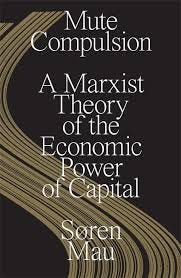
When Marx and Engels were starting their careers as young radicals, and for a good while thereafter, they were perpetually convinced that capitalism was one more big market crisis away from being overthrown by the rebellious workers of the world. Now, Marx seems to have rethought that by the time he wrote Capital, there’s a whole interesting bit about this in the last part of Soren Mau’s book Mute Compulsion, where Mau traces the story of Marx coming to recognize that the periodic crises of capitalism could function almost like forest fires that renew the forest ecosystem for the next round of accumulation. Perhaps also experience was starting to teach Marx that the dynamics of class consciousness were a lot more complicated than just, people experience a crisis, decide they have nothing to lose but their chains, and rise up. I might be making this up, because I’ve never been able to find it again, but I could swear I remember reading some very late in life letter from Engels where he says that back in the 1840s he and Marx mistook capitalism’s “birth pangs” for its “death agony.”
Even so, during Engels’s final years, the Second International had gotten going, and in the decades leading up to the First World War it was racking up progressively more impressive electoral successes, especially in Germany, that for a while there it was possible to believe that capitalism would radicalize its own gravediggers more or less automatically. As industrialization continued, the proletariat would get bigger and bigger, packed together in factories and working-class neighborhoods, and socialist ideas would naturally flourish in those conditions and sooner or later, to borrow a phrase used much later in the 20th century by Fidel Castro, trying to stop the transition to socialism would be like trying to stop a pregnant wale from giving birth.
There’s a lot we could say about why that didn’t happen. Again, I want to be clear that I’m under no illusions that it’s a simple story reducible to a few easily diagnosed causes. We’re talking about well over a century of human history here. More than one thing happened! But, as we’re having this conversation near the end of Marxism’s second century, I think one thing we have to acknowledge is that, whatever else is true, there’s nothing automatic about class consciousness and socialist organizing and working-class radicalization. Class consciousness is always a precious but heart-breakingly contingent cultural achievement.
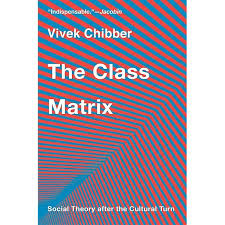
If I was going to recommend just one book about all of this, it would be the one I wrote about in the second essay of this thing, which is Vivek Chibber’s short but very sharp book The Class Matrix. One of the things that Chibber does in that book is turn the tables in a really interesting way on all the Marxist and post-Marxist theorists over the course of the last several decades who’ve said that, if we just go with basic Marxist economic analysis, we should expect that a successful global movement to transition to socialism should have happened by this point in the history of capitalism (because, after all, that would be in the class interests of the working-class majority) and since it hasn’t happened yet, we need to either revise the basic class analysis or else supplement it with other intellectual resources to figure out what’s the counteracting factors are—maybe some sort of analysis about culture, about ideology, maybe even psychoanalysis. And Chibber essentially says, no, whatever interesting things we might be able to learn from all of that, we don’t actually need any of that to explain working class non-resistance.
I’m sure everyone here is familiar with Marx’s “mute compulsion” concept in a basic way, wherever you all are in the spectrum from “I read an article in Jacobin every once in a while” to “I’ve not only memorized every word of all three volumes of Capital, but also all of the punctuation marks.” But in broad strokes, the idea is that, in all class systems—slavery, feudalism, capitalism, whatever—the immediate producers, whether proletarians, peasants, serfs, or slaves, spend part of their day working to meet their own needs and then they’re forced to spend part of it working to enrich some sort of exploiting class. Under capitalism, since all this is mediated through market relations, workers spend part of their day reproducing their own wages and part generating profits for the boss. That much is what capitalism has in common with all those previous systems. But one of the most important differences between capitalism and its predecessors is that serfs and slaves are directly, violently compelled to do that surplus labor. Fail to show up for your week of corvee labor as a feudal serf and you’ll end up having a conversation with some guys with swords. Try to escape from the plantation as a slave and you’ll be chased down by the slave patrol. And of course that’s not how capitalism works, at least in typical cases. In fact, workers show up every day at even the most tedious, degrading, or dangerous jobs, precisely because the threat of losing employment is such a potent disciplinary tool. They’re terrified of losing those awful jobs. No one needs to be frog-marched to work at an Amazon warehouse by guys with rifles. The “compulsion” of their economic circumstances does the trick just fine on its own.
And so a big part of what Chibber argues is that, when we take Marx’s insight about mute compulsion, his basic picture of class relations, and zoom into look at the matrix of particular incentives that particular individuals have by virtue of their class location, the Frankfurt School kind of assumption that Marxist structural analysis would predict proletarian resistance and we have to bring in culture and ideology to explain non-resistance ends up getting things exactly backward. Once we zoom in on the individual incentives, the balance of incentives for individual proletarians, precisely by virtue of the circumstances that mutely compel them to participate in the structure, is to keep their heads down and pursue individual-level solutions. Even the lowest-income workers really do have a bit more to lose than just their chains! They have families and kids to worry about. Even if they live in cramped apartments, they make those apartments their homes and they don’t want to get evicted. Even if their jobs suck, they don’t want to lose them. And while reforms within the system can blunt at least some of these edges, for example with better labor laws, the default result of basic capitalist economic structures mean that collective action always comes with tremendous risks. If you get involved a union organizing campaign, you might get fired. If you go on strike, the boss might shut down your warehouse entirely. If you elect a socialist government to power, you might trigger capital flight orthe rest of the world might economically cripple your country with sanctions. The hard work, the terribly hard work, of organizers is to build solidaristic culture in order to get people to take risks on one another’s behalf. So the punchline here is that, once we zoom in to the level of individual incentives, Marxist structural analysis predicts non-resistance and you actually have to bring in culture and ideology to explain resistance.
And a point Chibber often makes very sharply about all of this is that organizers tend to be psychologically unusual people. You sort of have to be a moral fanatic to dedicate your life to this stuff. Realistically, most human beings just aren’t going to be like that. So, material incentives still have to do an awful lot of the heavy lifting. The disincentives to collective action are going to win out in the end unless you’re actually delivering the goods through collective victories. In the best-case, the absolute best-case scenario, there’s a virtuous cycle here, where you can build up enough solidaristic culture to put some points on the board with concrete victories, and you can start to change that risk-reward matrix to create better incentives for sticking with the movement to get even more. And the frustrating thing about this picture, but I think this is absolutely correct, is that class consciousness and class organization is always a contingent and fragile achievement. There’s no structural guarantee.
So, I want to make two points about all of this, one connecting back to what we were talking about before and one that might advance the plot a little. The first is that if you accept Chibber’s analysis that you need a core of hardcore fanatics to make any movement work, that tells me something about what purpose is being served by trying to intervene in our weird fragmented media landscape to promote socialist politics. What are we trying to do when we do that? Sometimes people who think they’re being sophisticated materialists will say, what are you trying to do when you do all these debates, or write all these articles for Jacobin to give people talking points for arguments with their non-leftist friends, or write all these articles for the non-socialist press trying to get left-wing ideas in there? Do you think that we can somehow achieve socialism this way? In other words, are you such a simpleton that you actually think we can debate our way to socialism? And for the record I do not in fact think that. No one anywhere thinks that. But if we want to create a socialist political culture that’s going to breed the kind of fanatical hard-core organizers we need, if we understand this as a big part of the task, then all of this discourse-level stuff does become relevant. You never know where future organizers might first encounter socialist ideas and get excited about them. That’s one point.
The second point is that I want to admit that I haven’t really done what I promised earlier. I haven’t actually said what I think happened to the Left in the period from the Manufacturing Consent era in the 1980s to the present. Because the Class Matrix story is a general story rooted in the basic structure of capitalism. And of course we can’t explain any particular shift that took place within the history of capitalism by appealing only to the general story. You have to look at particular events. But the starting point of that analysis, the thing I think we can take from that as we start to think about what happened, is that class consciousness and working-class militancy and working-class organization can only be a terribly fragile cultural achievement.

And what we’ve seen in the last several decades is really a catastrophic collapse in a lot of the progress on that front that had previously been made in societies like the UK and even the US. That happened for a lot of specific concrete reasons, not deducible of course from the general we’ve just been discussing. Neoliberal restructuring of global trade conspired with automation to undercut a lot of the big industrial unions that had previously been the heavy battalions of the workers’ movement, for example—that’s an obvious piece of the puzzle. Smaller workplaces are harder to organize. The collapse of the deeply flawed experiments in authoritarian state socialism that existed in the 20th century also just took a lot of wind out of the sails of a lot of the people who’d be our necessary hard core of fanatics, that’s absolutely another puzzle piece. Even basic social democracy in Europe, or the most successful movements in the US, couldn’t have been built up without the contributions of a lot of people who were inspired by a long-term radical socialist vision, and capitalism’s triumph in the Cold War terribly undermined a lot of that confidence that something better is possible. I don’t think you can discount that. And obviously we could say a lot more about what happened to the left in between the 1980s and today, but there’s just one more factor I want to highlight, which is the way a lot of the political evolution that’s happened in a lot of different countries over the last several decades has been shaped by what political scientists call the “diploma divide.” The explosion of higher education has historically meant that whether or not you went to college defines a lot of culture war battlelines, and the combination of that with the decline of those powerful industrial unions has contributed to class dealignment—the phenomenon whereby left-of-center parties that might traditionally look to union workers as a voting base end up increasingly being captured by the values and worldview of credentialed professionals. That in turn opens up space for the real monsters, the really poisonous xenophobic authoritarian dragons, on the pseudo-populist Right.
And I want to point out that my claim here is absolutely NOT that the non-diploma-addled working class is culturally conservative while credentialed professional types are culturally progressive. In fact, that story would just be inaccurate in a basic ways, if you look at opinion polling. We live in a vastly more secular, more cosmopolitan, more pluralistic, less sexist, and so on society than anything our grandparents could have imagined at this stage of their lives—that’s true at all class levels—and the trend line at all class levels is very very clear. But if different parts of society don’t necessarily move on the same speed on various social and cultural issues, the culture war can be mixed up with the diploma divide in ways that are just profoundly un-conducive to a flourishing socialist left. And the diploma divide is obviously not the only divide. There are all sorts of other cultural divides, and various culture wars that mostly play out within the professional classes themselves.
So, when you put it all together? what’s the Left going to do? How do we proceed? That brings me to the new book.
Thanks for reading Philosophy for the People w/Ben Burgis! This post is public so feel free to share it.
From Philosophy for the People w/Ben Burgis via This RSS Feed.