

As real wages buy 30% less meat, non-traditional proteins emerge as a controversial survival strategy.
Argentinais still dealing with a challenging inflationary environment in the first half of 2026. While the month-on-month Consumer Price Index (CPI) has shown signs of stabilization compared to the volatility of previous years, the annual rate remains significantly elevated.
As of March 2026, year-on-year inflation stood at approximately 32.6%. However, these general figures often conceal a more nuanced reality within the food sector.
Statistics from the National Institute of Statistics and Censuses (INDEC) reveal that food and non-alcoholic beverages have frequently outpaced the general index, with meat and derivatives specifically surging by 6.9% in the Greater Buenos Aires area in early 2026 alone.
The primary challenge for the average Argentine household is the “relative price” distortion. While official reports indicate a slowdown in the headline inflation rate, the cost of essential proteins has risen much faster.
This has resulted in a significant “scissors effect” on purchasing power. Real wages have been unable to keep pace with these essential costs, particularly following the removal of broad utility and fuel subsidies in early 2026.
This loss of disposable income means that while the economy may show growth on paper, the capacity of a standard monthly salary to purchase a “basic food basket” has diminished by an estimated 30% over the last 24 months.
The Paradox of the Beef Export Giant
Argentina continues to be a major player in the global beef industry, but this success has created a paradox for its own citizens. In Q1 of 2026, beef exports reached an all-time high, generating over $1.1 billion in revenue.
Key markets such as China, which now accounts for almost 60% of export volume, and the United States, following recent trade expansions, have sustained demand at record levels. High international prices and a “first-come, first-served” export quota system have incentivized local producers to prioritize foreign buyers who pay in stable currencies.
For the local consumer, this global demand translates into “price parity,” where the cost of a steak in a Buenos Aires neighborhood butcher’s shop is increasingly tied to its value in Shanghai or New York.
In the absence of government interventions such as export taxes or domestic quotas, which the current administration has largely dismantled, local prices rise to match international levels.
As a result, domestic beef consumption has plummeted to 47.3 kilograms per capita, the lowest level recorded for over 20 years. There has been a growing trend of families opting for more economical alternatives to traditional beef, such as poultry and pork, or in some cases, non-traditional proteins.
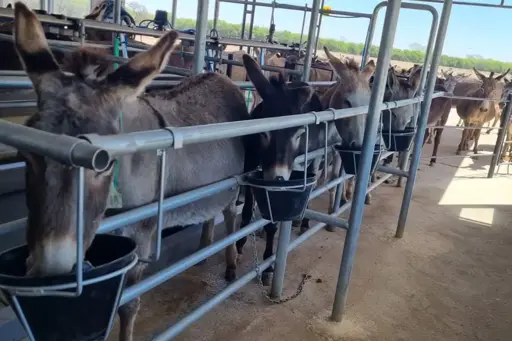
Emerging Alternatives and Regulatory ChallengesThe sustained pressure on beef prices has catalyzed the emergence of non-traditional food markets, most notably the commercialization of donkey meat and milk. In the province of Chubut, pilot programmes initiated in mid-April 2026 have introduced donkey meat to local butcher shops at a significant discount.
These premium cuts are available at a competitive price point of approximately $7,500 per kilogram, representing a significant cost reduction compared to traditional beef. The product’s affordability and high demand resulted in initial stock selling out within 24 hours.
Concurrent with the growth of the meat market, a niche industry for donkey milk has emerged in provinces such as Córdoba. Marketed for its hypoallergenic properties and high nutritional value, often compared to human breast milk, donkey milk is being positioned as both a premium wellness product and a therapeutic alternative for children with cow’s milk protein allergies.
However, the expansion of these markets faces significant regulatory hurdles. The National Health and Food Quality Service (SENASA) has noted a lack of federal-level slaughterhouses authorized for donkey processing, which is currently limiting sales to provincial borders.
Political Discourse and Societal Impact
The political response to these shifting consumption patterns has become a central point of contention between the administration and its critics. President Javier Milei and his team have described the focus on donkey meat as a “political operation” by the opposition to overshadow macroeconomic improvements.
The administration’s narrative highlights that, while inflation remains high, the “price jump” is a necessary correction following years of artificial price freezes. From the government’s perspective, the emergence of niche markets is a testament to private sector innovation and the freedom of consumers to choose affordable alternatives without state interference.
In contrast, opposition figures and social movements point to the consumption of donkey meat as a “symptom of national degradation.” Critics argue that a country capable of exporting over a billion dollars in high-quality beef should not have a population forced to seek out “emergency proteins.”
This debate is indicative of a broader societal concern regarding the erosion of the traditional Argentine lifestyle. As the government continues its policy of non-intervention and fiscal adjustment, the central question remains whether these non-traditional food sources are a temporary adaptation to a crisis or the beginning of a permanent shift in the Argentine socio-economic fabric.
The Commercialization of Donkey Milk and Market NicheAs the search for affordable proteins dominates the headlines, a secondary and more specialized market has begun to emerge: donkey milk. In contrast to the meat industry, which emerged as a response to domestic economic challenges, donkey milk is being promoted as a premium “superfood” with both therapeutic and industrial applications.
In the dairy heartlands of Córdoba and Santa Fe, small-scale producers have started to formalize production in response to a growing demand for hypoallergenic milk alternatives.
Scientific interest has bolstered this trend, as donkey milk’s biochemical composition is remarkably similar to human breast milk, making it a viable option for infants with severe cow’s milk protein allergies (CMPA).
While the global donkey milk market is projected to grow significantly through 2032, the Argentine sector remains in an artisanal phase. Producers are currently navigating a complex regulatory landscape to secure the necessary sanitary certifications for nationwide supermarket distribution.
For the Milei administration, this sector exemplifies the concept of “niche innovation”: a high-value, low-volume export product with the potential to generate foreign currency without the need for extensive infrastructure, as is typical of the traditional cattle industry.
Political Polarization and the Future OutlookThe issue of “donkey meat” has become a contentious topic in political discourse, serving as a potent metaphor for the country’s diverging economic narratives. Government spokespersons, including the Ministry of Deregulation, have largely characterized the issue as an illustration of market adaptability.
The official stance is that, in a free economy, price signals will naturally guide consumers towards the most efficient alternatives. President Milei has been vocal in defending the truth-telling of prices, arguing that the high cost of beef is a result of years of suppressed inflation and that the market must be allowed to find its own equilibrium without state-imposed price caps.
However, opposition figures and labor unions regard the situation as a social emergency. Critics argue that the increasing acceptance of non-traditional meats is a visible sign of a “broken social contract” in a country that historically defined its middle-class status through the accessibility of high-quality beef.
As Argentina moves into the second half of 2026, economic analysts suggest that food inflation may begin to decelerate further, with some forecasts projecting a drop to 20–22% annual inflation by year-end.
The decision of whether the “common Argentine” will return to the traditional beef asado or continue to integrate these new proteins into their diet will depend largely on the recovery of real wages and the government’s ability to balance record-breaking exports with domestic affordability.
(Telesur) by Silvana Solano
From Orinoco Tribune via This RSS Feed.