

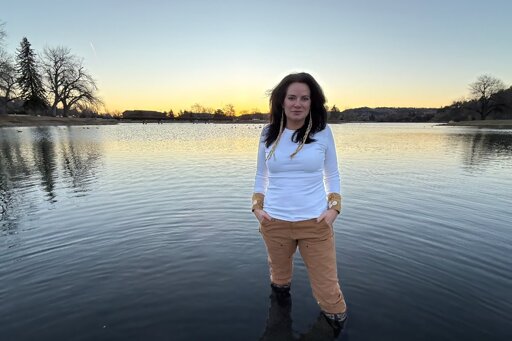
A few years ago, I was watching Ken Burns’ The American Buffalodocumentary when a photo of Fred Dupree and Mary Good Elk Woman popped up on the screen, and I thought, ‘Oh my gosh, where did he get that? That’s our family photo!’ Fred and Mary are my great-great-great-great-grandparents, and they were living on the Cheyenne River Sioux reservation in the late 1800s when Mary Good Elk Woman had a dream about saving the buffalo. The next morning, when she woke up, she told Fred he needed to get their sons and get out there and save the buffalo.
So they went out and rounded up some calves. The federal government supported efforts to eradicate the bison—it was a very purposeful campaign to destroy our food source—but the calves didn’t have any economic value at the time, so hunters left them alone. There were herds of just calves roaming around. So Fred and his sons went out, rounded up some calves, and eventually created a herd that helped repopulate the buffalo in parts of the Great Plains. Most all the buffalo in Custer State Park are descended from our family’s herd. And now, when I see baby bison, not orphaned but with their families, I get choked up, because we’ve come full circle – from a few orphans left to die on the plains to these joyful calves today zooming around their mothers.
I love that so much of my work today is still about helping bring the buffalo back to Tribes. I’m the vice president of Native Nations Conservation and Food Systems at the World Wildlife Fund. I started there in the fall of 2024 after spending four years as the director of the USDA’s Office of Tribal Relations under the Biden Administration. While I was at the USDA, I worked hard to change the agency’s policies to be more inclusive of Tribes, Tribal producers, and Indigenous foods. At the WWF, my team gets to continue much of these efforts, working to integrate Indigenous values into conservation work, and to directly support Tribal conservation—particularly with buffalo and buffalo food systems.
“You can only do so much with a PowerPoint. You really need people to experience things firsthand.”
While at USDA I often spoke to different agencies about the federal government’s role in slaughtering the buffalo in order to control Tribes’ access to food and to force Native people into becoming western farmers. It was important for people throughout the agency to understand how purposeful federal policy decisions led to the challenges you see today in Indian Country—high rates of diabetes, food insecurity, poverty, complicated land ownership, inaccessibility of Indigenous foods—because if we don’t understand the historical lens, then we can’t fix it.
But you can only do so much with a PowerPoint. You really need people to experience things firsthand. When we take people into Indian Country, it’s really impactful, but that’s hard to do. So we tried to bring experiences to D.C. as well. For Native American Heritage Month one November, my office decided to have an Indigenous Foods “cookoff” for the department. We invited people from all the different USDA agencies to stop by the office, where we had all kinds of Native ingredients on display, and pick an Indigenous ingredient to cook a dish with.
Across the board, people really got really excited, from the meat inspectors to the lawyers. One person even made brownies using tepary beans, a drought-resistant bean native to the Southwest. It was great to see folks who have never been to Indian Country doing their research on Indigenous foods and really excited, and I thought, “Wow, we have to do this every year.”
When I started at the USDA, I walked in hot. I had very specific things that I wanted to work on. I had spent years working for several large land-based Tribes, and I was aware of just how much USDA policies affect people in Indian Country. It’s our school lunches. It’s whether healthy and Indigenous foods are available through the Food Distribution Program on Indian Reservations (FDPIR), which we call “the commodity program” or “commods.” It’s also our grazing rights and lack of access to farming and ranching programs. And it’s our ability to process Indigenous sources of protein, like buffalo, reindeer, and salmon.
I did a lot of hiring to make sure there was a Tribal liaison in each USDA agency. That’s important because, for example, for nutrition programs like FDPIR, SNAP, and WIC, you need someone who understands that Native bodies evolved with non-European diets. For example, Indigenous Alaskans, they’re like the original Keto diet, right? Highfat, low carbohydrate. So, whale blubber, seal, and salmon. The high proportion of those kinds of foods don’t always meet Western nutritional guidelines. So if you don’t have a Native person to consult with, you’re not going to recognize that Native bodies are different, and you’re going to be feeding those bodies the wrong foods.
That’s what happened for years and years. After we were pushed off our lands and lost our food sources, we were forced to became dependent on the federal government to feed ourselves. The FDPIR program is the modern version of that dependence, and it’s a necessity for Tribes on large reservations where grocery stores are few and far between. The USDA purchases and ships domestically sourced foods to Tribal governments, and Tribes distribute it through warehouses or Tribal stores. Historically, those food packages were lard and flour and things that were really bad for Indigenous bodies and caused dramatic problems with diabetes and obesity.
When I was at USDA, I was able to get that changed somewhat so that Tribes could choose more of the foods they wanted to eat: wild rice in the Great Lakes, buffalo in the Great Plains, blue corn in the Southwest, salmon in Alaska. It’s not across the board, but where it’s been implemented, it has been wildly successful. So now you’re seeing people calling up the FDPIR office and asking, “Hey, is the bison in?” and really wanting to participate in these programs because they are foods that are both culturally appropriate and nutritionally appropriate for the bodies in those regions. So that was a big win.
“It’s what happens when you let Tribes do what Tribes want to do: They buy healthy foods locally, and they eat healthy foods locally.”
But the really big win for Indigenous Food Sovereignty when I was at the USDA was the Local Food Purchase Assistance Cooperative Agreement program (LFPA), which was funded first through the American Rescue Plan and later extended. It took the federal dollars and rather than USDA doing the food purchasing, it gave the money directly to states and Tribes. Those governments could then purchase whichever foods they wanted, as long as the food they bought came from within 400 miles. The idea was to strengthen local food producers after COVID showed that parts of our food supply chain were vulnerable to disruption.
I can’t speak for the states, but the LFPA was revolutionary for Tribes. It changed everything, because for the first time, Tribes had the dollars themselves to do what they’ve been thinking about forever: eating local Native foods. The Sitka Tribe of Alaska was buying crab and salmon and clams, and the Oglala Sioux Tribe in South Dakota was buying wild berries, wild turnips, and buffalo, and several Ojibwe Tribes were buying wild rice. It also empowered people within Indian Country to go out and get wild foods, like by digging up prairie turnips and starting a bison harvesting plant because they had a buyer. And it also empowered the people who wanted to eat these wild foods because now they could access them. So it created this whole economy around Indigenous local foods. It’s what happens when you let Tribes do what Tribes want to do: They buy healthy foods locally, and they eat healthy foods locally.
Unfortunately, the dollars ran out on that, but I’m hoping that Congress rethinks it, because it’s a very conservative principle. It’s basically stopping the federal government from running your nutrition programs and letting local communities empower local producers. The LFPA is also a good example of the importance of having Native people in the federal government, because originally, the LFPA did not include Tribes. The money was just going to go to state governments. We helped change that, because Tribes are not subsidiaries of the states, we’re not counties, we’re our own sovereign governments.
Another thing I helped change was access to meat processing. For 250 years, the USDA has really only invested meat-processing dollars in harvesting European domesticated animals—cattle, pigs, sheep, and chickens. We’ve never funded the processing of the animals that are actually native to the U.S. But our people want to eat seal and whale and deer and elk and moose and bison. So for the first time ever, the USDA gave grants to fund meat processing for those animals, through the Indigenous Animals Harvesting and Meat Processing Grant. And one really cool project that came out of the grants was the mobile meat-processing trailers that Tribes can take out to the field to process a buffalo.
Many Tribes don’t like to load a bunch of buffalo on a truck and take them to a big slaughterhouse. We think that’s disrespectful, because the buffalo are our relatives, and that is very stressful for them. We prefer to bring a sharpshooter out onto the prairie who takes down the animal in one shot while it’s grazing. The buffalo doesn’t ever know what’s coming and doesn’t get stressed. It lives and dies with dignity where it’s lived its whole life.
But the only way you can do that and also address modern food safety requirements is if you’ve got a refrigerated mobile harvest trailer so you can field-dress that animal out on the prairie. So I got the USDA to finance, along with the Intertribal Buffalo Council, a harvesting trailer to show it could be done. It was wildly successful. I don’t even know how many we have now, I think about 15 trailers. Every Tribe wants one. And they‘re only like $100,000 each. So compared to a $30 million stationary processing facility, they’re very accessible.
Another important policy that I worked on at USDA was changing school lunches to include more Native foods. The biggest challenge to school lunches is that the federal appropriation amount is so small; it’s a little over $4 a child, and that forces most schools to buy really unhealthy food in bulk. Schools turn to these large food corporations that consolidate the market and can offer them ultra-processed food that is not really food.
So, one of the biggest issues we faced at USDA was, how to empower schools in Indian Country to purchase local foods that are healthier for their people when you only get $4 per student? It’s really hard. So, to be frank, we’ve only been able to include Indigenous foods in Native schools when Tribes or grants have subsidized the cost. Because the price point of buying local food, whether it’s buffalo or wild rice or other things, is so much more expensive than what schools have in their budgets.
I also helped clarify to people who work in schools in Indian Country what the rules are for buffalo meat inspection. That was something we really wanted to get across during last year’s Buffalo to School Conference, because there’s a myth that all meat you serve in schools has to be USDA-inspected, but that’s not true. Buffalo and game meat are not required by USDA to be USDA-inspected. So we spent a lot of time demystifying that. We also brought together Native buffalo ranchers and school staff so they could get to know one another and create a pipeline for getting more buffalo meat into schools.
During my last year at the agency, I remember we had a panel on Indigenous Food Sovereignty with Native celebrity chef Sean Sherman and Agriculture Secretary Tom Vilsack. Sean was criticizing the USDA’s destruction of Indigenous foodways and lack of inclusion of Indigenous foods in USDA programs, and Secretary Vilsack got upset, and he pushed back and talked about how important Indigenous foods were and then listed out all the things the USDA was doing to support Tribes and Indigenous foods.
And I thought, OK, my work here is done. For a USDA secretary to actually care enough about Indigenous foods to be proud of the work, to get upset about it, and to know in detail all the things USDA is doing to help with Indigenous food sovereignty? That was a first for the history books.
As told to Civil Eats and lightly edited.
The post Finding ‘Big Wins’ for Indigenous Food Systems appeared first on Civil Eats.
From Civil Eats via This RSS Feed.
She’s doing great work (and really upholding her family’s incredible legacy). I wish that this was bigger news.
404
Sorry, page not found.
Oops. This is not good. You’re probably not looking for this page. Please try the search tool, above, or visit our home page.
