

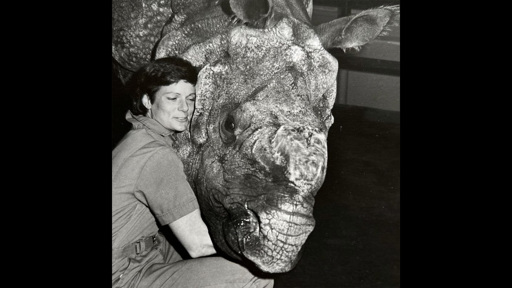
“One of the great tragedies of the 21st century,” Nan Schaffer once said, “will be humanity’s homogeneity.” The remark was less a warning than a diagnosis. In a world where landscapes were being simplified and species reduced to remnants, she concerned herself with what would be lost when difference itself began to disappear. For species like rhinoceroses, that erosion of difference was already under way. In the controlled stillness of a zoo enclosure, where a four-ton animal may refuse to breed or carry a pregnancy to term, extinction can feel procedural. It is a matter of missed signals, incompatible pairs, and time lost in small increments. For the rhinoceros—ancient, solitary, and increasingly isolated—survival has often depended not on the drama of the wild but on the patience of those willing to study its most intimate biology. Schaffer spent much of her life in that patient, technical struggle. She believed that if rhinos were to persist, it would be because people learned how to help them reproduce when shrinking, fragmented populations could no longer sustain breeding on their own. Sumatran rhino at the Sumatran Rhino Sanctuary. Image by Rhett A. Butler/Mongabay. Schaffer, a veterinarian who pioneered the science of rhino reproduction, died on March 27th after a prolonged battle with cancer. She was 72. Her work took her into pens and barns, across zoos and wilderness sites, and into a field that barely existed when she began: the reproductive physiology of large, endangered mammals. She was one of the world’s leading…This article was originally published on Mongabay
From Conservation news via This RSS Feed.