

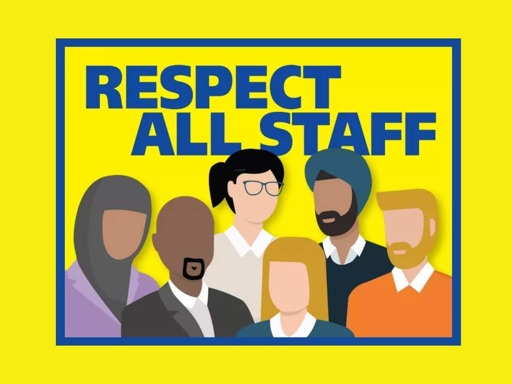

New TUC polling shows Black and ethnic minority workers have faced a significant increase in overt forms of racism at work over the past six years.
The union body says wider unfair treatment and discrimination of Black and ethnic minority workers is “plaguing the labour market”. And it’s calling for urgent action to stamp out racism and discrimination at work.
Black and ethnic minority workers are facing “appalling levels” of racism, bullying and unfair treatment at work, according to new TUC research.
The polling – conducted by Hold Sway – reveals a “shocking increase” in explicit racism at work since six years ago, when the TUC polled the same questions.
The TUC warns that unfair treatment, bullying and explicit racism of Black and ethnic minority workers is rife. It says the government needs to take urgent action to stamp it out.
Explicit racism at work
Explicit racism at work is plaguing the labour market and getting worse, according to the TUC.
The new polling reveals that since 2020, black and ethnic minority workers say they are experiencing racism at markedly higher levels including:
- Having your ability to speak English questioned (increasing from 20% to 31%).
- Racist jokes and banter (increasing from 36% in 2020 to 41% in 2026).
- Racist remarks directed at you or made in your presence (increasing from 31% in 2020 to 36% in 2026).
- Verbal abuse directed at you or at others (increasing from 32% in 2020 to 35% in 2026).
- Physical violence, threats and intimidation at work (increasing from 19% in 2020 to 26% in 2026).
- Racist content through social media being shared in the workplace (increasing from 22% in 2020 to 28% in 2026).
- Racist literature or music being shared in the workplace (increasing from 19% in 2020 to 25% in 2026).
The poll also found that Black workers face a range of unfair treatment at work, with the most common being:
- Over 2 in 5 (45%) say they have been given harder or less popular work tasks.
- Over 2 in 5 (43%) say they have received unfair criticism.
- 2 in 5 (41%) say they have been kept on temporary of fixed terms contracts.
The most significant worsening of treatment since 2020 all relates to contracts and working hours. Black and ethnic minority workers reported:
- Not being given sufficient hours has increased from 30% to 40%.
- Not being offered overtime has increased from to 30% to 37%.
- Being kept on temporary or fixed term contracts has grown from 33% to 41%.
Perpetrators
The most common perpetrator varies by whether the most recent incident was unfair treatment, bullying or explicit racism.
- The perpetrators of unfair treatment are more likely to be direct managers (35%) or other managers (19%).
- Bullying is most likely to come from direct managers (30%) and colleagues (28%).
- Explicit racism is most likely to come from colleagues (33%) and customers, clients or patients (22%).
The TUC is calling on the government to urgently tackle racism and discrimination of Black and ethnic minority workers in the labour market.
The union body says ministers should:
- Ensure employers are meeting their obligations to prevent harassment at work under the Worker Protection Act 2024 by providing ring-fenced funding for the Equality and Human Rights Commission (EHRC) so it can carry out its role to enforce protection for workers.
- Fully deliver and enforce plan to Make Work Pay including statutory rights for equality representatives.
- Legislate at pace to introduce mandatory ethnicity pay gap reporting for employers with more than 50 employees and require action plans to address identified disparities.
The TUC says the Employment Rights Act will be an important step forward. It will introduce third party harassment protections. Employers will therefore have a duty to protect workers from harassment and abuse from customers, patients and punters.
The TUC says employers have a role to play too. It says employers must:
- Treat racial, and racialised sexual, harassment as a workplace health and safety issue requiring proactive prevention measures.
- Implement comprehensive ethnicity and intersectional monitoring, including recruitment, retention, promotion, pay and grading, ethnicity pay gaps, training access, and disciplinary processes.
- Embed racial equality commitments within collective bargaining agreements.
- Ensure flexible working opportunities are available and applied fairly across the workforce.
TUC general secretary Paul Nowak said:
No one should be treated unfairly or discriminated against because of their background, where they’re from or the colour of their skin.
But Black and ethnic minority workers are facing appalling and growing levels of racism and unfair treatment in Britain.
This racism is plaguing the labour market – and it’s getting worse. The most explicit forms of racism have seen a shocking increase over recent years.
Enough is enough. It’s time for action to stamp this out. The new duty on employers to protect workers from harassment from patients and customers – introduced through the Employment Rights Act – will be an important step forward for Black and ethnic minority workers.
Ministers should now get on with beefing up enforcement so that workers are able to exercise their rights and protections – and swiftly introduce legislation to deliver mandatory ethnicity pay gap reporting, it’s a common-sense way to deal with glaring inequalities in our labour market.
Featured image via TUC
By The Canary
From Canary via This RSS Feed.
why am I hardly surprised this was the UK