

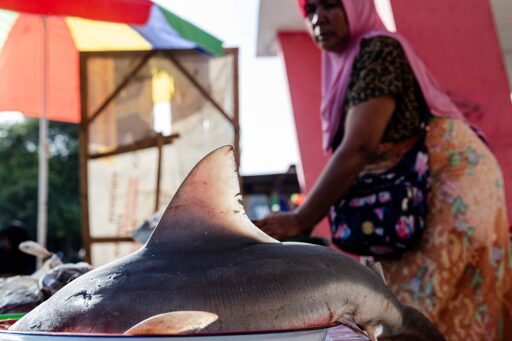
Shark meat has quietly surpassed shark fins in international trade volume and value. In East Lombok it sells for as little as 29 cents a skewer. Photojournalist Garry Lolutung documented the shark trade at Lombok’s Tanjung Luar fish market and nearby Rumbuk village, an important shark meat processing center. EAST LOMBOK, Indonesia — Indonesia consistently ranks as the top shark-catching nation in the world. The fish market in Tanjung Luar village on the island of Lombok is often called the country’s biggest for sharks. It was bustling when Mongabay visited one morning in February last year. Vendors with plastic buckets greeted fishing boats from nearby islands, welcoming fresh catches. At the pier, fishers carried a shark from their boat to the auction site and placed it among others on the floor, ready for bids. “This has been a job passed down from the previous generation to our generation,” fisher Safruddin told Mongabay while unloading his catch. “This has become a daily livelihood for the people here to make a living, and the market price is still promising.” Lombok’s shark trade first gained prominence in the 1990s, locals say. Today, the animals sell at auction for 600,000-1 million rupiah each (about $35-$58). The sharks here are supplied by longline vessels that deliberately target them, which is generally legal in Indonesia, and by gillnet fishers who take them as bycatch. Tanjung Luar village and market, with Mount Rinjani looming in the distance. Safruddin, a fisher, carries freshly caught sharks from a boat…This article was originally published on Mongabay
From Conservation news via This RSS Feed.