


This article by Alberto Carral originally appeared in the April 22, 2026 edition of Rebelión.
Mexico imports 75% of the gas it consumes, and almost all of that gas comes from the United States. Even worse, 60% of our electricity is generated by gas-fired power plants. If the United States, for whatever reason, were to cut off gas supplies to our country, in just two days millions of Mexicans would be left without stoves, refrigerators, internet, television, and much more.
You don’t need to be a technical expert to understand that our neighbor to the north has us in its grip, but what’s inexplicable is why successive Mexican governments put us in this extremely vulnerable position. Whatever the reason, here we are, suffering under the most anti-Mexican and demented president to have occupied the White House in a long time. Without a doubt, we are obligated to reduce this unacceptable dependence somehow, but the question is how.
President Claudia Sheinbaum has proposed using a “less harmful” type of fracking to extract gas from the northern basins, in particular, and has taken advantage of the global geopolitical crisis to announce it. However, such an option will be, at best, a palliative and not a fundamental solution, since the problem is not only energy dependence on natural gas, but essentially our subjugation to a foreign economic model whose objective is to satisfy the interests of large foreign corporations.
If the world plunges into a prolonged Great Depression, Mexico will no longer have the option of becoming the emerging manufacturing hub it aspires to be, and the dream of establishing itself as a kind of mini-China will have vanished.
The country is at a crossroads: 1) satisfy the needs of the United States’ productive apparatus and the interests of corporations and finance, or 2) satisfy the requirements of the domestic market and the needs of its population, without harming nature.
From our perspective, if Mexico wants to survive and adapt to the very complex times ahead, it is essential that it move, along three different routes, towards a sovereign economic and energy model.
First. Capitalizing on residual nearshoring. Since the pandemic, Mexico has deepened its level of productive integration with the United States, given that nearshoring is the best option available to our neighbor in its current phase of deglobalization and imperial decline. The expansionist economic model of the American way of life, based on cheap and abundant energy, is rapidly weakening, and Mexico has been able to take advantage of its death throes; that is, the United States’ inability to relocate the manufacturing of many of the goods it imports from here. However, this favorable scenario could change very soon if the war in West Asia intensifies and the world plunges into a prolonged Great Depression. If this happens, Mexico will no longer have the option of becoming the emerging manufacturing hub it aspires to be, and the dream of establishing itself as a kind of mini-China will have vanished.
Second. Igniting the Internal Engine of Self-Sufficiency. After four decades of submission to Washington’s whims, the country is obligated to build, as soon as possible, its own sovereign strategy so that its productive integration with the United States ceases to be merely complementary and subordinate. Mexico must focus all its efforts on recovering the internal engines of its development, and, to this end, it urgently needs to design an industrial policy capable of thoroughly promoting the productive activities that are strategic for Mexicans, emulating the Dual Circulation Strategy employed by China to adapt to internal and external challenges. Under the pressure exerted by the decreasing availability of energy and critical materials, in the coming years the automotive industry will shrink and cease to be the axis of the country’s (and the world’s) development. Priorities will be very different from the current ones, so it is necessary to identify them precisely.
In principle, there seems to be a certain level of consensus on the activities that would be strategic: 1) food self-sufficiency, 2) water use and management, 3) development of alternative energy devices, 4) innovation in electromobility modalities and systems, 5) utilization of the waste-to-input chain, 6) healthcare, 7) systems and devices for education, and 8) cultural and tourism industries. It is urgent to design a roadmap that will enable the transition from the assembly-based model to a new model centered on innovation and the adoption of technologies that will drive those activities defined as priorities.
Third. Decentralizing the productive and energy base towards local communities. It is extremely urgent to initiate a vast process of decentralizing Mexico’s productive and energy base towards local communities. While conditions may seem ideal for transforming Mexico into a mini-China, or something similar, that is not what is truly important and strategic. A careful examination of driving trends, such as the drastic decrease in the availability of fuels and critical materials and the imminent collapse of the climate system, makes it clear that a very different kind of organization of production and life is required, one that depends on infinite consumption and material growth. We live on a finite planet with finite resources—which are also being depleted—and these biophysical limits compel us to build an economy from the ground up, from the communities, in neighborhoods and towns, to achieve the best possible adaptation in a very short time and to be able to survive what is coming. We have maintained for more than a decade that the complexity of the transformations in which the world is already immersed compels an urgent debate —social, academic, governmental— on the best way to face the immediate future.
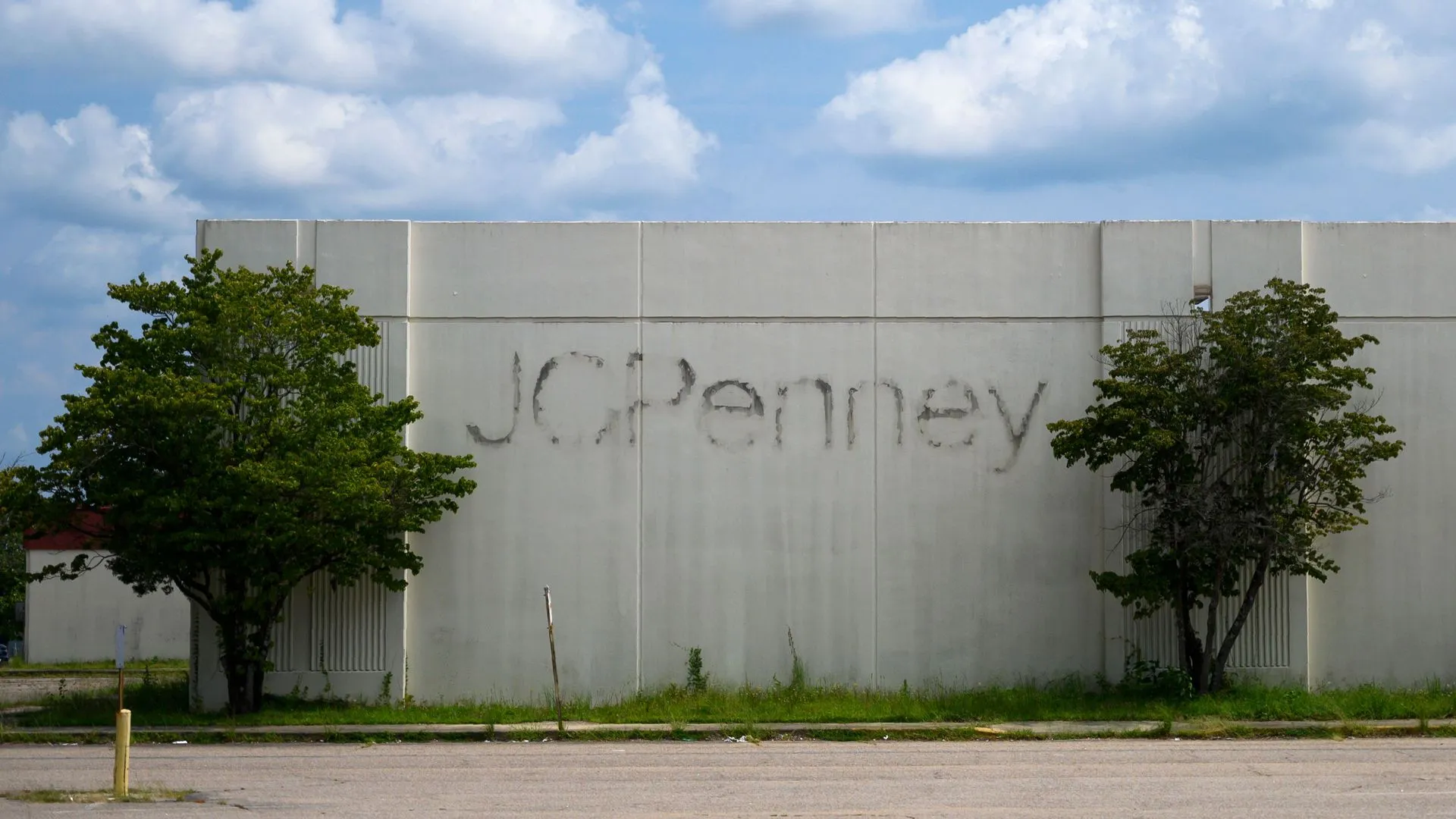
Is Mexico eternally damned to be the low-wage sweatshop for US corporations, its productive capacity only mobilized to feed the grotesque appetites of a heavily indebted US consumer base, anchored to its northern neighbor until its economy implodes, and a crisis beyond that of 1982, 1987 and 2008 takes Mexico down with it?
Here are some scattered ideas, possible clues, loose and unconnected, to try to contribute to the collective debate, with the perspective of finding the best paths for the future:
Urban and rural communities are the foundation of the emerging system and the new civilization that is beginning to take shape. Within their spaces, cooperation and solidarity must prevail over individualism and competition. They are key to dismantling the old, disorganizing status quo, eradicating the oppressive and limiting mechanisms of social reproduction, and demolishing the oppressive mode of production. Their spread is essential to strengthening this embryo that is already beginning to define itself through diverse manifestations, all of which share a common goal: to halt the advance of the destructive forces of unchecked material growth. We are, therefore, on the verge of a historical shift characterized by the end of perverse globalization and the rebirth of a form of coexistence that makes sustenance possible without disrupting the inherent balance of the landscapes in which human beings coexist with other species and exchange energy with nature. Such is the secret of true sustainability: importing from other basins only what is essential and supplementing with external resources only when it is imperative to do so.
Thus, local communities provide the ideal space to begin breaking free from the predatory market and its networks of control, which is perfectly feasible in the most basic aspects of daily life, such as food, health, education, information, money and finance, light manufacturing, art and culture, energy, and transportation. The key lies in building community self-sufficiency networks.
The material base that enables the transition to local economies has this profile:
-
More than half of the world’s population is already outside of commercial networks, so alternative social networks are needed to ensure they can live fulfilling lives.
-
Given that the prevailing economic model tends towards stagnation and decline, local options take on a strategic character.
-
In the face of imminent energy shortages, local-scale renewable energy generation and storage projects are a priority option.
-
The knowledge and innovation that most help ordinary people are found in working people, rather than in the exclusive and expensive laboratories of large corporations.
-
The exposure of agriculture to the climate emergency demands the adoption of resilient organizational and production methods
-
Limited access to materials and natural resources necessitates the complete reuse of waste through circularity schemes in supply chains
-
The potential efficiency of local economies undoubtedly constitutes an option for the development of communities, in the face of the growing difficulties of States in meeting basic social needs.
-
The local economy is less productive in terms of a capitalist economy, but it achieves low prices by not depending on monopolies, reducing costs due to externalities (circularity), and generating lower expenses for transportation, intermediaries, advertising and technology, among others.
A serious debate on the possible options before us is now imperative. Given the complex and threatening scenario in which our government is navigating, it will almost certainly be forced to explore new paths, such as the recently announced exploitation of natural gas through fracking techniques. However, if the government truly intends to find paths to independence and adaptation in this harsh environment, it is obliged to broaden its perspective on the range of phenomena occurring simultaneously.
-

How Much Do We Need Fracking in Mexico?
April 23, 2026
Mexico’s problem is not simply energy dependence on natural gas, but our essential subjugation to a foreign economic model whose objective is to satisfy the interests of large foreign corporations.
-
Mexico City Head Brugada Presents Fair Rents Reform
April 23, 2026
The reform aims to limit annual rent increases to the rate of inflation, increase the supply of social housing, regulate tenant-landlord relations and recognize the right to neighbourhood and community roots.
-

CIA Agents Have Entered Chihuahua At Least Three Times in 2026; LA Times
April 23, 2026
No record was found that the Secretariats of External Relations, Defense, & Public Security had been informed about the participation of CIA agents in operations in Mexico.
The post How Much Do We Need Fracking in Mexico? appeared first on Mexico Solidarity Media.
From Mexico Solidarity Media via This RSS Feed.