

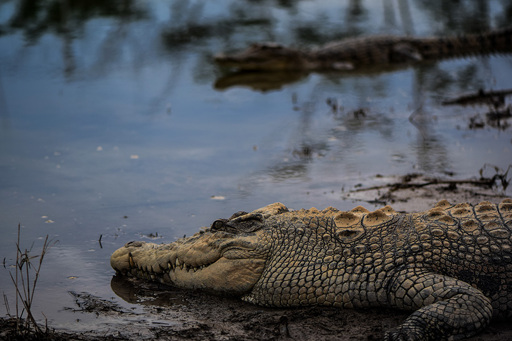
BANGKA, Indonesia — Residents of a centuries-old coastal settlement in the world’s largest tin-mining outpost — Bangka Island — fear that the environmental damage over just a few decades is behind a frightening rise in reports of violent deaths. In February, local fisher Jauhari became the latest person here on Bangka’s west coast to be killed by an estuarine crocodile (Crocodylus porosus). The 40-year-old was likely the 21st victim in the last five years, according to local wildlife charity Alobi Foundation. The saltwater crocodile — the world’s largest reptile — can exceed 6 meters (20 feet) in length weighing up to 2 tons (4,400 pounds) and live more than 70 years. On Bangka Island, it ordinarily lurks quietly beneath the surface of estuaries and lagoons. “This has happened because many swamps and tributaries that are the habitat of estuarine crocodiles have been damaged by illegal tin mining, and then turned into oil palm plantations,” Suhadi, who lives in western Bangka’s Menduk village, told Mongabay Indonesia in late March. The Menduk wetlands, formerly home to estuarine crocodiles, have been converted into palm oil plantations and illegal tin mines. Image by Nopri Ismi/Mongabay Indonesia. For some local people, 40-year-old Jauhari’s passing was a signal of how environmental damage can introduce new forms of violence into communities, a pattern that will intensify as climate pressures compound. One study published in the journal Biological Conservation in 2023 counted 665 cases of crocodile attacks in Indonesia in press reports from 2017 to 2019. Indonesia accounts…This article was originally published on Mongabay
From Conservation news via This RSS Feed.