

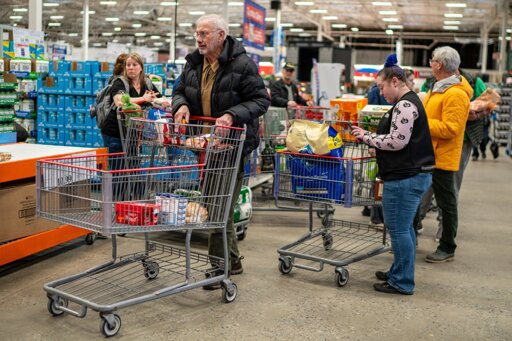
Amid the chaos of the war with Iran, Americans have already seen gas prices rise. Soon, we are likely to see the price of food rise, too, as farmers face rising fuel and fertilizer prices. As Congress considers the 2026 Farm Bill, all Americans are recognizing that farming’s reach doesn’t stop at edge of the field.
We have been here before: During Russia’s war in Ukraine and the COVID-19 pandemic, disruptions in labor and shipping, along with increased costs of equipment and fertilizers, caused food prices to soar. Consumers famously paid the price: $10 for a carton of eggs, $8 for a gallon of milk. Small and midsize farmers suffered, too, facing a sudden spike in bankruptcy.
Our food security does not have to be so vulnerable to global disruptions. We can address this through legislation and policy fixes that encourage stronger regional markets and support a more diverse group of farmers. And we should.
“Rather than meet the challenge of rising food and fuel costs by consolidating farms, the Iran crisis is the latest reminder that we need a better system.”
Decades of American farm policies have focused on increasing scale and production by creating larger, streamlined farm operations. However, research suggests that this consolidation across both farm productionand grocery retailershas also made our food system fragile, leading to volatile prices, bankruptcies, and shortages. When everything is working well, this system accepts these problems to produce record harvests of starches, oils, meat, and ethanol at low consumer prices.
However, this food system is staggeringly inefficient for most growers and eaters: small farmers are cut out of global supply chains when they try to bring their foods to local markets; contracts with institutional buyers like schools favor large processorsover local growers; subsidized fuel and underpaid work artificially defer the cost of long-distance shipping; and, despite record yields, people routinely go hungry, while rural areas lose good employment opportunities.
Working within this system, farmers have no way to pivot during crises, which has forced them to destroy food at harvest time. This is not what an efficient, effective food system looks like. The problem is decades old, but it is exacerbated by our current moment of political and ecological instability.
Rather than meet the challenge of rising food and fuel costs by consolidating farms, the Iran crisis is the latest reminder that we need a better system, one that supports flexible, diversified farms, builds local wealth, and supports regional supply chains.
Shock Resistance
Policies like H.R. 4782, a law embedded within the 2026 Farm Bill, offers one way to break out of this cycle. The provision creates opportunities for smaller farms to get their foods to local markets and, ultimately, diversify the distributors who grow, process, ship, and sell our food.
Research suggests that diversifying these markets doesn’t just create more opportunities for biologicaland economic diversityin rural communities. It also helps to protect all Americans against the shocks of food and climate insecurity.
The U.S. Department of Agriculture (USDA) has already successfully experimented with a way to get more local food to people. During the pandemic, it invested in local foods and distributors.
The Local Food Purchase Assistance Cooperative Agreement program provided funding for food banks and community-serving institutions to purchase fresh food directly from small- and mid-scale local farms, which typically are shut out of that purchasing because larger, consolidated supply chains can sell food at a lower cost.
While such programs earned bipartisan, widespread public support, the USDA under President Donald Trump cancelled the last planned batch of funding as part of a series of federal spending reductions. This unexpected withdrawal of federal support undermines the very farmers who could anchor a vibrant rural economy while easing American dependence on long, fragile supply chains.
The 2026 Farm Bill—with the H.R. 4782 provision specifically—offers a chance to revive these investments. Through policies like this, we can redirect government food-buying toward local farms and regional food distributors, including schools and food banks. By guaranteeing a portion of spending on local food purchasing, institutions like schools and food banks will be able to support small and local farmers in their own communities.
But even if a farm bill can’t make its way through our current Congress, lawmakers should look for other ways to write this program into law.
Like other local entrepreneurial work, local food systems give a great return on investment, as much as two-to-one, because they keep money circulating in the community. That’s especially important now, because the current system isn’t only fragile to global shocks: It’s in desperate need of a new generation who can meet the demands of a changing world.
Cultivating Farmers
The average farmer-producer is 58 years old. On farms across the country, farmers continue to age while their children leave agriculture for more stable sectors. To manage ever-larger farms, farmers must either employ migrant workers, newly vulnerable to immigration and customs policing since 2025, or they must use polluting agricultural chemicals and expensive technology to manage bigger farms with fewer people.
Instead of promoting this dangerous consolidation, agricultural policies could encourage more people to get into farming. Researchers have shown that new and beginning farmers are pushed out of agriculture because they lack access to credit, land, and reliable markets. By guaranteeing a supply chain, programs like H.R. 4782 help more people, including those without inherited land or who come from non-farming backgrounds, to enter the agricultural workforce.
One program won’t remake our entire food system. But “local” is a great place to start. But because so much power is vested at the state rather than federal level, this bill could also uplift the next generation of farmers by giving priority to beginning, diversified, and regenerative farms that make enduring investments in land and community. After all, diversified markets will require diversified farmers to bring them to fruition.
These investments are expensive. But so is our current system. We all pay the price of these agricultural priorities when we experience the public costs in environmental pollution or public health. By some estimates, contemporary global agriculture’s toll, in terms of degraded land, water, air, and unpaid wages, is a $13 trillion costwe all bear.
This expensive system has not reliably provided affordable or plentiful food, because it is easily disrupted by rising fuel costs, war, and labor shortages.
It’s time for a new, re-localized, more flexible system, one that cultivates farmers, not just food. Local supply chains can sustain and build more resilient communities. By creating policies that make it easier for small, diversified producers to thrive, Congress has a chance to improve our national security and support rural communities in one fell swoop.
The post Op-ed: Facing Global Disruptions, Congress Should Invest in Local Food appeared first on Civil Eats.
From Civil Eats via This RSS Feed.