

Indigenous land defenders are being killed and criminalized at alarming rates, AI systems scrape traditional knowledge without consent, while Indigenous women face escalating rates of violence — crises that Indigenous leaders confronted this week at the United Nations, where they warned that the fight for health and sovereignty now extends from traditional territories into digital spaces.
Those warnings came during the 25th session of the United Nations Permanent Forum on Indigenous Issues, or UNPFII, where the overarching theme “Ensuring Indigenous Peoples’ Health in the context of conflict” resonated with participants from around the world. In 2023 alone, 31 percent of human rights defenders killed worldwide were Indigenous or working on Indigenous rights, despite making up only five percent of the global population.
“There is a crisis Indigenous people are currently experiencing, and it’s because many Indigenous peoples are killed, many are under arrest, many live in hiding. This is because Indigenous peoples land and territory are often not protected enough,” said Albert K. Barume, the UN Special Rapporteur on the rights of Indigenous Peoples, in an introductory statement at Wednesday’s session.
As the largest gathering of Indigenous voices in the world, the forum provides a critical platform for communities to tackle systemic inequities together. Claire Charters, who is from Ngāti Whakaue, and is an expert in Indigenous global affairs who regularly presents at the forum, said the power of UNPFII lies in this shared experience.
“That is a very empowering thing,” Charters said. “Because it supports the movement as a whole.”
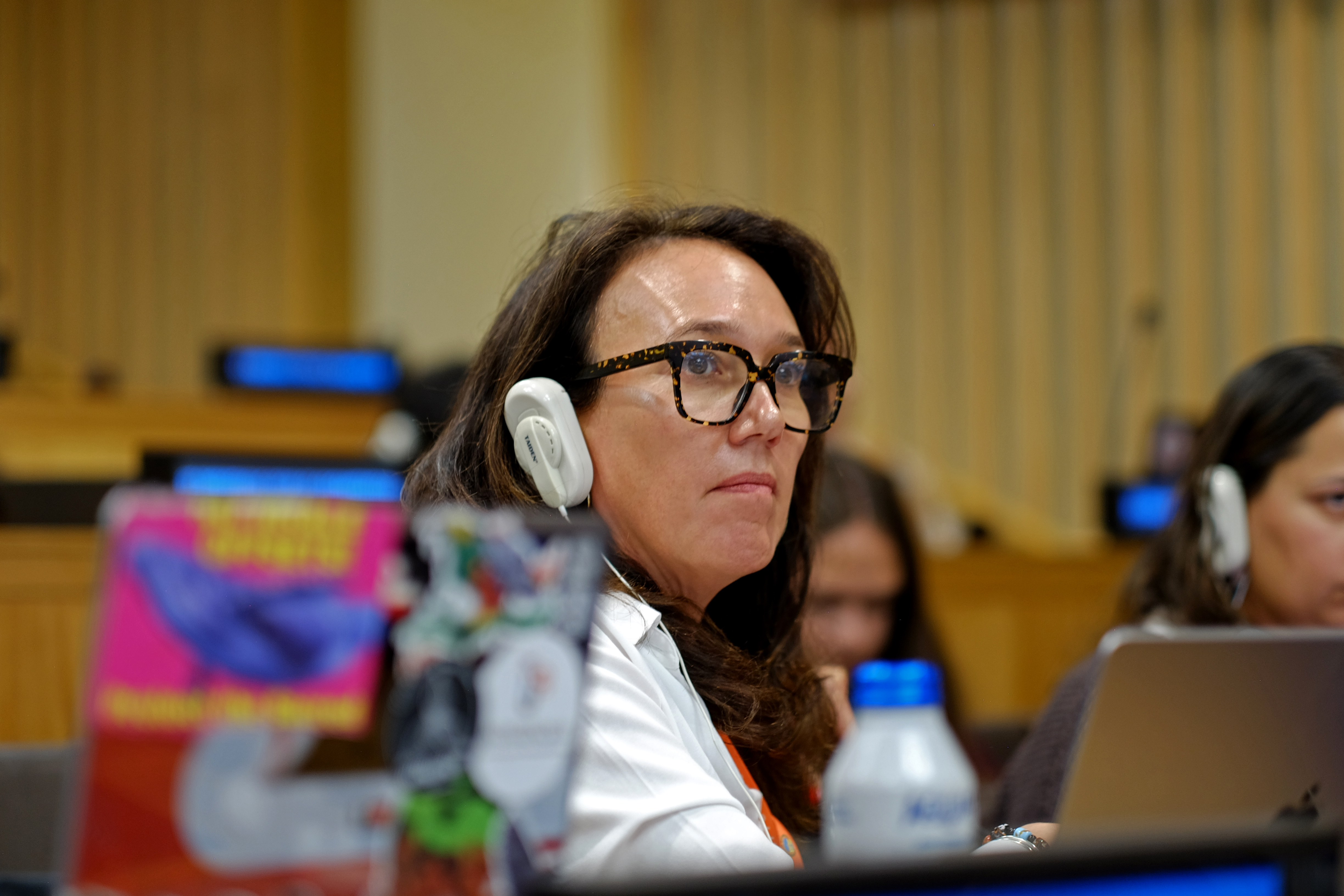
Claire Charters, who is from Ngāti Whakaue, at UNPFII. Tristan Ahtone / Grist
For Indigenous nations worldwide, the fight for health and rights is inextricably tied to the land. Yet, communities without legally recognized land tenure are left vulnerable to extractive industries and state-sponsored violence. As a result, Indigenous land defenders are facing a growing crisis of criminalization, with human rights groups warning that legal systems are increasingly being weaponized to suppress resistance on ancestral lands.
“The violence against Indigenous peoples happens so often,” said Hindou Oumarou Ibrahim, who is Mbororo and the former chair of the forum, in a statement in Wednesday’s session. “It’s happening every single day.”
According to the Global Terrorism Index, the Sahel region in north-central Africa has seen the rapid expansion of militant jihadist groups, particularly focusing on the pastoral sector – a key source for the well-being of the Indigenous peoples of the region. “Access to the land, access to water is becoming a big challenge in the daily lives of women and men, and of course children’s lives are being lost on top of that,” Ibrahim said.
Fatal violence against land defenders and Indigenous leaders is a global issue. While Latin America remains one of the most dangerous regions for fatal violence against defenders, the suppression of Indigenous voices is a pressing issue in the US and Canada as well.
“Canada is prioritizing rapid resource development,” said Judy Wilson, who is Secwépemc and an elder and knowledge keeper for the British Columbia Native Women’s Association. “The legislation directly threatens our Indigenous sovereignty, environmental protection, safety and specifically increases the risks associated with man camps and missing, murdered Indigenous women and girls.”
Across North America, Indigenous nations have documented the widespread use of detention, surveillance, and strategic lawsuits to silence Indigenous leaders opposing projects like pipelines and logging. In 2022, the UN Committee on the Elimination of Racial Discrimination recently called for urgent action in land rights cases for Western Shoshone, Native Hawaiian, Gwich’in, and Anishinaabe peoples.
Advocates at the UN say the criminalization of Indigenous land defense is often linked to disputes over natural resources, where governments and corporations seek access to land without consent. Amnesty International has found that those abuses are rarely investigated, contributing to a cycle of impunity that leaves defenders vulnerable.
Indigenous leaders and advocates are calling for stronger protections, warning that the suppression of Indigenous voices undermines human rights and environmental efforts globally. In an interim report to the General Assembly, Barume, the Special Rapporteur on the rights of Indigenous Peoples, warned that States must stop treating Indigenous lands as mere commodities and recognize the sacred, foundational nature of their tenure.
“Indigenous Peoples’ land rights are inherent and do not originate from State authority or recognition,” Barume wrote in the report. “They arise from Indigenous Peoples’ long-standing and ancestral ownership, use and occupation of their lands as distinct nations, prior to colonization or the establishment of State boundaries.”
With the rise of generative artificial intelligence, or AI, data sovereignty has also become a critical battleground for Indigenous leaders worldwide. As these systems expand, long-standing patterns of exploitation are being replicated in the digital realm.
A new study presented at the forum by Ibrahim outlined the double-edged sword of the AI boom for the world’s estimated 476 to 500 million Indigenous people.
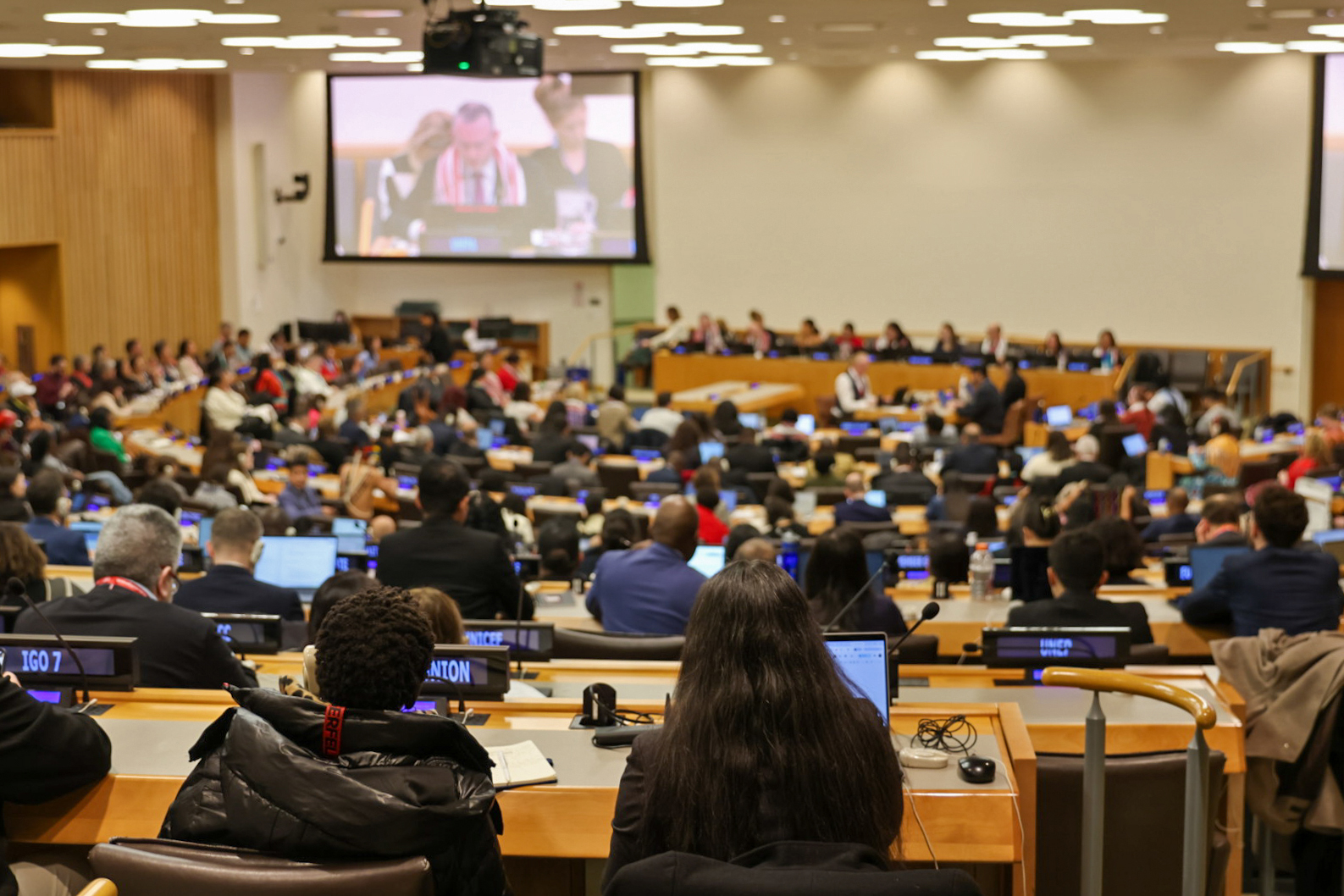
Attendees at UNPFII. Carrie Johnson / Grist
While she said AI offers powerful tools for Indigenous peoples, Ibrahim warns of a looming era of “digital extractivism.” Generative AI systems frequently scrape Indigenous medicinal knowledge, traditional stories, and cultural motifs from the internet without consent, leading to the commodification and appropriation of their heritage. Furthermore, due to the underrepresentation of Indigenous peoples in the data sets used to train AI models, algorithmic biases can result in systems that fail to accurately recognize Indigenous identities or languages, ultimately amplifying structural discrimination.
To combat digital exploitation, a growing global movement is pushing for strict “Indigenous data sovereignty” to replace the Western “open data” paradigm that often fails to protect collective rights. Ibrahim’s report highlights several successful frameworks where Indigenous communities are already implementing this digital sovereignty. In Aotearoa New Zealand, for example, the report praises the development of te reo Māori speech recognition tools created by Te Hiku Media. This initiative demonstrates how communities can build vast linguistic corpora while ensuring their cultural and linguistic data remains firmly under Māori control.
On an international scale, Ibrahim’s report recommends the adoption of the CARE Principles — Collective Benefit, Authority to Control, Responsibility, and Ethics — which establish a framework for the ethical management of A.I technologies and ensure Indigenous communities retain ultimate decision-making authority over their data. Similarly, the report cites the OCAP principles—Ownership, Control, Access, and Possession—developed by the First Nations of Canada as a robust model that establishes a community’s absolute right to own its data and control how it is collected, accessed, and physically stored.
The Kāhui Raraunga Charitable Trust is taking digital sovereignty into its own hands. Te Kāhui Raraunga Data Program Manager, Roimata Timutimu, said having Indigenous people in control of their own data is vital to ensuring better outcomes for service delivery, which Māori are implementing through the Māori Data Governance Model. The Model is intended to assist all agencies to undertake Māori data governance in a way that is values-led, centered on Māori needs and priorities, and informed by research.
Māori data sovereignty expert Dr. Karaitiana Taiuru says artificial intelligence can offer opportunities for Māori, but only if it is grounded in Māori customs and Indigenous governance. In a panel discussion about Māori Data Sovereignty, he emphasized that data is not just a product but is deeply connected to identity and lineage.
“All data is whakapapa [lineage],” Taiuru said. “It still has that spiritual connection.”
Displacement, climate change, and the fallout of extractive industries have an even more acute impact on Indigenous women. In North America, this reality is starkly visible in the ongoing crisis of Missing and Murdered Indigenous Women and Girls—a situation driven by the exact intersecting vulnerabilities being debated at the UN this week.
To combat this global crisis, Wednesday’s session featured a dedicated review of the Committee on the Elimination of Discrimination, or CEDAW, against Women’s 2022 Recommendation No. 39, which stands as the only form of international law specifically dedicated to protecting the rights of Indigenous women and girls.
Despite that landmark status, Indigenous women at the UN repeatedly highlighted the lack of implementation and ongoing threats they face. “The international trauma and on-going trauma is compounded each day, with more losses in our families and in our communities,” said Judy Wilson from the British Columbia Native Women’s Association. “This needs to change.”
Beyond physical violence, the recommendation outlines how systemic barriers restrict access to fundamental rights. In education, for example, Indigenous girls face major hurdles to school enrolment and completion, compounded by a lack of culturally appropriate, Indigenous-controlled educational facilities. To dismantle these barriers, CEDAW is urging states to provide targeted scholarships, expand financial aid, strengthen Indigenous-led education systems, and actively combat discriminatory stereotypes that continue to limit Indigenous girls’ educational opportunities globally.
However, Claire Charters notes that while discrimination against women isn’t a new phenomenon among Indigenous communities, dissecting the root causes of that discrimination remains a crucial and complex debate. “One focus or one question that often comes up is the extent to which Indigenous people discriminate against particularly our own women, and the extent to which that might be driven by colonization” Charters said.
As one of the final speakers of the morning session, Em-Hayley Kūkūtai Walker, who is Ngāti Tiipa and an artist, reflected on the disparities Māori women face in Aotearoa New Zealand. As of 2025, Māori women make up 63 percent of the total female prison population, 49 percent of Māori women experience and/or sexual intimate partner violence and are a further three times more likely to experience intimate partner violence as opposed to non-Māori.
In her statement on Wednesday, she encouraged UN mechanisms to push Aotearoa New Zealand to ensure the rights of Indigenous women and girls are protected. “Hear the cry of my people,” she said. “Our women, children and ancestors, who wish for our tapu [sacredness] and mana [authority] to be upheld.”
This story was originally published by Grist with the headline Indigenous land defenders are being killed, AI is scraping their knowledge on Apr 23, 2026.
From Grist via This RSS Feed.