

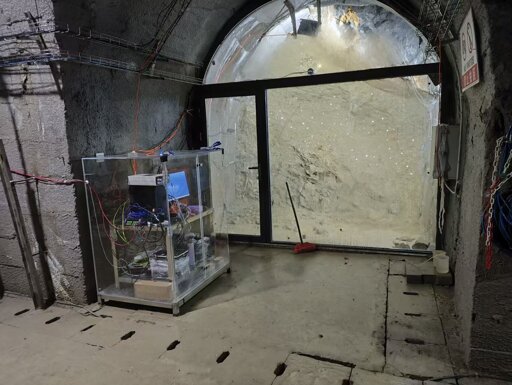
Too much stress can make even a rock crack. But before rocks reach their breaking point, they “sigh” a chemical warning by releasing nuclides, a type of atom defined by the number of neutrons as well as protons in the nucleus. Scientists have studied these naturally occurring geochemical emissions for more than half a century, but struggled to link nuclide release to the timing of rock breakage. Now, an international team of scientists from universities in China (led by Xin Luo at Hong Kong University and Yifeng Chen at Wuhan University) and the United States (led by Michael Manga at the University of California, Berkeley) has cracked that mystery, by creating a model to connect nuclide signal fluctuations to progressive changes in rock structure that lead to critical failure.
From Earth News - Earth Science News, Earth Science, Climate Change via This RSS Feed.