

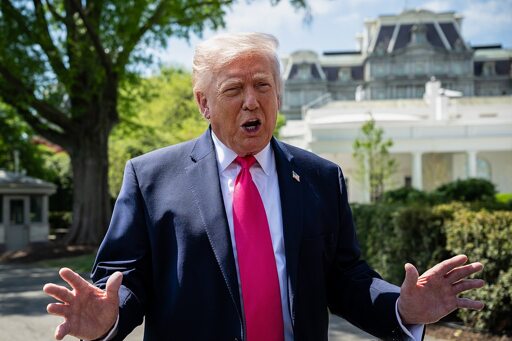
Just hours before the ceasefire was set to expire, Donald Trump opted to extend the truce and “give Iran more time.” The gesture, presented as an overture to encourage Tehran to adopt a more conciliatory approach to negotiation, confirms an uncomfortable strategic reality: there is currently no clear path — neither military nor diplomatic — to force an outcome favorable to Washington. War has not resumed, but the conflict is not moving toward a resolution either. And in this interim period, the Strait of Hormuz remains closed.
Trump’s Reluctance to Escalate
The underlying reason for the decision to postpone resuming hostilities reveals that even if Trump went all the way towards a military escalation, that would hardly affect Tehran’s fundamental positions and, instead, would open the door to a far more costly scenario: attacks on regional energy infrastructure, massive supply disruptions, and a global economic shock.
This is not an abstract hypothesis. Iran has made it clear that it has the capacity to respond asymmetrically and strike where it hurts most: the Gulf’s energy flow. In this context, the idea of a military escalation capable of forcing Iran’s capitulation lacks credibility. It is difficult to imagine a level of destruction that would guarantee such an outcome without triggering seismic consequences.
Thus, extending the ceasefire appears to be a way to avoid an escalation whose costs are predictable but uncontrollable. Trump is avoiding war, offering no way out, and limiting his scope of action to managing a crisis he cannot resolve.
Iran Stands Firm: Clear Positions, Zero Incentives to Yield
In the face of U.S. hesitance, Iran remains firm. Its demands are well-known and, under current conditions, non-negotiable: lifting of sanctions, reparations, the right to keep intact its nuclear capabilities, preservation of part of its reprocessed materials, continuity of its regional alliances, and, above all, effective control of the Strait of Hormuz.
The message is simple: there will be no concessions under pressure. Negotiating while a naval blockade is in place would amount to acknowledging the effectiveness of U.S. coercion, something politically unfeasible in Tehran. This is underscored by the fact that the closure of the strait has demonstrated Iran’s capacity for global impact, reinforcing the internal perception that the strategy of resistance is working.
At this point, Iran is not merely resisting: it is dictating the pace of the conflict. By maintaining the closure of the strait, it is shaping the international economic landscape and shifting the cost of the conflict onto its adversaries.
Trump Maneuvers Under Pressure
The extension of the truce does not occur in a vacuum. Trump faces conflicting pressures: on one hand, markets strained by the disruption of the flow of oil, fertilizers, and chemicals from the Gulf; on the other, allies such as Israel and hardline sectors of the establishment demanding a more aggressive stance, in response to what they interpret as a loss of credibility in U.S. deterrence.
This dual pressure limits his room to maneuver. Escalating the conflict entails assuming economic and strategic risks of great magnitude; failing to do so projects indecision and erodes his credibility. In this unstable balance, the chosen option — extending the ceasefire without changing the underlying conditions — is, in essence, a headlong rush forward.
But this maneuver has an expiration date. Blocking the Strait of Hormuz is not sustainable indefinitely without consequences. Each day without exports from the Gulf fosters inflationary pressures and increases the political cost for the White House.
The War of Attrition: Who Will Give in First?
The current dynamic is not one of decisive confrontation, but rather one of gradual attrition. Iran is betting that it can hold out longer than the United States can tolerate the economic and political consequences of the blockade. Washington, for its part, is confident that the pressure will eventually fracture Iran’s position.
For now, the balance tilts slightly toward Tehran. The extension of the ceasefire can be interpreted domestically as a tactical victory: the United States avoids escalation without securing concessions. However, that advantage is not definitive. Iran remains under sanctions, without full access to its markets, and exposed to internal tensions that could intensify over time. In any case, that is, ultimately, Trump’s gamble.
The problem is that neither side has immediate incentives to back down. And in the absence of a negotiated solution — stocked by the lack of agreement on sanctions — the risk of an incident capable of shattering the current fragile balance remains ever-present.
Toward Growing Wear and Instability
What is emerging is not a solution, but a strategy aimed at postponing substantive decisions rather than resolving the conflict. The extension of the current status quo avoids, for now, an escalation with no clear end in sight, but it does so at the cost of consolidating structural instability. The mediators have bought time, but they have not altered the conditions that make negotiation unfeasible.
The deadlock persists because there is no minimum agreement between Iran and the United States on sanctions relief during a potential diplomatic process. Without that starting point, negotiations are deadlocked before they even begin. Meanwhile, Tehran continues to rely on closing the Strait of Hormuz as a lever for global pressure, convinced that it can inflict more costs than it absorbs.
For Donald Trump, the margin is narrowing: escalation entails systemic risks; not doing so prolongs a stalemate that erodes his position. In this precarious balance, Iran has no incentive to yield — and will not do so in the short term — while Washington vacillates between bearing the costs of escalation or those of inaction.
Thus, the conflict is trapped in a logic where the “best” is simply to avoid the worst. But that containment solves nothing; it merely postpones a crisis that tends, over time, to intensify. And as long as the Strait of Hormuz remains closed, the consequences of this standoff will be felt with greater intensity around the world, spreading the conflict to new areas of tension.
This article was originally published in French on April 22 in Révolution Permanente.
The post No War, No Solution: Trump Buys Time While Iran Sets the Rules of the Ceasefire appeared first on Left Voice.
From Left Voice via This RSS Feed.