

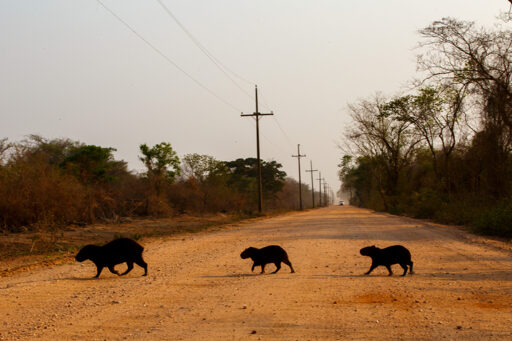
Grasslands, wetlands and other nonforest ecosystems are being converted to agricultural land far faster than forests. However, they remain largely overlooked by Europe’s flagship antideforestation law and other environmental policies, according to a new report by the Rainforest Alliance, World Resources Institute and partner organizations. The report found such ecosystems are being lost to agriculture at roughly four times the rate of forests. Around 190 million hectares (470 million acres) of nonforest natural ecosystems, a combined area almost the size of Mexico, was converted to mostly pastures and farms over the 15 years from 2005 to 2020. “When protections tighten around forests, agricultural pressure can shift into other natural ecosystems that are also ecologically important but often much less protected,” Siyi Kan, an environmental economics researcher at the University of Oxford, told Mongabay by email. “We need to start paying attention to them now, before it is too late.” Both forest and nonforest ecosystems are important for biodiversity and carbon sequestration, Kan added. However, most existing policy and sustainability commitments from companies focus exclusively on forests. Brazil saw the most conversion of nonforest ecosystems to agriculture over the 15 year period of the study, followed by China, Russia and the United States. Map courtesy of WRI. Source data from Kan et al., 2026. The EU’s deforestation-free regulation, or EUDR, is meant to prevent agricultural commodities such as palm oil, cattle, coffee, cocoa, soy, wood and rubber from entering the EU market if they’re linked to recent deforestation. But it uses…This article was originally published on Mongabay
From Conservation news via This RSS Feed.