

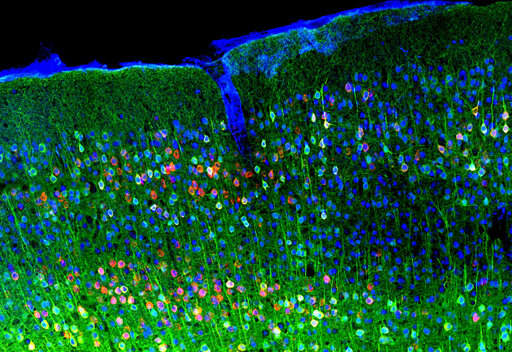
Fluorescent probes have transformed modern biology by allowing researchers to tag and visualize individual molecules in living cells, tissues, and animals. Using these tools, researchers can watch viruses infect cells in real time, observe cellular trash collection, and track the signaling that spurs tumor growth. Now, scientists at Albert Einstein College of Medicine and the Salk Institute for Biological Studies have developed a new molecular imaging technology that illuminates proteins inside living cells and animals far more clearly than before. Described in Nature Methods, the system uses engineered fluorescent nanobodies—tiny antibody-like protein fragments—that light up only when they bind to their specific targets.
From Biology News - Evolution, Cell theory, Gene theory, Microbiology, Biotechnology via This RSS Feed.