

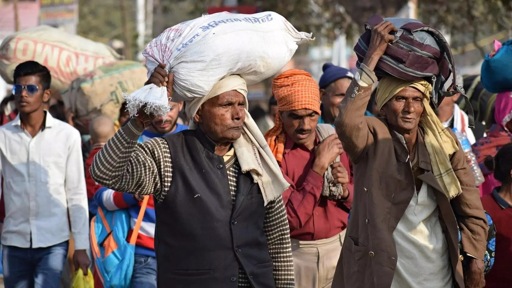
Thousands of migrant workers have been forced to leave the industrial city of Surat, located in India’s western state of Gujarat, since March this year, following the energy crisis provoked by the US-Israeli war on Iran.
On Sunday, April 19, reports circulated that there was a stampede-like situation at one of the railway stations in the city as thousands of the workers gathered to board trains to their home towns located mostly in the eastern parts of the country.
Workers have stated that they have been forced to leave because they were unable to afford the rising prices of cooking gas or cannot afford to buy food from the market.
According to various reports, the price of a cooking gas cylinder, which was previously available for around 1,000 rupee (around USD 11) shot up to over 2,500 rupee (around 27 USD) or more within days in March.
Several workers have also complained about a lack of work due to Liquified Petroleum Gas (LPG) shortages and other reasons, as several textile and other factories have reduced work hours or completely shut down work since the beginning of the war on Iran on February 28.
Production disrupted, jobs lost
Production in most of the industrial units in the city has also been disrupted due to the drop in demand in the war-affected regions, many of the goods there are exported to West Asia.
The shortages in supply of some of the crucial ingredients for the textile and other industries, as well as the rise in the prices of other inputs, have also affected industrial production in the city and other areas.
Apart from textile, other industries such as ceramic and diamond are also impacted due to the war and the shortage of fuel and other essential ingredients.
Surat and other industrial clusters in India’s western state of Gujarat are highly dependent on migrant workers who number in the hundreds of thousands. Most of these workers are daily wage laborers receiving very low pay and therefore are highly susceptible to inflation or to any small disruption in production.These workers cannot afford to pay their rent or buy food without those jobs.
According to the officials at Udhana Station in Surat, at least 22,000 people gathered at the station on Saturday alone, to board trains for their home towns and villages in the northern and eastern states of Uttar Pradesh, Bihar, and Odisha the next day.
The number of people gathered to board the trains were many times over the capacity of the station, which led to the deployment of security personnel, who used force to control the crowd of people rushing to catch the train, leading to several injuries.
Gujarat is not the only region in India affected by the US-Israeli war on Iran. Several other cities, such as Bangalore in the south, faced situations where restaurants had to shut down in March due to the lack of cooking gas.
Read more: US naval blockade puts future of talks with Iran in jeopardy
India is the world’s third largest importer and consumer of oil. It imports around 60% of its gas needs as well. Most of India’s oil and gas comes from West Asian nations, such as Qatar, the UAE, and Saudi Arabia.
Since the beginning of the war, India, like most nations in South Asia, has been forced to restrict the supply of gas to industries in order to prioritize the household demand. This has resulted in production cuts in various industries, such as steel and plastic.
The overall impact of these measures are already visible in Surat and other major industrial cities and it is expected that this will impact the long-term economic prospects of the country and cause further increases in the price of essential goods.
India’s ultra-right-wing government has refused to acknowledge the depth of the crisis and tried to dismiss the problem. Even on Sunday, it claimed the rush to the Udhana Station was due to the coming of the holiday season in summer.
The post Cooking gas shortages, rising living costs force thousands of migrant workers in India to return home appeared first on Peoples Dispatch.
From Peoples Dispatch via This RSS Feed.