

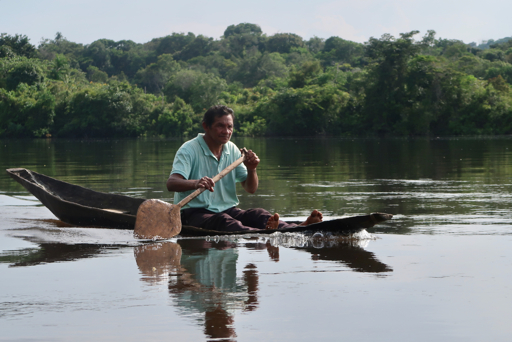
VAUPÉS, COLOMBIA — Traditionally, for members of the Indigenous Macaquiño community in the southeastern Colombian Amazon, the Vaupés River is not just a source of water, but a living being that must be respected. It supports all kinds of life, including fish, which have sustained the community for generations. Now, as a nearby Amazonian town upstream rapidly transforms into an expanding urban municipality and increasingly brings untreated wastewater from its poorly constructed treatment plant to the banks of Macaquiño, that same water is bringing them sickness and disease, residents say. During a visit to Macaquiño in September 2025, community members told Mongabay the Vaupés River is contaminated by untreated sewage dumped into it in the town of Mitú. “It’s like an atomic bomb coming out of the sewer,” said Julian de Jesus Madrid Correa, a member of the Macaquiño community. He said it causes rashes, itches and fevers, especially in children, and has begun to spread diseases, such as dengue and hepatitis. The Indigenous Macaquiño community on the banks of the Vaupés River in Colombia’s Vaupés region. Image by Aimee Gabay/Mongabay. To verify what the community told us, Mongabay obtained water quality studies from the Corporation for Sustainable Development of the Northern and Eastern Amazon. Its latest report, which contains results from water samples taken in 2025 across four sites in Mitú, confirms there is contamination above safe limits in the Vaupés River that could impact public health and the quality of the aquatic ecosystem. Fecal coliforms (fecal bacteria), which…This article was originally published on Mongabay
From Conservation news via This RSS Feed.