

The extraordinary story you’re about to read, by Camila Lourdes Galarza, is a dark look into what it’s like to live and die on the other side of U.S. headlines. As we expand deeper into reporting on South and Central America, particularly with the hiring of our Latin America bureau chief José Luis Granados Ceja, this is the kind of journalism we hope to be bringing you more of. (Granados Ceja just returned from a reporting trip to Cuba; watch him discuss the situation there on Breaking Points.)
This expansion has been made possible by a surge in reader support over the past six months or so, and if you want to see more of this, please consider upgrading to a paid subscription or make a one-time or recurring contribution. Reporting like this isn’t cheap, but the world is far poorer if it doesn’t exist. If you do upgrade, please put a note in there that you’d like to see more Latin America reporting.
We rely on our readers to keep producing articles like this. Consider subscribing below.
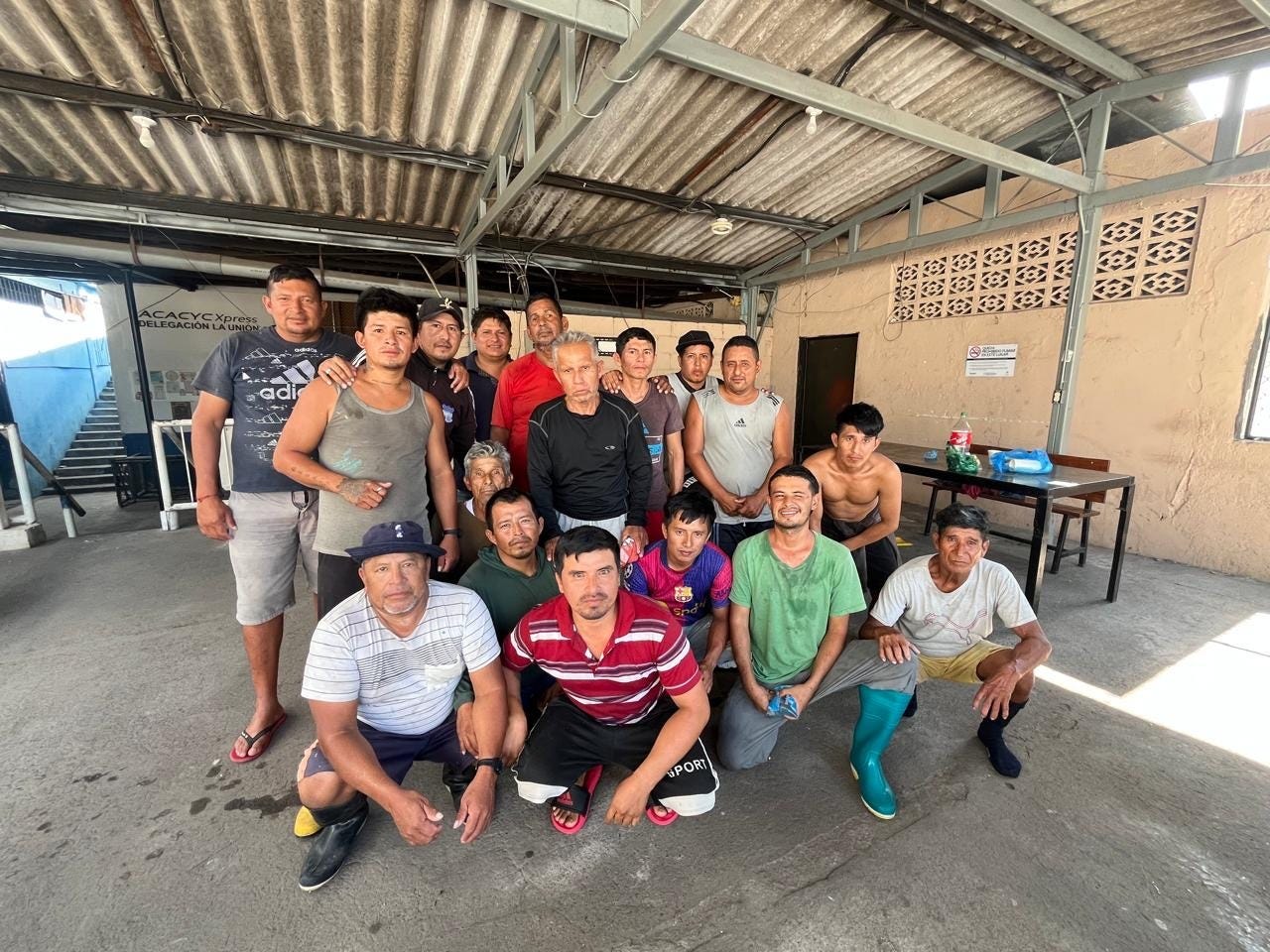
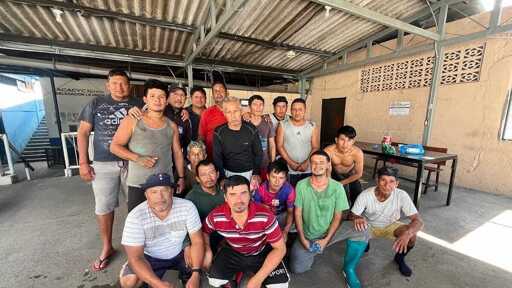
Survivors of an attack on the fishing boat Don Maca, provided to Drop Site News.
QUITO, Ecuador—The last time Roxanna Mero heard from her husband Carlos was January 19. Calling from sea on an emergency line, he said an “American aircraft, two drones, and a blue patrol ship” had been circling La Fiorella, the Ecuadorian fishing boat he captained. The presence of an airplane worried him, given that Trump’s extrajudicial airstrikes across the Pacific and Caribbean have killed more than 170 people in 6 months, but a local coast guard had already inspected the vessel, found nothing and cleared them to continue.
The next day, the boat went up in smoke. The eight fishermen aboard have not been seen since.
Three independent accounts from relatives of the missing crew assert that eyewitnesses, on a nearby raft at the time of the incident, saw La Fiorella engulfed in flames. “They’ve been threatened not to speak to the press. They’re scared for their lives,” said Angelica Lourdes Mero, whose son and spouse are among the disappeared men.
Ninety days after La Fiorella vanished, Roxanna told Drop Site News, “No search team has been sent out. In Manta, we live with constant military helicopters circling overhead every hour but none of them have been used to find my husband.” The helicopters are part of ongoing US-Ecuadorian joint operations, despite 60% of Ecuadorians voting to uphold the constitutional ban on foreign military presence in their territories this past November. The ban was originally introduced in 2007, precisely due to the U.S. military sinking fishing boats off the coast of Manta.
Under right-wing president Daniel Noboa, Ecuador has become a critical U.S. proxy in the region; described as a “North American colony” by political analyst and former advisor to Ecuador’s Secretary of International Relations Daniel Granja.
The military regime, which rules by martial law, has stonewalled all inquiries into the whereabouts of the fishermen. “They slammed the door in our face,” Angelica Mero told Drop Site News.
The United Nations Committee on Forced Disappearances, which was already investigating Noboa’s armed forces prior to this incident, has issued a letter demanding answers on La Fiorella. Opposition lawmaker Mónica Palacios echoed those calls, announcing she will bring this case directly to the U.N.
Now, 36 survivors of two Pacific attacks fitting a similar profile alleged that they were abducted and tortured by American forces and taken by boat all the way to El Salvador before being returned to Ecuador. Drop Site spoke to multiple survivors and attorneys from both boats.
Drop Site reached out to the U.S. Southern Command for comment on all three incidents; they said they had no information to provide and directed questions to Ecuador. Drop Site asked Ecuador’s Port Authority for comment. They hung up after hearing the call was from journalists.
“Filled the floor of our lifeboat with blood”
On March 23, 16 Ecuadorian fishermen from a second vessel, La Negra Francisca Duarte II, were found by El Salvador’s coast guard, their limbs mangled and backs etched with burns. One man’s foot was spliced open, exposing bone. Another had lesions on the nape of his neck that left him dizzy whenever he moved.
The fishermen told Drop Site News they’d been struck by a drone with a yellow cylinder five days earlier, forced to jump overboard to escape the fire caused by the explosion, and subsequently taken captive by forces on a U.S.-flagged blue patrol ship—just like the one Roxanna Mero’s husband, Carlos Valencia Mero, had described before he disappeared. Captain Hernán Flores, one of the 16 survivors, said the word “Spear” was written on the hull of the blue ship. Trump’s counternarcotics military program in the Americas is named Operation Southern Spear.
“A lot of us had wounds all over our bodies from the explosion. One young man was bleeding so much he filled the floor of our lifeboat with blood,” said Flores. “The drone had flown through our cabin window, torn my nephew’s foot so bad you could see flesh and bone, and made the boat’s roof cave-in on the back of my neck. A few seconds later, an explosion shook the boat causing a terrible ringing in our ears. Out of exasperation, the guys threw themselves into the water, some without life jackets, even the ones who don’t know how to swim.”
As the fishermen made their way toward what they hoped was safety on the nearby blue boat, an aircraft hovered directly overhead. Nearing closer, they spotted blonde-haired men, armed to the teeth, dressed in camouflage uniforms, and yelling “hands-up” in English. Flores said they began to pray, convinced they were going to die.
Guns drawn, the men placed hoods over the fishermens’ heads, handcuffed them, and held them on the blue ship’s scorching metal deck for over 24 hours, blistering their skin. The Ecuadorian crew of La Negra Francisca Duarte II were surprised to find themselves detained following the attack. Like Mero’s husband, they had been cleared to proceed by Ecuadorian coast guard personnel just hours earlier at a checkpoint near the Galápagos.
The gunmen, issuing instructions through an interpreter, offered no explanation for why they were being apprehended, nor did they bother to inquire what had happened, as a rescue team might, or search their boat for evidence, as a counternarcotics operation would. All but one fisherman were denied medical attention, despite the severity of what they had just endured. Held for days, they were refused food and given only one bottle of water.
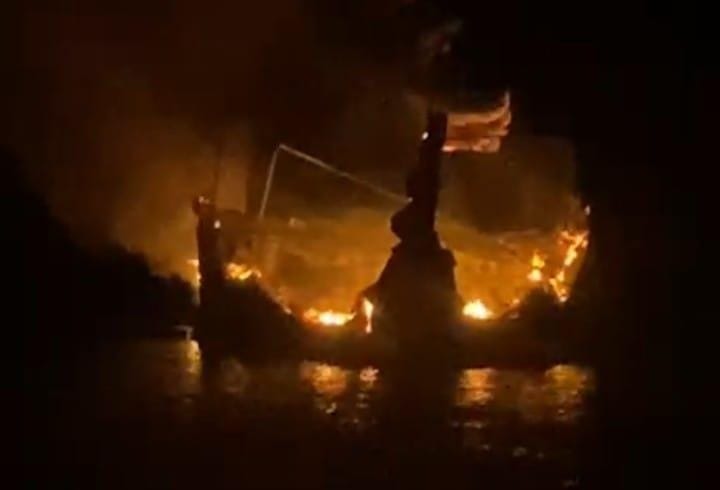
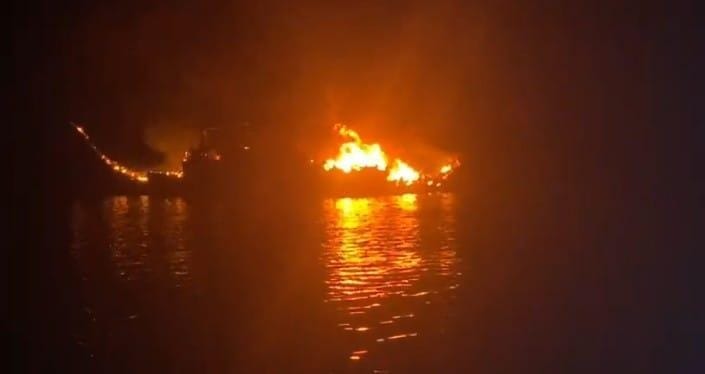
La Negra Francisca Duarte II burning on March 17, 2026, captured by nephew of Captain Hernan Flores and provided to Drop Site News.
The following day, despite being in Ecuadorian waters near the Galapagos Islands, the kidnappers transported the fishermen roughly 900 nautical miles north, turning them over to El Salvador’s coast guard.
Drop Site News spoke to 11 associates across El Salvador’s Ministry of Defense, coast guard, and navy, all of whom said they were aware of the incident but were unauthorized to comment. In recent years, El Salvador’s government has drawn scrutiny from human rights advocates over President Nayib Bukele’s embrace of U.S. President Donald Trump’s migration policies, labeling him an accomplice to U.S. human rights violations, with several documented cases of torture in its prisons—facilities the Trump administration has contracted to hold deported migrants. On March 24, El Salvador’s authorities began coordinating the return of the fishermen to Ecuador.
“Just like the Americans didn’t do anything to help save us when our boat was bombed, the Ecuadorian government also hasn’t done anything to help us,” Flores told Drop Site. “It was our families who made sure we got home safe.”
“El pueblo salva al pueblo,” he said, a popular Spanish saying about solidarity and mutual support between working-class people.
Ecuador’s Foreign Minister, Gabriela Sommerfeld, cast doubt on the innocence of the fishermen and defended the extrajudicial assault. “Ecuador and North America are working cooperatively with joint activities. I cannot tell you for sure what activities the fishermen were carrying out or the situations they are in,” Sommerfeld told local media.
Throughout her tenure, Sommerfeld has repeatedly come under fire for failing to uphold international law. Most notably, when Ecuador stormed the Mexican embassy to kidnap former Vice President Jorge Glas of left-wing party Revolución Ciudadana, ending diplomatic ties between the two nations for the first time since they were established in 1838. An event that Tamara Lajtman, researcher with the Lawfare Observatory and the Institute for Latin American & Caribbean Studies, said was the foreshadowing for an autocracy rife with abuses, “It revealed a willingness to use state force outside of any legal limits. It’s really not an isolated incident, but rather a symptom of an authoritarian way of exercising power.”
Legal counsel for La Negra Francisca, Jorge Chiriboga, frames the airstrike as a similar breach of international law. “This is an invasion of Ecuador’s airspace and maritime because it occurred within Ecuador’s Insular Exclusive Economic Zone,” Chiriboga told Drop Site. Chiriboga, shared GPS photos with Drop Site News taken at the site of the bombing showing La Negra Francisca was operating within permitted limits.
“These attacks are no longer just a mistake,” he continued. It is a planned and coordinated abuse against working-class civilian fishermen who are unarmed and they should be condemned by international law. Imagine these bombs would’ve killed all of them, it is an extrajudicial action by a foreign nation, it’s an abuse by the biggest force in the world.”
“They treated us like animals”
The second report of torture came two weeks later. On April 3rd, 20 more Ecuadorian fishermen aboard the Don Maca were intercepted by El Salvador’s coast guard. Arriving with vision and hearing loss, bruised limbs, and perforated arms, they reported a strikingly similar account of an alleged attack by U.S. soldiers: a bombarded boat, a round of bullets, and no due process.
This time, the men charged that they had been held hostage and hooded for eight days.
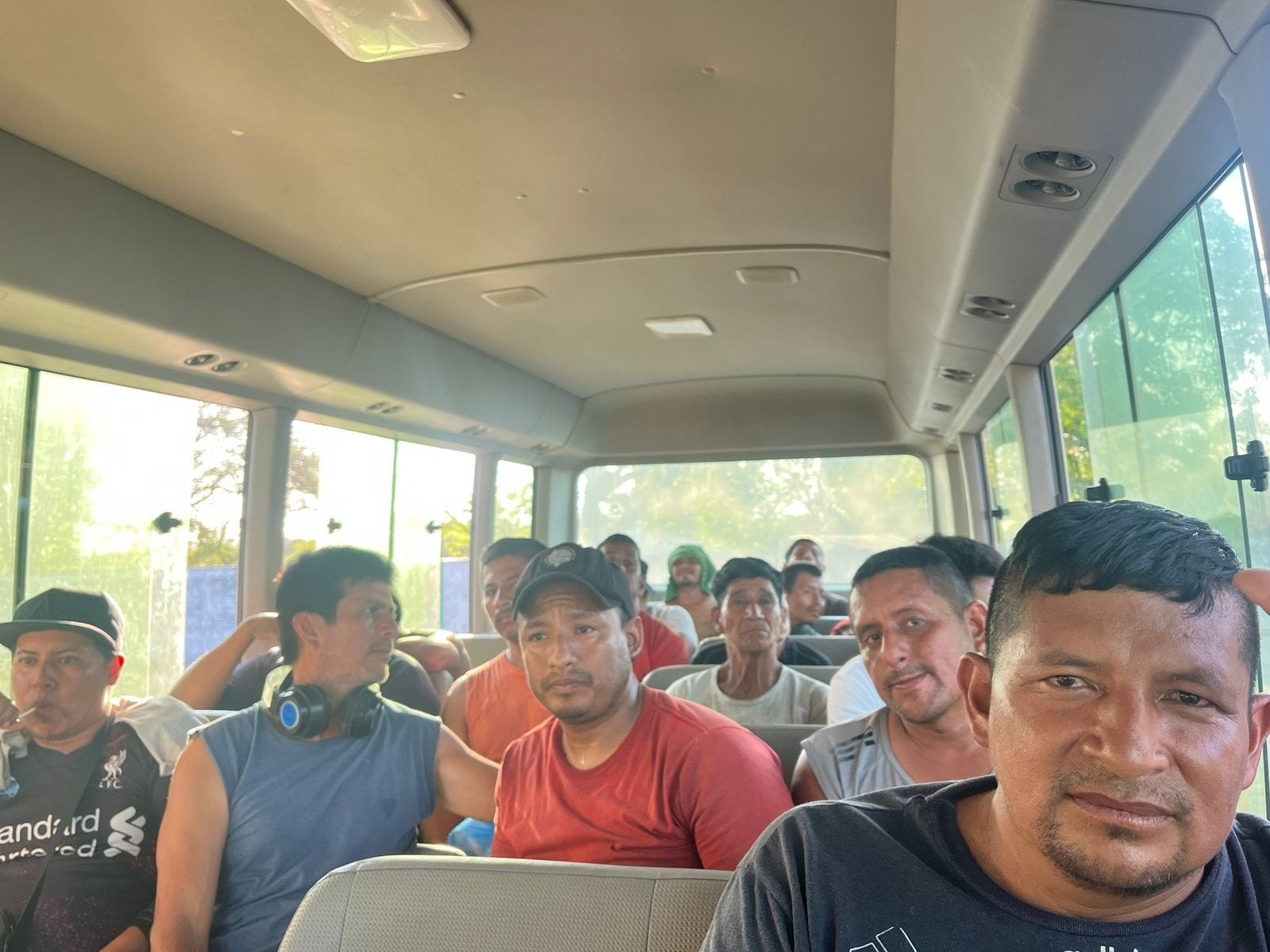
Survivors of the Don Maca attack, provided to Drop Site News.
“They treated us like animals,” said Sebastián Palacios of the Don Maca vessel, his thousand-yard stare welling with tears as he embraced his family at the Manta airport upon finally returning to Ecuador weeks later.
Several workers of both the Don Maca and La Negra Francisca remain hospitalized; many are receiving psychiatric care, as well.
The attorney for the Don Maca crew, Pilar Muñoz, recounted her clients’ testimonies to Drop Site News.
“Two small drones and one big drone had been tailing them for 24 hours,” she said. “They informed Don Maca’s owner, Cristian Mendoza, of the sighting, and he assured them not to worry, as the boat and fishermen had all the proper licensing and registration. He told them, ‘There’s no problem since you’re just there to fish.’”
“But the next day,” Muñoz continued, “a drone struck their boat, causing an explosion just 15 centimeters from the gas tank. Had it hit any closer, they would’ve all died from the explosion, and there would’ve been no survivors to tell this story.”
Immediately, the crew scrambled to raise a white flag, signaling they were unarmed and in distress. Men in uniforms on an adjacent boat—who the survivors of Don Maca also identified as U.S. military—followed with multiple rounds of glass pellet gunfire, leaving crew member Erik Coello with 70% vision loss and his arms riddled with puncture wounds and embedded glass. They eventually ceased and instructed them to approach their boat.
The fishermen said the kidnappers were white, spoke English, and accompanied by a translator with an Ecuadorian dialect.
A survivor, who asked not to be named due to pending legal action, told Drop Site News that, once detained on the boat, he was fired on again with a pellet gun. The account resembled what Coello had experienced, though by then the men had been hooded and were unable to see what exactly was being done to them.
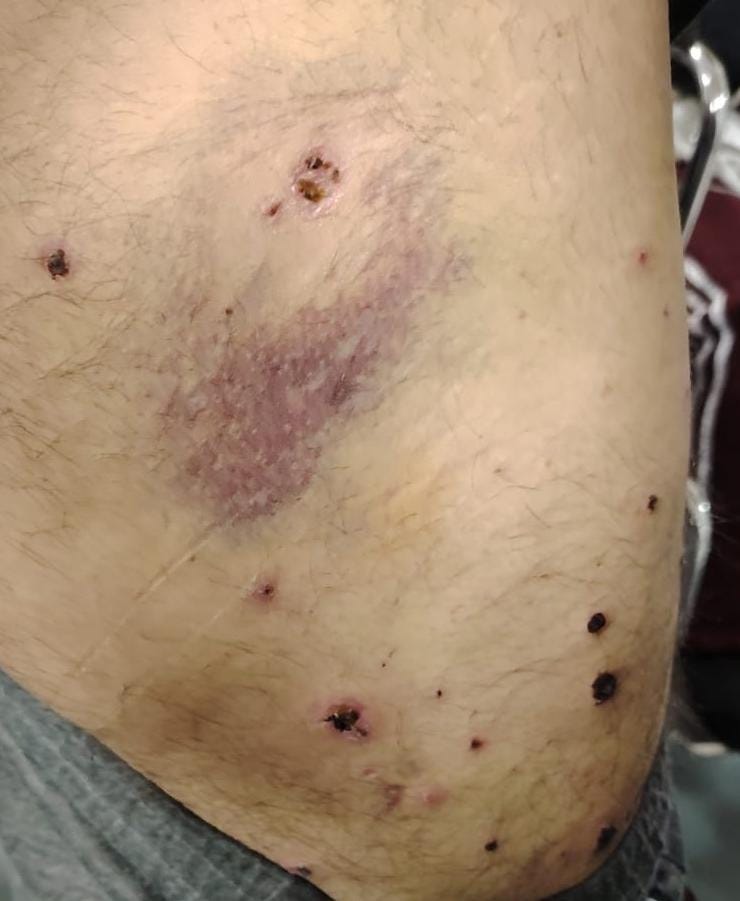
Photos of scarring, perforation, and bruising left on Erik Coello’s body from the drone strike and gunfire. Taken by his attorney upon returning to Ecuador.
Just before men in fatigues forced hoods over their heads, the fishermen caught a glimpse of them doubling back to bomb and sink their already damaged boat.
“If the boat would’ve actually been carrying drugs, they wouldn’t have drowned the boat because they would’ve needed to use it as proof,” Muñoz pointed out.
Ecuador’s interior minister, for example, released video of a different detained vessel around the same time that was found carrying 300 packages of cocaine 180 nautical miles off the coast of Manta. In the video, officials are seen carefully locating, documenting, and preserving the evidence with no signs of a drone strike. Unlike Don Maca or La Negra Francisca’s fishermen, the alleged traffickers aboard the vessel were returned to Ecuador the same day, alive and without apparent serious injuries— paraded in front of TV outlets as a victory lap for the Ecuadorian government.
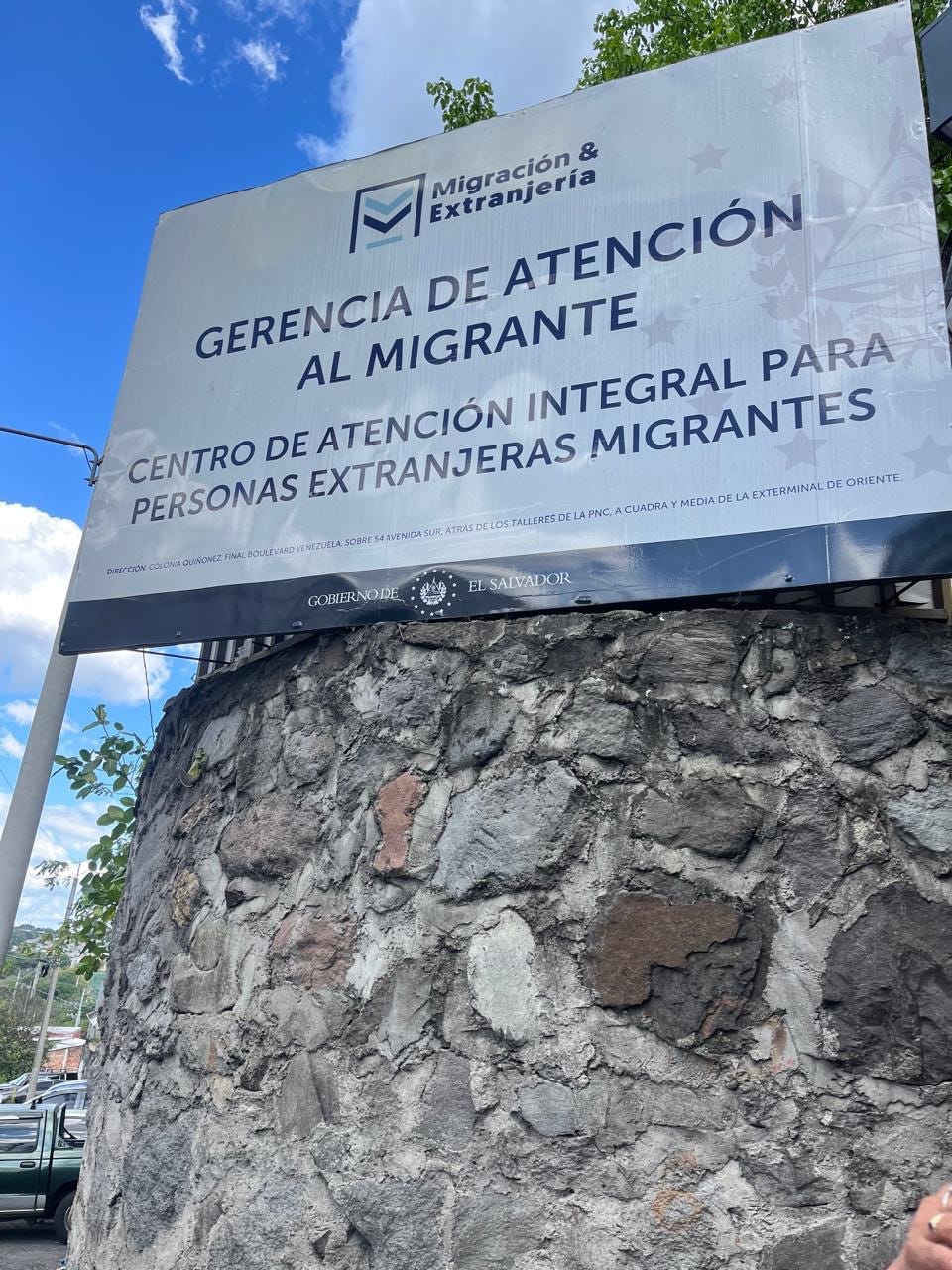
Sign of El Salvador’s migration center where Don Maca survivors were transferred, provided to Drop Site by legal counsel for the survivors.
Noboa’s Unconstitutional War
While no drugs or illicit behavior were found on any of the three boats, the same cannot be said for ships belonging to the family and private enterprises of Ecuador’s right-wing president, Daniel Noboa.
In 2025, Colombian investigative journal, Revista Raya, revealed that €26 million worth of cocaine headed for Croatia had been seized by Ecuadorian authorities from the shipping containers of Noboa Trading. Leaked chats showed Balkan drug traffickers bragging that they had exclusive access to Noboa Trading ports and containers.
An employee of Noboa Trading, Jose Luis Rivera, responsible for inspecting the ports for narcotics, has been arrested by Ecuadorian officials four times in connection to drug trafficking. Noboa’s personal attorney, as well as its current Ecuador’s Minister of Health, served as the legal representation for Rivera. Rivera’s charges were dismissed after Ecuador’s attorney general decided not to pursue charges. In March the head of Ecuador’s notorious cartel, Los Tiguerones, told Spanish newspaper El Mundo that President Noboa struck a deal with the group to whip votes for his election in exchange for immunity, contradicting his primary campaign pledge to combat drug trafficking and corruption.
The Miami-born billionaire, who was elected president of Ecuador only after the assassination of his political rival, Fernando Villavicencio; American mercenary group, Blackwater, patrolled voting sites on election day. Noboa has since built a military regime, backed by the U.S. through Pentagon-supplied bombs, and enforced using a never-ending decree that the country is in a state of war. The FBI even opened its first office on Ecuadorian soil under the pretext of fighting drug trafficking. A UN probe determined there was insufficient legal basis for Noboa’s state of war decree.
Tamara Lajtman, researcher at the Lawfare Observatory, calls it “the consolidation of an authoritarian project with strong elements of militarization and geopolitical alignment with the United States.” “Ecuador is being reconfigured as a strategic enclave in the hemispheric security architecture of the United States, especially in that strategic competition with China,” Lajtman continued. “We’re seeing raids, judicial proceedings, actions in the electoral arena, public stigmatization.”
All the while, drug trafficking has soared under Noboa’s presidency, now accounting for 70% of the world’s cocaine distribution.
The spectacle of “combatting drug trafficking” while actually targeting civilians is reminiscent of Colombia’s 2006 “Falsos Positivos” scandal wherein U.S.-funded armies massacred an estimated 6,000 disabled men, luring them to remote areas under the false promise of a job, then slaughtering and dressing them in guerrilla uniforms to meet wartime quotas.
In March, the New York Times published an investigation that found campesinos, in the indigenous and oil-rich Sucumbíos region of the Amazon, had been kidnapped, waterboarded, electrocuted, and bombed during a joint operation by the Ecuadorian military and U.S. Southern Command. Using U.S. intelligence, the operation had supposedly identified a FARC dissident drug camp. However, the New York Times, and several local journalists, found no proof of a drug camp—only a farm whose workers were left with severe physical and psychological trauma.
A few months prior, 16 Ecuadorian soldiers were convicted for the kidnapping and burning to death of 4 Afro-Ecuadorian children as young as 11 years old. The military tried to justify the atrocity by wrongfully accusing them of drug trafficking.
As executive power continues to be unconstitutionally consolidated in Ecuador, through the banning of political opposition parties, the rescheduling of elections, the kidnapping of democratically elected officials, and the assasination of indigenous workers on strike, a sense that the country has slid into autocracy now prevails. As former president of Ecuador’s National Assembly and the leader of Noboa’s largest political opposition party, Gabriel Rivadeneira, said, “Ecuador is living under dictatorship. Whoever raises their voice to defend the rights of their people either has their life threatened, their house raided, or is sent to jail.”
From Drop Site News via This RSS Feed.