

This editorial by Arturo Huerta González originally appeared in the April 21, 2026 issue of La Jornada de Oriente, the Puebla edition of La Jornada*, Mexico’s premier left wing daily newspaper. The views expressed in this article are the authors’ own and do not necessarily reflect those ofMexico Solidarity Mediaor theMexico Solidarity Project.*
In March 2026, a deputy from the Workers’ Party (PT) in Brazil (the ruling party) proposed an amendment to the Complementary Law that links the central bank to the Ministry of Finance and proposes that the central bank, in addition to the objective of guaranteeing price stability, maintain full employment, smooth out fluctuations in the level of economic activity and safeguard the stability and efficiency of the financial system.
It is noted that “the revision of Complementary Law No. 179 of 2021 is an urgent necessity to correct the institutional isolation of the central bank of Brazil, which currently operates under a model of autonomy marked by a significant democratic deficit. In fact, the central bank today enjoys absolute autonomy with respect to the elected power and the government program legitimized at the polls.”
The amendment speaks out against high interest rates because they “produce a series of adverse effects on the economy. They increase the cost of working capital for businesses, putting pressure on prices and hindering, if not preventing, productive investment. They also make it impossible for the country to reach the level of investment necessary for its economic and social development. High interest rates also contribute to household over-indebtedness, increasing people’s financial stress and reducing their purchasing power.”
The current international situation necessitates a shift in economic policy to favor the productive sector, reduce imports, the foreign trade deficit, capital inflow requirements, and the external vulnerability into which the national economy has fallen.
It is stated that “the autonomy of the central bank is absolute only in relation to political power, but not with the interests of the financial market” and hence it is proposed that “the autonomy of the central bank cannot be absolute in relation to democratically elected power” and hence they advocate for a relative autonomy where the central bank is linked to the Treasury, in order to jointly fulfill the national democratic purposes of growth, full employment, low inflation and banking stability.
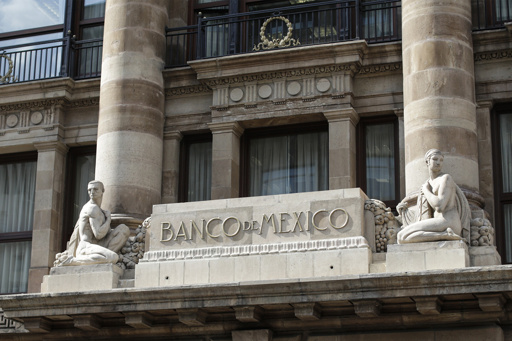
In November 2018, the Labor Party (PT) in Mexico proposed a bill to change the objectives of the Bank of Mexico (Banxico), adding economic growth, high employment, and banking stability to the existing objectives of low inflation. This bill was published in the Parliamentary Gazette but did not proceed to committee because the coordinator of the majority party in the Chamber of Deputies opposed it.
The national economy and the vast majority of countries face severe problems. These will be exacerbated by the inflation and product shortages resulting from the war in the Middle East, making it impossible to continue with the prevailing policies that hinder efforts to address them.
The context of stagnation, high underemployment, poverty, significant production lags, high dependence on imports and capital inflows, and the inability of economic policy to address this situation, demonstrate that the autonomy of the central bank (which prevents government financing), the high interest rate, fiscal austerity, currency appreciation, the free movement of goods and capital, as well as the deregulation of the banking and financial sector, which caused it, cannot continue.
The current international situation is generating product shortages and price increases, which will raise interest rates, put pressure on public and private finances, increase the vulnerability of capital and foreign exchange markets, and lead to slower economic growth. This necessitates a shift in economic policy to favor the productive sector, reduce imports, the foreign trade deficit, capital inflow requirements, and the external vulnerability into which the national economy has fallen.
The central bank’s autonomy, which serves only the interests of the financial sector and not the national objectives of productive growth and employment, cannot continue. The government must finance itself with its own currency to abandon fiscal austerity and increase public investment to address production shortfalls, the deterioration of strategic sectors, infrastructure, public transportation, health services, education, and all those affected by budget cuts. The central bank’s autonomy and objectives must be rethought. The central bank should purchase government debt directly at low interest rates so that fiscal policy acts countercyclically to revive economic growth, generate formal employment, and improve the population’s living standards. This will not be inflationary; rather, by increasing productive capacity, low inflation would be compatible with economic growth and high employment, thus promoting banking stability.
-

Mexico’s Economic Problems Demand A Review of Central Bank’s Functions
April 21, 2026April 21, 2026
The neoliberal dogma of central bank independence is false: in reality it serves only the interests of the financial sector & not national objectives of productive growth & employment.
-

US Trade Rep Greer Makes Clear That Trump’s Tariffs on Mexican Companies are Here to Stay
April 21, 2026
Four industry sources familiar with the talks said tariffs on auto and steel, one part of Mexico’s economy with high domestic ownership, will remain.
-

President Sheinbaum says Dead US Agents in Chihuahua Collaborating with State Authorities, No Conversation with US Ambassador
April 21, 2026
The Washington Post reported today the two Americans reportedly killed in an automobile accident were CIA officers.
The post Mexico’s Economic Problems Demand A Review of Central Bank’s Functions appeared first on Mexico Solidarity Media.
From Mexico Solidarity Media via This RSS Feed.