

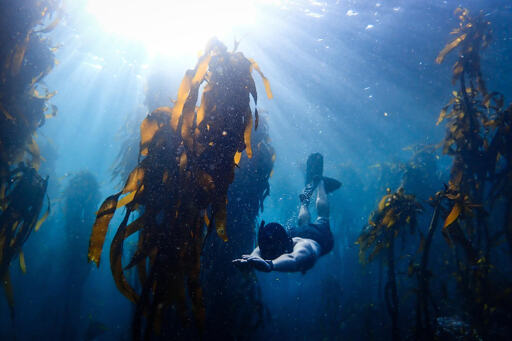
CAPE TOWN, South Africa — Diving in the Great African Seaforest, with its tightly packed towering kelp stipes that can rise up to 9 meters, or 30 feet, from the seabed, is a surreal experience, even for those who study this vast underwater habitat. “You see fish swimming as birds would do in the forest,” says marine biologist Loyiso Dunga. The Great African Seaforest is a biodiverse ecosystem, home to hundreds of species of seaweeds and thousands of species of marine organisms. Image courtesy of Jannes Landschoff. The popping sounds made by snapping shrimps (belonging to the family Alpheidae) can be heard throughout the Great African Seaforest. Image courtesy of Jannes Landschoff. The name describes a belt of marine vegetation around 1,300 kilometers (800 miles) long, stretching along South Africa’s Atlantic coast, around the Cape of Good Hope and extending into the Indian Ocean. It’s composed of hundreds of varieties of seaweed and hosts a kaleidoscope of marine species, from snapping shrimp (family Alpheidae) that fill the ocean with their popping sounds, to neon-colored mollusks called nudibranchs (order Nudibranchia), to the African penguin (Spheniscus demersus). It’s also home to a charismatic octopus, made famous by the Netflix documentary My Octopus Teacher. Dunga, executive director at the Seas of Good Hope initiative, is one the few people who understand the true expanse of this unique ecosystem: He helped map it through the use of satellite imagery. “You can’t really protect what you don’t know,” he says. For many years, resident scientists…This article was originally published on Mongabay
From Conservation news via This RSS Feed.