

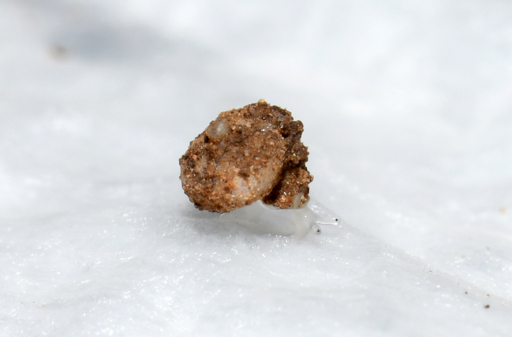
In 2024, scientists found a tiny new-to-science translucent microsnail in a cave of Banan Hill, a limestone hill that is part of the karst ecosystem of Battambang province in western Cambodia. The snail is less than 2 millimeters (0.1 inches) wide including its shell, about the size of a pinhead. The scientists behind its discovery named it Clostophis udayaditinus, its species name referring to the 11th-century Angkor-era King Udayadityavarman II. The king ordered the building of Banan temple, which became the name of the only hill where the species is currently known. The team collected 28 individuals at the site by hand between July and August 2024. The snails have a colorless body except for dark eye spots at the tip of their upper tentacles. The shell is described as “pale whiteish” to which the snails add soil and dirt. “The snails tend to decorate their shells with soil and dirt in star-shaped patterns,” the authors wrote in the description of the species published in February 2025. “This encrustation presumably serves as a humidity reservoir or camouflage.” C. udayaditinus was discovered during a three-year biodiversity research mission in northern Cambodia’s karst hills, an underexplored limestone landscape teeming with endemic life. The surveys uncovered another 10 species new to science, including another microsnail, a pit viper and several gecko species. “Each one of these isolated karst areas act as their own little laboratory,” Lee Grismer, a biology professor at La Sierra University, U.S., said in a statement. “The results are species…This article was originally published on Mongabay
From Conservation news via This RSS Feed.